
I read Throne of Avarice this morning on its release, which brands itself a “setting book and procedural generation toolbox.”. I considered writing a review of it, but I’ve been avoiding reviewing new releases as my Bathtub Reviews can be quite critical. But I found myself encountering a very specific problem.
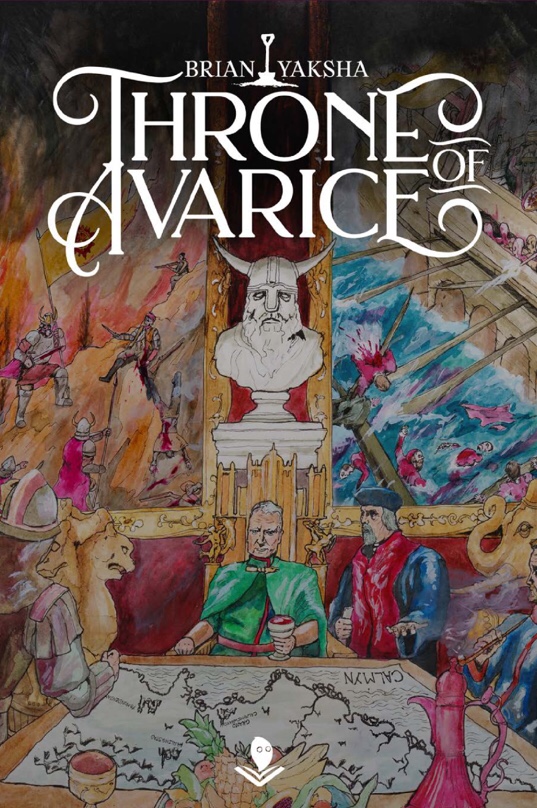
This book is jam packed with lists, most of them unique, interesting and well-written, and almost none of them well-tethered. I don’t think every list needs to be tethered to a concept! But the problem is that it’s never clear to me which list I should consult in a given moment. There are groups of lists, sure: to generate a location roll on these three lists. But I need to get to that section of the book to find out that that group of lists exists. There’s no sign pointing me there.
This is easily solved: Individual items are as good in this book as something like Fever Dreaming Marlinko and if the author (Brian Yaksha) had chosen to, they could easily have formatted it as a more concrete world to great success. I think this would have worked better than what I read, but it’s clearly not the design intention. I’m not sure it’s a real solution if it runs contrary to the design intent.
I think the problem is a lack of what I’m going to term scaffolding: An overarching structural framework that allows the reader to organically explore the world in a way that invites delving further with intention. I can think of a few scaffolding types off the top of my head.
A narrative scaffold is presenting a core story and allowing the larger setting to be footnotes to that story. A mechanical scaffold is presenting a core mechanic which points to various sections of the larger setting in its outputs (an overland travel system for example). A structural scaffold is designing the module such that as you read it you are pointed deeper (or back further) into the module.
I’m certain there are other scaffolding types that I haven’t thought of, but I think that in writing a sandbox or tool-based module, it’s important to consider that navigation can be the most significant barrier to accessing the creativity you’re putting on display, and placing an appropriate scaffold in place to allow your readers to navigate your material is just as important as putting good material down on paper.
15th April 2023,
Idle Cartulary


 Playful Void
Leave a comment