Bathtub Reviews are an excuse for me to read modules a little more closely. I’m doing them to critique a wide range of modules from the perspective of my own table and to learn for my own module design. They’re stream of consciousness and unedited critiques. I’m writing them on my phone in the bath.
I Miss You Very Much (henceforth IMYVM) is a 3 page module for Mausritter by Norgad, the same author that brought us the very solid The Stragglers. In IMYVM, you travel to the top of a peak — a bird fountain — to ask an oracle for one last moment with a dead loved one. I received a complementary copy from the author.
IMYVM utilises the familiarity Mausritter keying style with a strict one-sentence primary description. This worked extremely well for the Stragglers, and does so with about the same amount of success: Only 5 location descriptions feature the same playability features “orange dust”, “icy cold”, and some are very sparse “Cold. Wet. Windy. Tiring. Dangerous.” is truly a useless and uninteresting description. To make matters worse, the keys are arranged bottom-up, but not entirely due to the fact that there are two possible routes to climb, making the map quite difficult to navigate. Colour is used here, but differentiates opposite features on each page, which was perplexing a choice for me.
I rarely write home about hooks, and here they taint up 15% of the text, but all four here are excellent. All change the adventure and how to approach it remarkably. All hooks should be this varied and interesting.
The module includes climbing rules — handy to be honest, as I’ve had to intuit how to use a climbing harness in Mausritter before. I don’t hate the rules, but they’re overwhelmingly negative and concerned with failure, rather than providing interesting additional routes to success. If I’m adding rules to something as cautious with systems as Mausritter, I’d prefer to have it really change my game — and example is the racing rules in Song of the Frogacle.
Overall, this is a genuinely clever concept for a location, with hooks that make that concept sing twice as loudly, but falls apart in its execution. I mainly consider Mausritter through the lens of playing it with my kids — it’s one of the systems I play most often, because they can play it at 4 and 6 — and the climbing rules are punishing and unfun in that context. The locations don’t feature as much fun, gameable options to counteract their brevity. But it’s still a fun module, and I could see it going down a treat if I scrapped or simplified the rules, or cherry picked the hooks to be the funniest. I’d also serve well as a funnel, if you were playing with adults. I Miss You Very Much a 2 dollar pamphlet, so it’s probably worth it just for the things that are special about it. i’ve paid more for less inventive stuff, but it probably wouldn’t make it whole to my particular table without some modifications.
Bathtub Reviews are an excuse for me to read modules a little more closely. I’m doing them to critique a wide range of modules from the perspective of my own table and to learn for my own module design. They’re stream of consciousness and unedited critiques. I’m writing them on my phone in the bath.
Temple of the Beggar King is a 51 page module for OSE by Jesse Gerroir, with cover art by Andrew Walter and public domain interior art. In it, you delve into the temple whose cult leader has sought a dark enlightenment, in a dark interpretation of Japanese buddhism.
We open with the introductory information — the backstory, the deal with the cultist and their Ascended Ome, changes to spellcasting, and a table of past lives. There’s a lot going on here — not bad, but just a lot (and I didn’t mention hooks, I’ll loop back to them later). I wonder if all of this would better have been distributed throughout the module. The past lives table in particular, while it connects to the changes to spellcasting, belongs in an appendix as it gets a huge amount of use elsewhere. Details about the Ascended One likely belong with that boss character deeper in the module. In general, while I love a good section summarising the details for the referee, I don’t love when those details aren’t divulged to the players, and because the denizens of the dungeon are hostile, and not all of this is recorded in the dungeon, I think it’s unlikely it’ll all come to bear. I generally despise dungeons that impact spellcasting — while it’s a classic trope, I don’t think it’s a good one, because spell casters deserve their spells. It’s used here neatly, though, impacting not the effect spells but how they manifest, in a way that players may find compelling. If you’re going to do it, this is how to make it not punitive.
Most of the book is key. The maps are rudimentary, but do their job and communicate the temple clearly. I like that they’re fully labelled, not just numbered. It would be better were they with their keyed sections, or used cut out minimaps given the page size means that there’s often space for it. I like that we skip the wilderness and focus on the dungeon itself here — the multiple entrances to the dungeon reminds me of Gus L’s work in the best of ways. The child guide is also very compelling, as are the ways to discover he’s a traitor. I could see a lot of fun coming out of this, whether or not the players take the easiest route. In general, the keys are a bit long for my taste, but they sit solidly in the terse but clear, generally half a page range that again reminds me of Gus L’s work. For me, the dungeon needs a little more in terms of interconnectedness — there aren’t many spaces that point to other spaces, or NPCs that point to other NPCs. For example, aside from the presence of the four Black Lotus keys on the first level, there aren’t any hints regarding how to solve this puzzle. There are also few other puzzles here, but they aren’t to my taste — the door of 33 locks for example is a trap disguised as a puzzle, which seems punitive. The spaces are pleasingly looped though, with ways between levels and exist to the surface. I think that baked into the concept are some opportunities that aren’t taken advantage of — the Koan Doors on the 2nd level, which connect to another room, if extended to a theme throughout the dungeons would’ve been a great opportunity to include riddles and puzzles that link spaces together and assist the players in progressing.
One big missed opportunity here for me is the lack of unique monsters — despite stat blocks being included, most of them are stock creatures, and I feel like a monk that has meditated themselves into death through starvation trapped in a clay pot should be more unique. There are a few here — I love the defiling monks — but this could’ve been expanded for more fun combat. In my opinion, the fun of monsters you’re familiar with — trolls for example — is that they’re puzzles you can cleverly solve using the space you’ve explored so far. But, when you re-label “troll” “swarm of hungry ghosts”, fire and acid weakness no longer makes sense, and isn’t intuitive, so you can’t manipulate the environment in a pleasing way.
Another missed opportunity is the lack of ready-to-go conflict in terms of NPCs or factions in this dungeon. There are a few interesting NPCs, but they are largely one note, and remain in their section. The lack of faction play means that you have very little option but to treat this as a gauntlet, hoping your characters will survive the combat and trap encounters to get to the deepest place. That isn’t my style, but it’s a fun style to dip into if the players know what they’re in for and it’s a detour on another path. It it’s not obvious enough for me that the Ascended One is actually evil, and if you don’t know that the Ascended One will end the world, then all the treasure incentives end on level 2 out of 4. This means you’ll either have some very disgruntled players when they realise they’ve risked their lives and time for no reward, or if they realise there’s no treasure — they’ll skip the lower levels altogether. There’s an assumption in this module that because it’s a dungeon (and potentially because the denizens of the dungeon are hostile) that the monk meditating at its core is an evil boss monster, and that the players will want to fight it — but this feels like an assumption that has snuck in heroic, more modern playstyles, but just isn’t present in most OSR play that I’ve seen. To get OSR scallywags to show up in this kind of world-ending scenario, they need to be personally attached.
I skipped past hooks, which are one of the first things in the book, because I think they’re one potential easy solution to these problems. What are provided aren’t precisely what I tend to call hooks — they’re more intended to show the referee how to world-build the temple into their campaign. They’re compelling as this, but they’re not a succinct, easy way to get the players engaged in the dungeon. Hooks with juicier worms would help engage the players heavily in the last 2 levels, and would provide reasons to engage in the dungeon in curious and compelling ways other than as a gauntlet. If I were to run this, I’d feel compelled to add these in.
Layout is in a 2 column letter sized format. It’s clear enough, legible to read and navigate, and the page size means we don’t have crowding or page turning issues. It uses colour coding for sections, aiding navigability. This is an excellent example of how to make a low budget and entry level layout really work for a module. You could keep the same basic concepts, and give it a glow-up in terms of aesthetics — font choices, leading and palette, things like that — for an even better experience though, I suspect even while sticking with low budget choices. In terms of information design, I like what it does — dungeons make for easy information design, stat blocks are functional and in-page, highlighting isn’t overused.
Overall, Temple of the Beggar King is exactly what it says on the tin: A module inspired by the early TSR modules. It’s fun to navigate, and it’s full of traps and monsters. It relies on the referee to bring flavour to the characters and it doesn’t lean into faction play at all, with the monks in the dungeon being monolithic, which means it isn’t to my taste — in a dungeon of this size, I want to see some fun interactions between characters and levels, I want to be playing spaces and characters off each other, and those relationships aren’t intuitive to me here. If you’re happy to rewrite the hooks to make sure the players feel personal stakes in what’s going on in the temple, and if your table gets a lot of pleasure out of the combat and hazard aspects of the crawl, Temple of the Beggar King is a cool dungeon to dig into for a few sessions.
In 2025 I’m reviewing zungeon zines. They’re stream of consciousness and unedited critiques, just like Bathtub Reviews, but they’ll be a little briefer. The goal here is a little different: I want to spotlight what a craft-based, just-do-it approach to module writing can do.
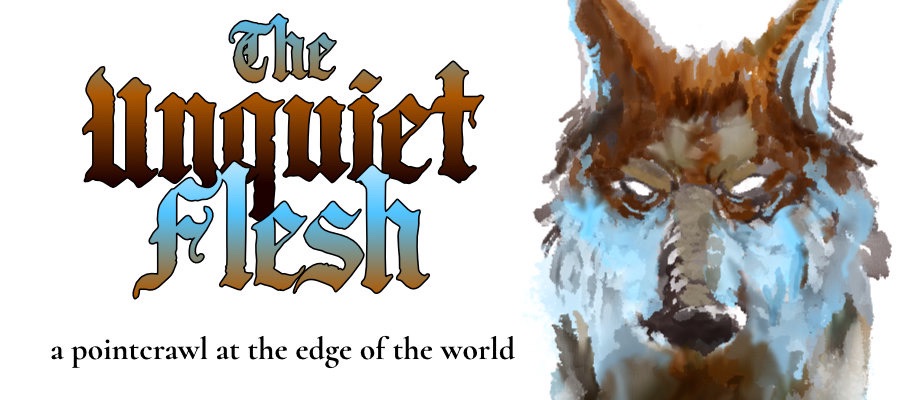
The Unquiet Flesh is an 8 page zungeon for Old School essentials, by Katt Kirsch, with art by Brandon Yu. In it, you delve in a tomb filled with undead, hoping to prevent their advance.
Kirsch is making a habit of releasing some gorgeous, thoughtful dungeons every month — this is I think the fourth — and this one in addition contains commentary which I really appreciate. This series of zungeons is a really statement: That it’s possible to throw together some really good looking modules, even with a collaborator for art, in a short period of time. Kirsch picks a colour palette and a free font, commissions an artists for a cover and a few pieces of spot art, and gets these out there quick smart. It’s really remarkable.
It opens with 12 rumours. These are flavourful, but a lot of them — the treasures, deadliness, just the basics of the dungeon — could be in a brief hook. I think in a project of this size, fewer and punchier rumours are better, following the principles laid out here. Most of the content here is good — it just belongs in the dungeon, where the lore is an excellent thing to fill empty rooms with, or it needs to be delivered en mass as a reason to attend the dungeon in the first place. Then, the actual rumours are things about the dungeon, that help our characters or hinder them through their knowledge. This is an efficient way to make small dungeons repeatable — second round you’re looking for different aspects. The random encounter table is short and sweet, and the method you use it changes to preference the deadlier and more floor themes monsters and you go deeper. Nest. It also uses modifications of monsters straight from the book, which is smart for a short module.
The dungeon itself packs a hell of a punch — 30 locations in so few pages. The map is clever and colour codes its entries and exits (this carries over to the key as well), although some looping between floors would make the dungeon more explorable — it’s not linear, but there’s only one way to move between each level. I like the brief descriptions, and the rooms slap, but in order to maximise usefulness, I’d like to see a little more consideration into the ordering of the clauses: “A draft from the northern wall’s hasty brickwork gently stirs dust. Carpet scraps blanket the floor. Along the west wall, a rolled-up rug conceals ...” could better be rendered as “A draft from the northern wall’s hasty brickwork gently stirs dust. Carpet scraps blanket the floor, and along the west wall sits a rolled-up rug. It conceals…”, for example, and those little changes make for a more useable text, where I don’t need to reframe the text I’m reading on the fly.
The strengths of this dungeon make me wonder about easy ways to add depth to a dungeon of this kind. This isn’t a puzzle dungeon, and they’re hard to write with such brief keys — the traps here are 2-sentence affairs. I wonder if one way to bring more puzzle solving and interactivity would be to use Sean McCoy’s writing rooms in pairs to add more keys and locks to the process of delving into the space. It does this a little — you can see it in the room I quoted above — but really the only thing this needs is a bit more complexity at a macro level, and pairing odd rooms more to introduce puzzle like elements would likely help to do so.
Overall, the Unquiet Flesh is a banger high level adventure. It’s high level enough, that you could either leave it floating there as something to loom over your campaign, and slowly seed the Carrathians as villains throughout your slow crawl to level 10, or use the included pregens to use this as a really fun high impact, 2-or-3 shot. As with Kirsch’s previous zungeons, The Unquiet Flesh is worth checking out, and I can’t wait to see what develops over the next 8 months of zungeon writing.
Bathtub Reviews are an excuse for me to read modules a little more closely. I’m doing them to critique a wide range of modules from the perspective of my own table and to learn for my own module design. They’re stream of consciousness and unedited critiques. I’m writing them on my phone in the bath.
Bitterpeak, written by Stuart Watkinson, with art is by Kiril Tchangov, is the second module in the Abbot Trilogy, a system neutral series of modules. After I reviewed the first module, Abbotsmoore, I expected to review Bitterpeak and the third module, Steelhollow, together, but Bitterpeak stands largely alone. In Bitterpeak, you’re tasked to deliver a single hair from the head of Demonsbane, which is hidden on Bitterpeak — but Demonsbane is a weapon, not a creature or a person. It’s a hexcrawl through a frozen tundra, culminating in a climb up a perilous mountain. I backed this on Kickstarter.
I realise now that I didn’t speak to the layout and art in Abbotsmoore much; to be frank, these three are of a piece and speaking to it thrice would probably be wasting your time. Each of the three has a unique colour palette, but otherwise the layout is the same. It’s spacious, single column, with strong use of size and decoration for smart navigation. It’s only 24 pages long, and I think the layout and organisation would fall apart if they’d packaged these 3 in a single book, because a larger organisational structure isn’t present. That’s not a problem here though. The crisp inks that feature here suit the simple choices in the layout. I’m not familiar with Kiril Tchangov, but his work, especially in the covers, absolutely slaps.
MacReady’s Hut is the base of operation and the “inn” of the module. I picture a kind of “Hateful Eight” situation here with 8 guests each with a secret. Honestly, I’m a little disappointed that these characters don’t play a bigger role in the module as a whole, although they could all act as henchmen or replacement characters. Some show up later, though. MacReady’s Hut is just such a strong location I want it to be more than it is; this honestly reminds me of the entire of Largshire, Stuart Watkinson’s previous town supplement, which left me with a similar feeling: I just want it to be expanded, because the premises are already great.
The Endless Tundra is a hexcrawl, with 3 regions to pass through before reaching Bitterpeak. I quite like these three locations, but each of these consist simply of a random encounter table and a description. The purpose of a hexcrawl is exploration, but there are no secrets in this hex crawl. You might as well as run it as a series of encounters, given 50% of the time it’s likely you’ll just encounter 2 of the first table, and 1 each of the second two. There’s no fun in wondering aimlessly lost through a wilderness, so the “getting lost” rules will get old fast for players, when there’s no chance of finding a pleasant surprise. And given the distribution, I’d run this as a point crawl, I think, or at else assign encounters to specific hexes and give them landmarks to make getting lost or navigating the waste more interesting.
The rules around climbing the Bitterpeak, are similarly a little weak. They’re essentially a skill challenge, but I think it would’ve been more interesting had there been a table of potential challenges here as well. I also don’t understand why the encounter here results in Rickard not caring for his sister’s death, which may or may not have occurred depending on how you rolled. The death itself is simply due to exposure to the elements, which also lacks drama. For me, the final encounter also lacks drama — particularly if Rickard comes and makes the dramatic choice for the player.
Watkinson remains an imaginative and evocative writer; one of the best. Scenes like “Courtship of the dragons. The two white dragons circle high above for quite some time before they descend. Their brilliant white scales glisten over their immense bodies.” just leap off the page. The characters, as I said earlier, are very well realised and briefly enough I can use their descriptions. I have no complaints at all about the writing.
But Bitterpeak fails to be more than the sum of its parts for me. When the two main sections feel underdeveloped, and the final feels anticlimactic, I can’t find myself eager to bring this one to the table. I think, basically, that this idea is more than a 24 page idea — we want to linger, trapped in MacReady’s Hut, and then have the politics between those characters develop and then feature in a journey in the wilderness where you’re searching to unlock the door to the Demonsbane, where finally you’re competing with whoever’s left for that lock of damned hair, whether by violence or by wit or by speed. There’s the seed of something great here, but it doesn’t get enough time to develop in the page count.
Overall, I can’t say that I’d recommend Bitterpeak over Abbotsmoore, which was pretty good, and its structure means it’s not awfully suitable to drop into an existing campaign. Watkinson’s writing is worth luxuriating in, it just doesn’t translate here into a module that I’d enjoy running; you could pillage it for some excellent ideas if your campaign is already in a frozen terrain, though. If you have time or inclination to expand this out, or you’re looking for a frozen tundra themed few sessions, and particularly if you have another source for some wilderness rules that will make it more meaningful, I’d suggest picking Bitterpeak up.
In 2025 I’m reviewing zungeon zines. They’re stream of consciousness and unedited critiques, just like Bathtub Reviews, but they’ll be a little briefer. The goal here is a little different: I want to spotlight what a craft-based, just-do-it approach to module writing can do.
Mother Worm is an 8-page system agnostic zungeon by Robot_Face. In it, you travel into the Mother Worm’s lair, with another party, to assist them resurrecting the worm’s child.
This is slapped together with Microsoft paint and free fonts, and while that doesn’t make it easy to read, it’s short and it vibes, really leaning into the DIY aesthetic that we like to see in our zungeons. You might like to take to it with a few coloured highlighters to make things a little clearer.
This tiny 6-room dungeon is full of banger ideas, with tons of interesting interactions for something of its size. I love the quest giver who is also a rival party, that your goal is to overcome specific obstacles in the dungeon, and that there are many layers of misunderstanding — the quest giver is lying, but also the Mother Worm will not understand if you’re acting in its best interests. It has a few elements that aren’t fully explained, though — particularly the lock in room 2 deserves more description, as does the spell in 3 which from further text appears to affect the hall rather than the room.
Overall, Mother Worm is an excellent tiny dungeon filled with colour and clever ideas, that will easily slot into almost any fantasy campaign.
I Read Games reviews are me reading games when I have nothing better to do, like read a module or write or play a game. I don’t seriously believe that I can judge a game without playing it, usually a lot, so I don’t take these very seriously. But I can talk about its choices and whether or not it gets me excited about bringing it to the table.
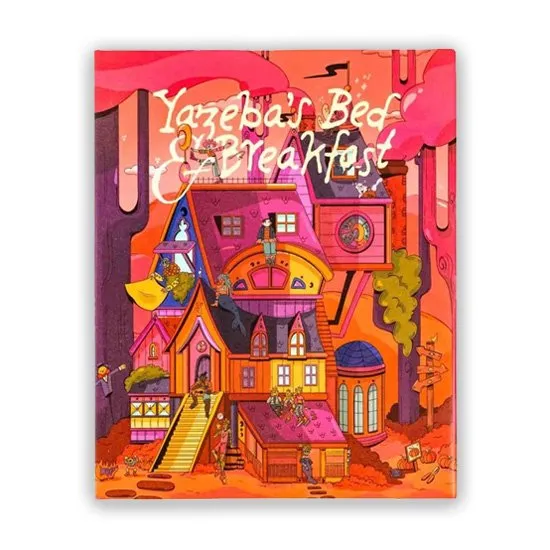
The kids are home and screaming at each other while they play Mario Kart, so I’m reading Yazeba’s Bed & Breakfast, a game I’ve been postponing a review for for a while. Why? It’s an almost 500 page game created by Jay Dragon and M Vaseleak, with a huge cast of contributing authors and artists; Jay is a longstanding friend of mine, as are a few of the other contributors. I backed this on Kickstarter, many moons ago, but only received the gorgeous shelf-breaker of a tome recently.
Yazeba’s Bed & Breakfast represents a conundrum to me as a reviewer: I backed this to play, with the anticipated structure of the game being perfect for my life when the children were young and we were close to friends, but the delays in fulfilment mean my lifestyle has changed a lot in the intervening years. I really have trouble reading such a huge book and providing cogent and valuable criticism of it without playing, just because it’s hard to process it all; it’s a text of amazing scope, with 7 starting characters, about 50 unlockable characters, about 50 chapters (each with unique mechanics), plus 50 pages of appendices that you’re not supposed to look at, hidden mechanics, a packet full of stickers and a Forbidden Envelope. I attempted this by reading a few chapters a day for about a week, and scribbling my thoughts down as I went, then assembling them as best I could at the end.
Here’s what’s basically going on in this game: Yazeba’s Bed & Breakfast is a collection of mini-games (“chapters”) that you proceed through as you choose. Each mini-game has a different cast which you share, and so you might play Sal in one game and Amelie in the next. Characters have strengths and weaknesses (whoopsies and bingoes), and after each chapter a few things happen, which cause a sense of time passing and characters growing, adding to their shelves or journeys. Each chapter is intended to be short — less than 90 minutes — so you might play a few chapters in a single sitting. Each chapter has unique rules, although feature similarities, and might need extra stuff which is usually commonly available like scraps of paper, index cards or playing cards. Each chapter also has a mood, which helps you pick what you’re wanting to play.
Yazeba’s frames itself (although not formally) as the licensed RPG of a children’s cartoon. It does this, however, as a way of framing more adult stories and themes, which cover a gamut of themes that can be challenging if you choose to engage with them — although I think you could choose not to, thanks to the frame and the element of choice around both your actions and the chapters you choose to play through. Certainly, this is, while being a joy-filled and fun-loving text in a lot of ways, a game that engages actively with challenging themes around queerness and self-isolation in a way that can be really confronting and it uses the framing to temper those themes to be more palatable and easily engaged with. This is something many children’s stories do, which may be why it succeeds. The rules text is filled with prose interjections from within the world, often from the perspective of the main cast, and the chapters themselves often involve a lot of read-aloud text to set the scene. In general, these are just lovely to read, but for me the initially made the book easy to read, but the deeper I got into its’ 500 pages I had more difficulty reading them and processing them as they jumped from new mechanic to storybook prose and back again. The writing is gorgeous, though, and given the sheer number of writers involved, I think that it’s a hell of an achievement for it to come across as so cohesive.
The chapters aren’t difficult to play (compared to any other individual game), and some of them are clever and most of them are a lot of fun, but you do have to figure them out together whenever you choose not to repeat a chapter. A few highlights from the starter chapters (not the locked ones that come later): Ollie Ollie Oxenfree, where you draw a collaborative map of the Bed & Breakfast and then hide in it, and Gone Fishin’, where you create a custom deck of fish to fish from. I really like some of the locked chapters, and one hidden chapter which involves a treasure hunt feels an absolute joy. There are all kinds of surprises to find. I prefer the chapters where everyone is adventuring, or some variation of that, than the chapters that are explicitly about character development for one of the characters — that said, however, the nice thing about those chapters is that you may pick ice skating without realising that when you pick Parish you’ll be making permanent decisions about who he is, and that shared development is a lot of fun to me. As the game goes on and becomes deeper, the complexity of the chapters match this: While I can see the intent here, chapters like Yazeba Casts a Spell, which benefit from by this point many sessions of build up, become a little unwieldy, and I would have trouble facilitating them as a Concierge without either experience running them before, or a fair bit of prep time — they’re a little anxiety provoking for me in terms of scale. Some of them are very compelling, too, though: One late-game chapter where you explore a ruin is something that many people would release as its’ own game, here just a chapter and the cumulation of a single character’s story. Overall, I think the hardest thing to recommend about Yazeba’s Bed & Breakfast is the breadth of play possibility here: Many tables might stumble into chapters they don’t know how to play, or don’t feel comfortable in that kind of play, or that involve a physicality or a mood of play that they can’t engage in well, and I think that’s quite unavoidable, even though the game tries to answer this through labelling and indexes and smart incorporated safety tools. Even with these things, the only way to curate for the things that you feel comfortable with is to not play a significant part of the game, and that, for someone like me, I’m not “finishing” the game — and this is a game that can be finished. For example, while Yazeba’s zenith is a fun, if mundane hour of play, it flagged with the pensive tag, Gertrude’s “Home” is intended as a fairly challenging exploration of her past, and it features among others the heavy tag. Aside from “heavy” you have to read it to see if it is too much for you, and if it is — you don’t get to finish Gertrude’s story. In the creation of something of this scale, you have to make some curation decisions, and I don’t think the better decision would have been to leave out the “heavy” chapters because clearly the creators wanted the game to have a breadth from vulnerability to party, but for those who don’t play their roleplaying games for that emotional catharsis or engagement, you’re missing out on a lot of Yazeba’s Bed & Breakfast. For those who want the opportunity to take tours through these characters and explore things in ways they have never explored before, however, chapters like this are the juice of the game, and will make a really effective zenith for those characters. This breadth goes in other directions, as well, though: Yazeba’s Bed & Breakfast feels like a game to be played at a coffee table, not at a kitchen table. Some of these games evolve you standing in front of your friends and performing. Some involve literally moving around the space you’re physically in as the players. You can — this is definitely an option, just like using a character voice or not is always an option — just describe what’s going on, but for many of these chapters, Yazeba’s Bed & Breakfast wants to transcend what we view TTRPGs to be, incorporating physical and ritualistic play, incorporating embodiment of your characters and fourth-wall breaking, in a way that most TTRPGs don’t ask you to. Yazeba’s in a way, feels designed to put everyone out of their comfort zone, somewhere in the book.
The core and developing cast are a huge part of Yazeba’s Bed & Breakfast, and I think that it’s really compelling being provided the potential to develop those characters together as a group, and things like the Forbidden Envelope also mean that some of those developments are hidden from view until you play the right chapters in certain ways, or achieve certain milestones. There is a breadth of characters in the book that is large enough that it would be a lie to say that you can’t play as a wide range of experiences, however, it’s also pretty clear that the game is not about all of those characters and their growth, but rather it’s about some specific characters and their coming of age. There’ll be some push back against my use of that word, but I genuinely think that a theme here is even the “older” characters like Parish and Yazeba are frozen in a specific moment, and their stories are about understanding themselves and overcoming those specific moments, to become who they want or are meant to be. I don’t think this is said explicitly in the text — although there’s a lot of text and I might be misremembering — but there it feels implicit in the prologue text — “the world was cruel and there was a witch who knew it well, and so she sold her heart to build a house in teh woods where the world could never find her” — that all of these guests are taking refuge here, are hiding from the world. It is explicit, however, that (spoilers, I suppose, for unlockable rules) when a character grows up, they leave the Bed & Breakfast, and their chapters are locked. Being in this liminal witch-cast Bed & Breakfast, for most of the guests, is a stepping stone to their becoming who they want to be, and most of the chapters, and particularly the locked chapters, involve specific cast members taking steps along that journey, and so it is a game that is unavoidably heartfelt and emotionally resonant for almost anyone who has felt they wanted to hide from the world, but eventually realised that stasis may not be the way forward. These stories of growth and variations on youth and struggling with where you fit in the world and how you make a place for yourself are the stories you’re playing this game for.
Yazeba’s Bed & Breakfast comes with stickers, expects you to mark the book up, and expects you to open the envelope that comes with it. It uses terminology like “scraps of paper” and “doodle” and “paperclip”, because it wants the book to be used and marked and torn and changed. The character sheets are in the book, right in the middle, as are the journeys and book shelves. The intent is for the book to be modified in play: an expensive, beautiful, 500 page work of art of a rulebook is rendered mutable and fluid by play. I’m not sure if it’s the intent, but it feels like as written you may not have the character sheet of your character in front of you the whole game, so much like children’s memory, what you are playing and who you are, and the decisions you make, are as fluid as a child’s memory, and may merge together, like Spidey and the Octonauts becoming part of a single universe in the playground. As well as this interest in memory and what it means to inhabit a place and share characters that are vulnerable to the inconsistency of memory, Yazeba’s is deeply interested in the book itself as a physical artifact of play, in a really interesting way, though. There are chapters that involve searching through the book, chapters are out of order and it expects you to engage with the book itself as players. The book is not just for the Concierge, even if it’s anticipated that the Concierge purchase the book. I think this is really interesting, particularly when taken as a part of Possum Creek’s output as a whole — a few years earlier we have Wanderhome, where a huge amount of the content is in a gazeteer in the forms of tables, and in calendars changing seasons. There are lots of surprises in Wanderhome if you play it deeply and long enough, and you can see Yazeba’s interest in its’ physical, changing tome as an extension of that. But furthermore, if you look at the in-process Seven Part Pact, you can see it extended even further, where the rulebook stands in as a spellbook, one that you need to follow the rules of, and spend time understanding, and one that rewards increasingly more physicality as part of its play: the book (and the physical things the book asks you to bring to it) are the game more literally than in most TTRPGs. This feels to me like a really interesting response to the question of “How can TTRPGS be more like board games?”. Board games in the age of crowdfunding advertise themselves and thrive on premium tokens, on deluxe physicality, even as the basic versions still resemble boardgames of yore. That physicality is really meaningful to your experience of a board game — be it the destructive physicality of Risk Legacy, or the extreme use of miniatures and terrain in wargames, or bespoke carved wooden tokens and dials, and games like this feel like they are a recognition of the fact that while the book is a core part of my understanding of TTRPGs, we can still ask how we can bring that deluxe physicality to TTRPGS if we can make the book respond to our play the same way a board game might, without simply adding extra tchotchkes. It’s interesting stuff, and a compelling direction for TTRPGs to pursue.
While this is a compelling and fascinating direction, there is a tension between form and function in TTRPGs as they struggle with increasing production values, but also want to be lived-in artefacts of play. A Thousand Year Old Vampire — a game which I remember creator Jay Dragon playing in serial when it was released, and so I suspect is an influence here if a tangential one — is a beautiful book, that wants to be written in, wants to be scrawled in, and whose form does not match that desire at all. Many people have argued that destroying something of beauty is the point of what Tim Hutchings is going for in A Thousand Year Old Vampire, but I don’t think that’s my objection: It’s the fact that A Thousand Year Old Vampire as a book is not a good vehicle for the game the book is asking me to play in it. Part of this is the paper quality, the binding, the heavily-produced but beautiful pages, but not because they’re beautiful, but rather that ink smudges, that there are no boxes to tick or places to write things, and that it leaves it up to you how to record things and how to understand the game: It’s easy to find people talking about how to play it if you google it, which make me feel I’m not alone in this experience. Yazeba’s, also treads this line, as a gorgeous tome of a book. The child-like nature of the layout, art, and presentation, makes me feel more comfortable to modify, but the size of the book causes a mismatch in function for me: This is a tome, one of the biggest books I have on my shelf. And so, while I love doodling and adding stickers, and while I think the character sheets (shared, of course) are intentionally in the book and not easily found to be printed off, I think the issue with Yazeba’s format is that the book’s size isn’t compatible with easily passing around the table during play, or perhaps isn’t bloating absurdly with paper that has been endlessly stickered upon with new rules. I want Yazeba’s to be a smaller book, but one that is bulging at the seems. I suspect Yazeba’s — although less of an imposing book it may have been — would have worked better as a series of books. Now, I didn’t back for the boxed set (it costs almost $300 right now in my country), and I wonder if the play aids in the boxed set — a “ledger” for example — might have occupied that space for me had I been in a more liquid position back when I’d backed this. About 100 pages of this book by my count is stuff that could be moved into a secondary book specifically for marking up, that would be easier to pass around the table. But that might also steal some of the magic away. And, the presence of the tome is also important to the role I see this game playing in the theoretical home it is played in: This is a game that lives on the coffee table, waiting for people to become curious about, to discover new things about, to be surprised by. Without the thickness and beauty of the tome, and its stickers and changes, it perhaps loses that presence.
I have gotten this deep into a review without mentioning the art, nor the layout: They’re both spectacular. Vibrant, childlike, generous, and bold. A friend of mine is absolutely obsessed with Triangle Agency, and particularly loves its’ locked sections and its’ wall-breaking approach to layout. In my opinion, Ruby Lavin’s layout for Yazeba’s attempts to do what Triangle Agency does in terms of breaking the fourth wall and becoming a play artefact, but in a more accessible, charming, and interesting way. I know that to a degree the inaccessibility of Triangle Agency is the point: I don’t care, though, I bounce off the lack of accessibility in the text. I prefer everything Yazeba’s does to the same ends, in the way it does it. It’s wonderful to have to hold up a chapter you’ve discovered in the mirror to read it; it’s drudgery to to wade through the overwhelming mess that are the latter parts of Triangle Agency’s Manager’s section. It brings a smile to your face to discover that you’re playing D&D all of a sudden for a night instead of Yazebas’s; that trick is repeated many times in Yazena’s, and only once in Triangle Agency. Many of the layout conceits here are secretly covers for later trickery in terms of gameplay. Where Triangle Agency leans so hard into its’ conceit it’s unplayable, Yazeba plays its’ conceit with you, successfully. It’s legible where it needs to be, but where the navigation is a challenge it’s for a purpose — again something Triangle Agency attempts but does not succeed comparatively at. I don’t know that it’s perfect, but it is playful, clever, and creative, and feels almost universally like the children’s TV show that it imagines itself to be, despite the barriers.
So, is Yazeba’s Bed & Breakfast for you? I don’t know. It’s beautiful, both as an artifact and a work of writing. It is filled with joy and love and warmth. I imagine Yazeba’s being a formative part of growing up, for some young adults: I’m living in a sharehouse, and a big ol’ coffee-stained copy of Yazeba’s sits on the table, along with a mason jar filled with tokens and stickers and a pair of scissors, and every night we play through one or two chapters. We run around the house playing games with Hey Kid and Sal. People flick through and either surreptitiously read locked chapters and realise — how can I play this? Or find hidden chapters that aren’t in the index. When I was younger, I did this! But in my current life, does Yazeba’s Bed & Breakfast fit into my life as well as I hoped it would? No. Maybe I could adapt it: An online free-for all, where the number of players showing up dictates the chapter played. Or, if I lived next door to my bestie, she could come over and play on odd nights where the kids were busy watching a movie. More realistically, I might play this with my children, when they’re old enough to understand the game, in five years time. This game and its messages would mean the world to a kid the age of its protagonists. The main barrier is the scope of the work: The index helps, but it doesn’t actually list all the moods, for big groups or for small ones, for example. Yazeba’s rewards it being the main game you play, for a time, where everyone gets familiar with the rules, and it’s easier. As is, even though the individual games are straightforward, there’s a learning curve there that can be tricky. There are barriers to this being the game I wanted it to be, in the life I’m living at the moment.
Yazeba’s Bed & Breakfast, to be honest, is far more compelling, meaningful and interesting that I expected, but for me, that success limits how I can fit it into my life — for now, at least. It would have been easier had I not read the damned book — the first few chapters fit my preconceptions far better without the knowledge of what is to come. Yazeba’s Bed & Breakfast is, however, unequivocally a masterpiece, in terms of being one of few games that captures not just a type of story or mood within its pages, but the sense of being a certain age with all of its ups and downs. The ideal audience for it is one has the energy for its’ most energetic chapters, sometimes. That feels excited to step out of their comfort zone and play tag or perform a song in front of their peers as if they were a cartoon frog. That want to learn new mechanics always, but are quick to forget and care about youth and memory. That want to engage in vulnerable and emotional story arcs, but not all the time. If your table is the kind to be excited and engaged new opportunities to roleplay in different modes, and to expand and contract their level of vulnerability readily, then Yazeba’s Bed & Breakfast is absolutely going to work for you. I have one proviso, though, and it will be of no surprise if you actually read the review: This game is so interested in physicality that you really, really should get a physical copy: The problem is, it’s no longer in print. But, there are a few places you can still buy the book and the boxed set if you do some diligent searching. If you read this and thought: “Oh yeah, I want to play that”, I’d probably track down one of those last few remaining copies, rather than buy the digital version, or grab a Print on Demand copy.
Bathtub Reviews are an excuse for me to read modules a little more closely. I’m doing them to critique a wide range of modules from the perspective of my own table and to learn for my own module design. They’re stream of consciousness and unedited critiques. I’m writing them on my phone in the bath.
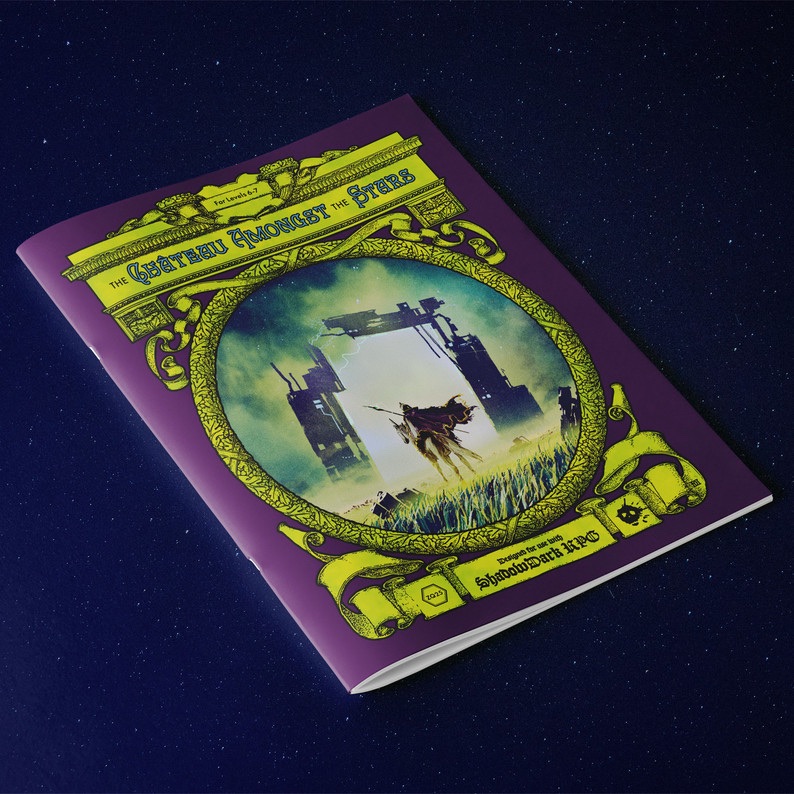
Chateau Amongst the Stars is a 32 page module for Shadowdark by Anthony J. Zinni. In it, you explore chateau that has magically been transported into the sky above a village, raining massive items down upon it. If you can’t reverse the spell, the chateau will destroy the village on impact. I backed this as part of Zinequest
Structurally, Chateau Amongst the Stars has 3 pages of introduction, an 8 location chateau grounds, then the 49 location chateau itself. The layout is very good, particularly in the key — an attractive 2 column layout, utilising decoration and textual highlighting, bullets and excellent key art that looks good and aids navigation. The exceptional art and maps appears to be by William McAusland and Felipe da Silva Faria, although its hard to tell. Sidebars are inverted, and bring a gothic feel through decoration rather than hard to read type. There is some art on most spreads, and the maps are good looking but functional. This is solid stuff.
Three of the hooks out of six, are solidly juicy. Honestly, it’s a rare thing I get excited by hooks lately, and it was great to see how these have the players focusing on different aspects of the Chateau — I just wish they’d all passed the bar. You start the module with these, technically, but the module proper starts with some admittedly pretty boxed text, and the combination of the two is clumsy. I’d rather a briefer boxed text, or just the hooks, than the combination — this is a bit too much narration up front for me.
The writing is, for me, workmanlike, but pleasingly terse, after the style of Necrotic Gnome. Read aloud text in the bulk of the module is brief and useful. The NPC descriptions, however, are immensely interactive, and there are 3 in the grounds. They use a structure of situation / what they’re like / what they want, which is a good take on NPCs. These are the kinds of touches that make modules like this memorable. Random encounters, however, are a little too random for my taste, with only 1 of 12 being tied to any specific event or location; there are also 6 for the grounds and 6 for all 49 rooms — we need unique biome random encounters for something this big, or at least more variation. This generic, random selection, along with the lack of string theming in the light of “chaos” effects, means that the chateau comes across as more generic than Shadowdark typically pitches itself. There is also a complete lack of page referencing, which makes me suspect that referrers other than the author have not read or attempted to run this — how am I supposed to describe “description of the kytherian mechanism” without a page reference, unless I’ve memorised the whole module?
Puzzles and interactive points of interest aren’t consistently OSR-style challenges, although there is space for them to be treated as such. There are puzzles without clues — perhaps it’s obvious to some that you press the button with the statue’s finger, but I think there should be a clue deeper into the dungeon for those who didn’t get it. I’m playing Blue Prince, and the best thing about it is hearing people talk about the different ways they figured out the solutions. If you’re including puzzles, make sure there are multiple solutions. But make them hard puzzles to balance this out! At least one here is a riddle so easy that it isn’t even a challenge (“Surround me, with a substance from the sea. A ring of crystal, that remains when you distill”) — I’m not sure why this is even a riddle?
Sadly, in terms of spatial design, the chateau falls into the mansion problem: Houses make boring dungeon shapes. They have too many exits, and loop so much as to make exploration trite. The chaos theme could’ve been used to justify some weirder spaces (as could the collapsing from above and dropping chunks to the ground below), but sadly advantage wasn’t taken.
The events table acts as a timer to provide a deadline, but there are a few odd aspects to it. It’s not clear why the environment becomes more deadly over time — it feels like random encounters would decrease as doom approaches given they’re largely creatures. The events themselves — likely because there are 21 of them — don’t really bring an aggressive sense of time proceeding, and the fact that you’re counting rounds seems fiddly and too granular to me. That’s not to say it wouldn’t work — just potentially there are ways of making the same progress more elegant.
Overall, the bulk of Chateau Amongst the Stars is a really solid dungeon. The chaos theme makes for a less cohesive space than I’d prefer, and it begins to feel quite generic D&D — something Shadowdark feels like it’s trying to avoid. I like a few proper biome changes when a dungeon is touching half a century’s worth of rooms, and this doesn’t offer that. It’s also a very high level dungeon — it’s good to see them existing, but it feels like you’re putting a team together especially to play this. If you do, though, there’re probably 5 or 6 sessions in this 32 page book. This is a solid beer and pretzels dungeon, but with some tweaks — improvements on the puzzles and interactions, and the NPCs being more prominent inside the dungeon and not just on the grounds — this could have been a classic. I’ll certainly keep an eye out for Zini in the future, as if the game design can develop to match the visual design, future modules are going to be a treat. But if you’re looking for a higher level, beer and pretzels dungeon for Shadowdark, I’d look no further than Chateau Amongst the Stars.
In 2025 I’m reviewing zungeon zines. They’re stream of consciousness and unedited critiques, just like Bathtub Reviews, but they’ll be a little briefer. The goal here is a little different: I want to spotlight what a craft-based, just-do-it approach to module writing can do.
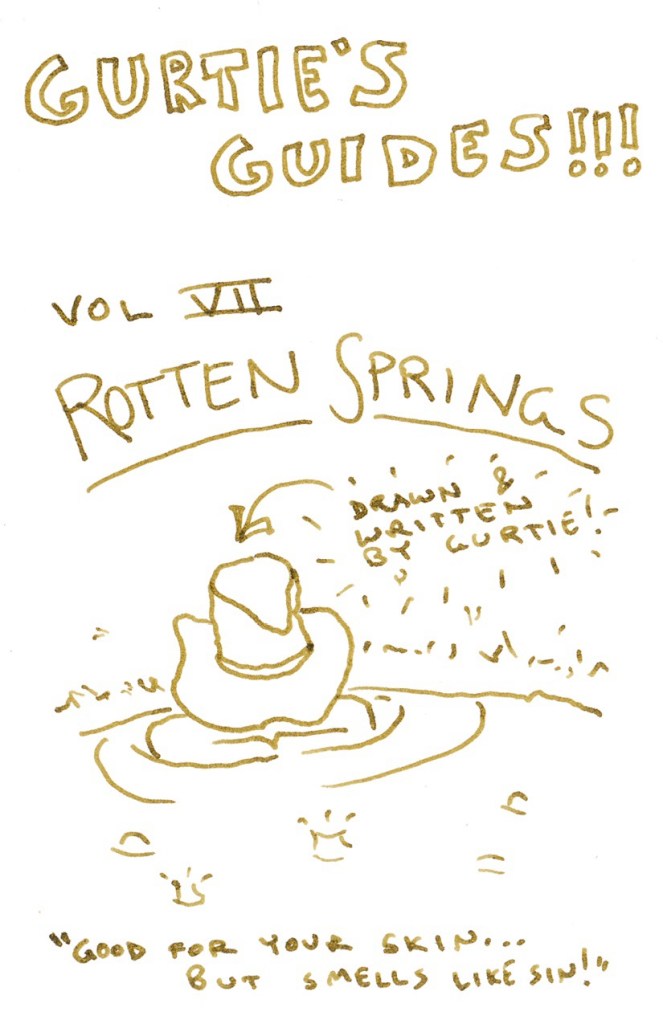
Standoff at Rotten Springs is a 1-page zungeon for Frontier Scum by Brendan Albano, written as an expansion to Gertie’s Guide to Rotten Springs. In it you rescue a team of archeologists who plan to excavate the heat engine powering rotten springs, who the local hermit has taken hostage.
This is hand-written in a single page, and I love the DIY attitude this brings. The map is a node-based thing, which, uses some neat annotation to communicate information.
There is some really neat interactivity here, for a one-pager: There are conflicts between the hermit and the archaeologists, at least one moral dilemma and a logistical one, which may potentially make for some really fun stories evolving out of this. I love that the titular stand off is almost entirely social rather than one of violence — my favourite kind of stand off.
Overall, you’re running Frontier Scum, or a system that matches the vibe (Eco-mofos or Vaults of Vaarn would fit fine I think), Stand-off at Rotten Springs is a no-brainer — and it comes with a guide to the hot springs in general, which is a broader setting to incorporate. Very cool.
Bathtub Reviews are an excuse for me to read modules a little more closely. I’m doing them to critique a wide range of modules from the perspective of my own table and to learn for my own module design. They’re stream of consciousness and unedited critiques. I’m writing them on my phone in the bath.
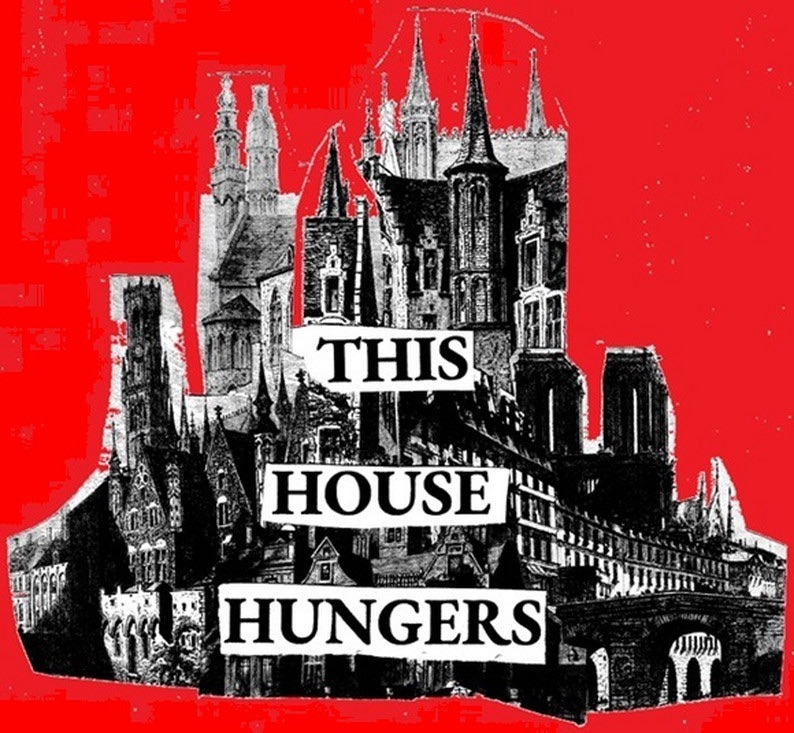
This House Hungers is a 41 page survival horror module for Knave by Richard Gottlieb. In it, you explore a death-trap mansion abandoned by their noble owners, but with the words “Riches untold for whoever can claim them” on the door. I received a complimentary copy from the author.
I said 41 pages, but it might be 67 pages? It’s split up between a few different books, rather than in one. This makes it a little challenging to read, although I can see the appeal of having the key in one pile of papers, the general content in another, and the maps and handouts separate. It’s an example of what a module might look like if not tied to the concept of a published book — which it isn’t anymore, when published digitally. This is a largely art-free effort (aside from maps and the player handouts), and layout is basic, but very clear, and benefits from its use of the full A4 page, which is a good choice given its clearly intended to be printed at home for play. It would benefit from some additional navigation aids, though — something as simple as having the room numbers in the header would make it a little easier to navigate in a pinch. There are negatives, though, to this table-focused layout. the lack of art breaking up the text makes it more challenging to read, and it really doesn’t work reading digitally at all, as there are too many documents to flick through. Because it’s challenging to pre-read, it means you’re not prepared for gaps on the map or unclear keying when it does occur. Even if it might be easier to use at the table, I don’t think the multi-pamphlet layout is necessarily a home run.
The module opens with an explanation of what is actually going on, then a core timer mechanic that is tied to deaths that occur in the dungeon. This mechanic is very neat, although it requires at least 6 deaths to “end” the counter, which means you’re expecting a lot of character death. There are hooks assigned per character class (a perplexing choice for a classless system like Knave) — but I don’t think these hooks work at all. They don’t provide juicy worms at all, and the ones that almost do ask the referee to supplement the module with their own additions. It’s a minor matter to provide characters or at least corpses in the dungeon or specifics for each of these hooks — there are only 6 here — and doing so would add character as well. Use the character for one hook to be a backup henchmen found holed up somewhere, or to warn of the nature of a trap after they triggered it — it would really add a lot.
There are a bunch of NPCs and a few factions that are detailed here — basically the core family and 2 invading factions. The individual characters are largely compelling, and there are some very fun little possibilities that they instigate — they’ll cause issues and for your players in interesting ways — but I want factions to have conflicting motives that are very clear — both to me as the referee and to the players. Spelling it out more would be better, in my opinion, especially given the choices in breaking this up from the main key — it’s absolutely not clear how these will interact. When I read a module, I want to be excited when I read a bunch of factions — the potential in these is not communicated well at all. In addition, a lot of these characters and factions instigate quests — these aren’t here, but rather in the key where you meet them. For me, keeping all this information in one place really aids in running things.
This is a 60 room, 6 level dungeon — there’s an awful lot going on. The maps are separated out along with their associated random encounters, which provide each floor with a unique flavour, which I like in theory, but with only 10 to 15 rooms on each floor, and 12 items on each table, the flavour is heavily diluted — I would cut these in half at most, as on most levels you’ll only meet 2 or 3 encounters, and I want the story of the level to be clear. These separated out maps will be helpful at the table, but reading digitally it’s a challenge to draw lines between map content and key content, which, like with the factions, makes it harder to get excited — within a few rooms, you’re not clear what magical items your players have stumbled upon, and have to refer to another document in an appendix to find the, which dampens that building excitement you get when finding fun connections in a module. The puzzles are pretty consistent and fun, although with the intent that you don’t read through the key, I think that referencing the locations for the solutions would help a lot in understanding the space. I also think that more generally, there aren’t a lot of flags for the meanings behind things — for example, I didn’t find a place that told the players what the grandfather clock indicated, and I feel like most players would miss the main clue given that the chimes will only occur a maximum of 5 times before they occur. Puzzles like that, and the musical puzzle, would benefit from having audio “handouts” in the same way there are physical handouts for other puzzles — but I really appreciate the range of different puzzle types that occur here. All said, room-by-room and floor-by-floor, this is a really competently put together dungeon, with solvable puzzles, clear mechanisms, that really rewards approaching challenges in creative ways, and telescopes danger effectively most of the time even while keeping danger levels high. It might all come together in play, but it doesn’t really come together on a read through, due primarily I think to the structural choices.
This House Hungers pitches itself as horror, but what it looks like in practice is a a darkly humorous meat grinder with gothic trappings. I like this theme, a lot, to be honest. The ticking clock elements won’t work if characters aren’t dying regularly. This feels like a major aspect to frontline if you’re pitching it to your players, and it should probably be a little more obvious on storefronts as well.
Overall, this is a pretty great module for Knave, if you’re interested in a haunted mansion with a lot of player death and dark humour. I think it would benefit from a re-organisation, and I’d prefer it in a different format, but your mileage may vary on that count — this is a pretty significant sized dungeon that you can print at home with ease. For the right table, this is pretty fantastic, it just might not be right for me. But, maybe that’s my desire for a bit more flash talking; Illustrated in a style aping Edward Gorey or something similar, and given a solid developmental edit, this would be a beautiful module dripping aesthetics, that I’d probably buy in print based on vibes matching the content so well. As is, in a Knave ecosystem desperate for content, This House Hungers is the best and largest module I’m aware of, and it’s probably effective as a centrepiece of a campaign given the likelihood of player death.
I use affiliate links where I can, to keep reviewing sustainable! Please click them if you’re considering buying something I’ve reviewed! Want to know more?
Have a module, adventure or supplement you’d like me to review? Read my review policy here, and then email me at idle dot cartulary at gmail dot com, or direct message me on Discord!



 Playful Void