In 2025 I’m reviewing zungeon zines. They’re stream of consciousness and unedited critiques, just like Bathtub Reviews, but they’ll be a little briefer. The goal here is a little different: I want to spotlight what a craft-based, just-do-it approach to module writing can do.
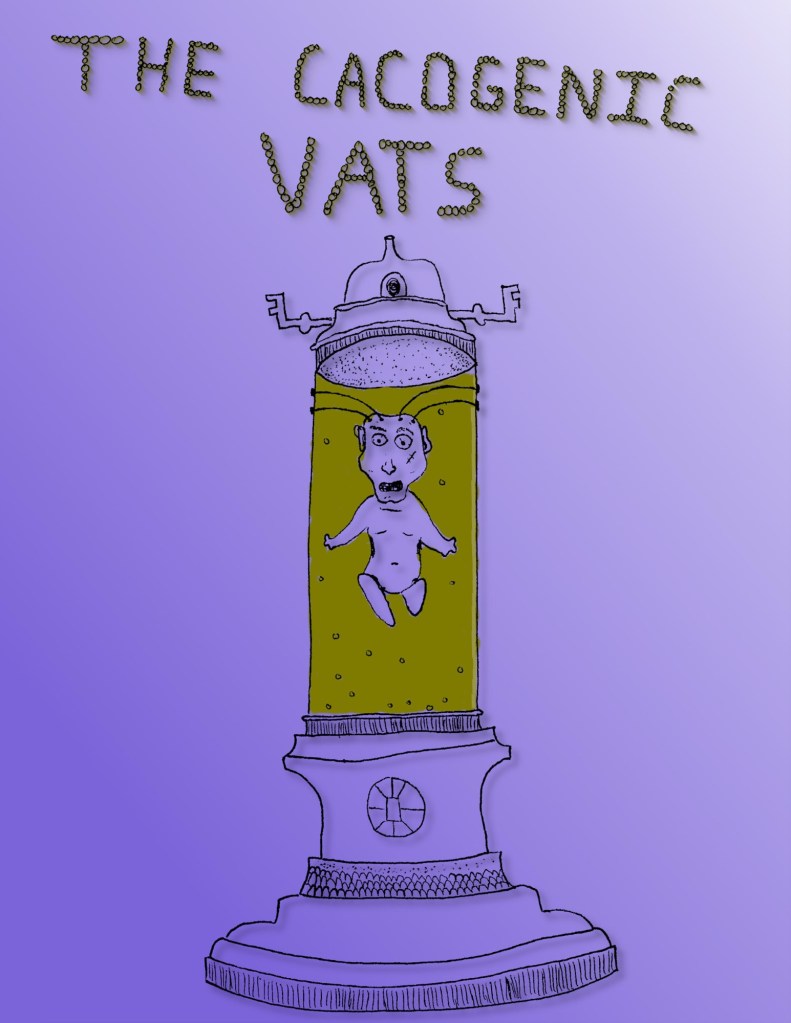
Cacogenic Vats is an 11 page zungeon by Operant Game Lab. In it, you investigate a horrible shrine, only to find out that it is secretly a wizard’s cloning lab, invaded by a group of raiders while the wizard’s clone builds his strength after a recent death.
The three hooks included here are fun — all providing a different reason to explore the dungeon. The random encounter table is an elegant, one-monster affair — the only problem is that the gradual progression of the clone breaking out of its vat really isn’t tension-building — in a movie you’d cut to each step. You aren’t going to know anything is happening unless you keep passing by room 8. I think a smart move would’ve been to place this room at the central hub of the dungeon, making a visual reminder that something is coming.
There are 9 foes in the bestiary, and they come up next in the book — these are all well described, but I think it may be better off placed in the text, as it’s a lot to absorb at once. The dungeon text itself is well organised — an explanation of the primary colour puzzle is up front, as is an explanation of what the players expect, and what they find. Empty rooms aren’t uninteresting, although they don’t tell much story. The interactive rooms themselves, are fun. The primary faction is fun, but I’d have preferred they be in more overt opposition to Sxixis the wizard; I’d tweak this a little so that the assassin might be turned against them, appropriately, I think, or that they could be bargained with against Sxixis.
I really enjoy the deceitful premise of the module — the shrine hasn’t lost its power, but rather its’ illusion has dropped due to the unfortunate death of the wizard maintaining it, and hence the heroes will be entirely out of their depth. And that is a lot of fun, to me. The main issue is that the two factions aren’t primed for interaction — honestly, in a module of this size, it’s a benefit to have them both negotiating with the party to break the balance of power, rather than have that negotiation be an option.
Layout here is basic, simple, and clear, as are the maps. There’s no issues with legibility here at all. I honestly love the rudimentary art style — it suits the stunted descriptions of the clones, and feels like it might well be Sxixis’ own hand doing the drawing.
Overall, Cacogenic Vats is a solid little zungeon. With just a few small tweaks, it’s perfect to be folded into your existing campaign, or to be used as a one-shot. As a pay what you want product, Cacogenic Vats a no brainer if you’re running OSE or B/X.
Bathtub Reviews are an excuse for me to read modules a little more closely. I’m doing them to critique a wide range of modules from the perspective of my own table and to learn for my own module design. They’re stream of consciousness and unedited critiques. I’m writing them on my phone in the bath.
Salthaven is a 16 page module for Cairn written by Robin Fjärem. It has minimal art — maybe 5 pieces in total, and procedurally generated maps. A small island is plagued by savage storms, and only you can solve the mystery!
There is a lot in these 16 pages, and honestly it could use some breathing space, but the dense 2-column layout has a charm to it to anyone who’s read too many issues of Dungeon magazine. It’s certainly short enough and the headings are clear enough that it’s usable, and it’s definitely not an ugly layout if very pragmatic.
The module is meant to be fast and brutal, and features a 3-day schedule to that effect. There’s a lot happening here, and because of that complexity I wish there were a little more specificity to the doom clock — not “abduct people” but specific NPCs, not “wreck structures” but these particular locations are gone. The set up is not complex, but to be honest isn’t explained well — it took some flicking back and forth to clarify whether a given reference to the Baron was to his imposter or not, for example. This part of the module ends at page 4, however, and feels very undercooked: The Cultists seem to be the primary enemy here, and the dungeon crawl — a neat one-pager — is their temple, but the actual solution to the problem is unrelated to them and in a ship in the harbour. The conceit for this module is far better than the execution.
The rest of the module is supplementary: The town and its sewers are detailed, for example, as are four myths that are basically adventure seeds that would make for a few extra sessions on the island. These are all neatly written, and compelling enough, but alternate between too verbose for my taste and extreme workmanlike brevity.
These disparate elements doing really hold together well for me. While there are seeds for an exciting and interesting location in Salthaven, there isn’t connective tissue enough for me to run in it without significant improvisation or a lot of my own prep; I’d rather just run something else given the case. But the location, people and story are compelling, and module itself is well enough put together that I feel like there is a fun short campaign on this island, if only the author were to revisit it and flesh it out with a mind to referees other than himself running it. As is, Salthaven feels like a well produced set of notes on a home campaign more than anything else.
Bathtub Reviews are an excuse for me to read modules a little more closely. I’m doing them to critique a wide range of modules from the perspective of my own table and to learn for my own module design. They’re stream of consciousness and unedited critiques. I’m writing them on my phone in the bath.
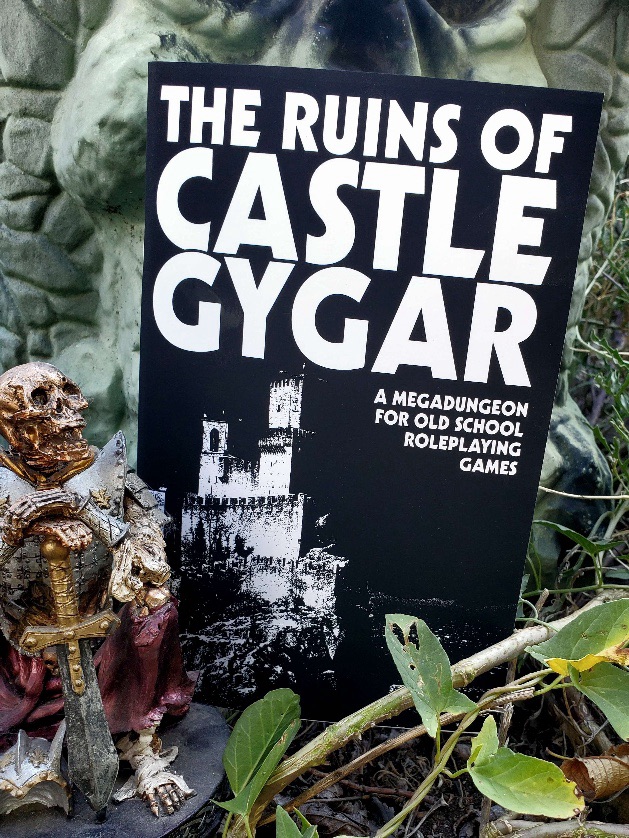
The Ruins of Castle Gygar is a 64 page megadungeon by Onslaught Six with art by Brandon Yu, for Old School Essentials. This is a pure dungeon crawl, unbeholden to any plot or external hooks. Stripped right down to basics. The intent here is to place this at the center of your campaign and spend most of your time here. It’s also the first Dungeon 23 megadungeon I’ve seen in print.
This module is terse. The most exposition we get is a column on the inside cover, with only a paragraph of explanation of each level when they come, and aside from that, the key starts on page 4 after procedures and unique monster types are detailed. Then we get an entire book of keying, often 10 rooms to a page, except for the very back which is a 2 page bestiary (mainly the random encounters — everything else is in-key), details on the trading sequence (I’ll get back to that), and a unique random encounter table for each level. No hooks, no rumours — If you want a hook, I’d pick something out of the trading sequence — although that may be disruptive, potentially, in the long term.
Layout is very low on white space, and highly information dense. Minimal margins, locations detailed on the bottom of each page with the number. Text is on an all black background for rooms in darkness, and black header with clear background for rooms that are lit. The same convention is used for the maps, which is neat. Highlighting is kept for only NPCs, treasure, and references to other rooms. Greyed out sections are stat blocks, for differentiating columns in tables, and very occasionally for information that might belong in a sidebar. There’s not a lot of art, but what’s here is good, monochrome line art in the spirit of the early megadungeons this is an homage to. I love Brandon Yu’s work here, but it isn’t the star of the book — the key is.
This hyper-dense layout wouldn’t work for me at all, if the text sprawled, but it doesn’t: It’s terse to a fault. Empty rooms are a single sentence: “A single candle illuminates a simple altar to the God of the Earth.”, and longer keys are workmanlike. Any additional description almost always speaks to the intentions of the inhabitants: “A small plaque reveals that the Medusa Queen believes this to be her husband.”, “Defeating him causes all Demons to become friendly, out of respect.” or to interactions with the room and its puzzles. This keying is about as minimal as it can be while retaining content, to be honest. What it doesn’t manage to maintain — and I think this is a conscious choice to keep things as tight as possible — is a really high level of connectivity and clarity. For example, there’s no section summarising the factions and how they act: You need to surmise this from the text, and the text is pretty obtuse regarding, say, what the Medusa Queen wants. I think that spending a little more time on making clear the agendas or needs of the many, many factions (aside from those participating in the trading sequence) would make play a little more compelling. This dungeon is old-school in the sense that this is intended to emerge organically, rather than intentionally. I suspect it will, too, particularly with persistent use of a reaction roll.
There are 12 levels in this megadungeon, connected in a loop such that in effect there are 2, 5 level dungeons in parallel with each other, with a climactic final pair of levels. I think that the overall macro-dungeon design could be more interesting — particularly as you get deeper, it would be really cool to find shortcuts — “I can skip through level 3 to get to 6, then to 10 once I have the chaos emerald”, but alas this opportunity isn’t taken. You’re incentivised to explore, though, through the trading sequence. There’s a few unique levels — a hex crawl, a non-euclidean level — but the maps of the upper levels feel like they got more attention in terms of being separated into distinct spaces, where the lower levels feel too looped and more like collections of rooms generated automatically, than bespoke spaces. Especially in a large space like this, having distinct sub-spaces helps with navigation and inference, turning the entire dungeon into a puzzle of exploration, making the whole greater than the sum of its parts.
The one significant piece of really intentional relational design is the aforementioned trading sequence. It’s is a really cool alternative to a meta-plot here, based on the video game Links’ Awakening — this whole trading sequence of 11 items is really long and a fun way to incentivise exploration — each item is on a different level — as you get bonus stuff along the route, and meet a bunch of NPCs. The main flaw here is that most of the NPCs on the list don’t know where their item is, and the levels aren’t really “in order” due to the spilt, which means these might end up being less purposeful and more “ooh! they were looking for something like this!”; they also don’t indicate rewards, which makes sense in a way: Why would I bother doing the petrified meat quest, unless I knew Rufus would trade me for a crystal ball? I think that more large spaces would benefit from this kind of overtly gamey trading sequence, to be honest, as it’s a fairly low effort way to increase interactivity and provide additional hooks within the dungeon, but I think that more clarity about what the NPCs know and have to offer would help with direction.
Overall, this is pretty special module, I think. It fits a whole megadungeon into a 64 page zine — a hell of an achievement. What that means, is that in a thin zine you can run years of gameplay. As a minimalist, traditionalist take on an old school style of play, this is one of the best I’ve seen. It’s missing some faction and interrelational aspects I normally appreciate in these kind of dungeons, but it makes up for it in easy of play and potential for emergent play. I’m reading this digitally, but I understand this is being published as a zine: I have some reservations there, but mainly because this contains so much play time I suspect a zine isn’t sturdy enough, and it probably needs to be a properly bound book to last the amount of play it offers. But if my main concern here is “oh no, the book will get so much play it might destroy the book”, I’m nitpicking. If you’re after low impact, old-school group week after week, The Ruins of Castle Gygar is a very low impact, easy to run, easy to carry megadungeon that will provide a year of weekly entertainment at least.
In 2025 I’m reviewing zungeon zines. They’re stream of consciousness and unedited critiques, just like Bathtub Reviews, but they’ll be a little briefer. The goal here is a little different: I want to spotlight what a craft-based, just-do-it approach to module writing can do.
Spell Shrine Pit is a 15 page “spell shrine” by Zak Hamer for Cairn 2e. A spell shrine is the home of 1 of the 100 spells in the Cairn 2e rulebook — Hamer, in a fun gesture, suggests that the community make more of them. You venture into the dungeon in order to claim the spell, Pit.
Starting with a description of spell shrines and how they might fit in your campaign, quickly the equivalent of hooks and rumours are described — these are slight, focusing on “something is amiss”, because the intent is that you’d be heading to the shrine for the purpose of gaining the spell, rather than being drawn there for other reasons. The framing here is explicitly intended to be like shrines from Breath of the Wild: The players seek them out, explicitly to expand their powers. This makes it hard to criticise the lack of juicy hooks or impactful rumours; the context minimises the need for them. In this context, the fact that the presence of the shrine impacts the region around it means that these changes act — along with rumours — as foreshadowing and clues a spell shrine might be present. If 100 spells shrines were present in a campaign, this foreshadowing would be both a puzzle and a lure after the first few. Very satisfying.
Keys are very clear, and most of the rooms have an interactive element t in them. The writing is workmanlike.
Thematically, I feel like a shrine related to a spell would be a little weirder. This one is effectively a tunnel, dug by spell, a context in which I don’t quite understand the presence of wooden doors or mechanisms. Especially, in the context of the unique creature which are pretty weird and flavourful — I feel the dungeon should’ve reflected them a little more. I don’t quite understand the combination of choices, but they’re also muted enough that it seems like it’s supposed to make sense. I think a brief paragraph explaining what’s going on in the shrine would help me.
Layout is solid — clear headings consistent highlighting, a cute hand-drawn map, public domain art. Perfect balance of DIY and legibility in a zungeon.
Overall, though, while Spell Shrine Pit isn’t a really strong dungeon in isolation, the concept here absolutely is a strong one. In the context of 99 other Spell Shrines, the complexity and depth of individual shrines becomes less important, and the context of other shrines, finding them in the campaign, and the fight for their contents becomes far more important. I think that if any other zungeon writers are stuck for a concept, they should as Hamer suggests steal a spell shrine as a concept and add to this. If the community managed to make 100 spell shrines this year, that’s an overworld campaign well worth running. For that reason alone, I think it’s worth checking out Spell Shrine Pit. It’s just one part of a concept that’s more than the sum of its parts, but that concept is a powerful one.
Bathtub Reviews are an excuse for me to read modules a little more closely. I’m doing them to critique a wide range of modules from the perspective of my own table and to learn for my own module design. They’re stream of consciousness and unedited critiques. I’m writing them on my phone in the bath.
Tiny Fables is a 59 page adventure collection written and illustrated by Josiah Moore for Mausritter. I backed it on Kickstarter for Zinequest. In it you’ll find a sandbox adventure inspired by folk and fairytales, including a village, the haunted forest, and five separate adventuring locations.
I’m going to open with: Moore kicks the graphic design, informational design, and art absolutely out of the park. It’s mostly illustrated in a digital linocut style, but where it deviates from that (for example the maps), it makes up for it with a consistent lovely single colour highlight. This forest green highlight is the only colour used aside from a little pink on the cover, I think. The same colour is used for specific text highlights, but sparingly. I adore this selective use of colour, but because it’s close to perfect, the inconsistencies — maps switching key colours for example — really stand out to me. The layout is a crisp two columns. It’s smartly mainly 1 location to a column, although in a few places this rule is broken, but very clearly signalled by changes in heading and decoration. In text signally is very clear, using bolding primarily to signify interest, and underlining and italics only in small measures. Colour and font are used to distinguish other elements like stat blocks. Bullets are used sparingly and well. Maps are all visually distinct and clear, although a few locations on some aren’t keyed which rubs me the wrong way, This isn’t keyed in the Mausritter house style, and while the influence of Gavin Norman’s layouts are apparent, it’s a much stronger version of that approach. Honestly, I think visually and informationally, this is one of the strongest modules I’ve read.
Does it hold up in terms of content? I think so. It opens with a tight frame, which is my favourite way of opening a module — the mice are in Thimblewood Village and introduced to the major mystery immediately, then left to the sandbox. Hooks are provided for the 5 major locations, in the case that the mice need further prompting, This is all on the first page, along with an (I think unnecessary for someone running Mausritter) intro to the playstyle. Great start, although I’d prefer even tighter framing — here they suggest you pick an NPC rather than give you specifically a mayor; they could suggest one perhaps? There are 4 factions elaborated in the classic Mausritter style, and an events timetable keeps things interesting and dynamic — there’s enough events for this to play out over I’d guess 10 sessions, although depending on the pace your players take, it may stretch further. I love that these culminate in very big climaxes — 2 are large scale battles, putting the warband rules on the cards, the other two are unleashing fearsome creatures, which will further incite adventure rather than end it. I should mention that in here is also a page on recent and distant history. This is fine, I guess. A full page feels too much, and it’s prose largely, although it’s formatted well to find key points, just as the key is.
Then, with little ado, we hit the locations proper. Thimblewood Village is a simple 8 location village, although the map has a few intriguing unkeyed locations — who lives in the shoe, Moore??? — Each location is really concrete in a great way. It focuses on characters, real ways to make the characters unique in play, and things like menus and local quirks. Some of them have a key problem to be solved as well, clearly displayed. There are 5 problems in 8 locations — decent hooks that both give the players something to do and link them to the larger story immediately. And they’re petty creatures — they have gossip and dislike each other for no good reason, or crush. And we have rumours, encounters and a few hirelings, all of which also provide hooks to the mystery. It’s good stuff. Overall, this is one of the better towns I’ve read lately. It puts me in mind of a far more practical and interesting version of the succinct village in A Wizard. I rarely get excited for a town, but boy, this is close to the perfect village for me.
The forest is a point crawl, with its own travel rules, that changes day to night significantly. It contains 14 locations, 5 of those being the major adventure locations. The first has basic day/night descriptors and a generator for small impressions of sensations which is great, although not too unique, and doesn’t tie into any small subtleties — the smell of campfire smoke here doesn’t tie into a particular place or encounter for example. I feel it would’ve been stronger had this been incorporated into the encounter tables, so that some of these subtle signs could’ve been signs of something in particular. As is, it would help where an incidental, random sensation might derail the players, to point to where in the module it might connect to at a whim. There are 18 random encounters across day and night by — 9 of these are directly tied to locations and encounters in the forest. I’d love for some interconnection with the village as well there directly, but that’s a pretty exceptional density of connection. I really appreciate that the locations are numbered from the outset of the book to the end of the forest, however that breaks down in individual locations and it would keep up that specificity and usability had it continued on throughout the book.
The minor locations aren’t all consistently strong and gameable, although they have great flavour and contribute strongly to the overall aesthetics. I need a reason to break into the crabapple orchard, or to bother Boris the mole, or to assist the lost angry ghost! These all either have nothing to interact with, else there isn’t a good reason to interact with them. This pattern repeats throughout the minor locations. I’m torn with these — a lot of them do have little quests associated with them, but no intrinsic reason to engage with them. But, there’s a social contract where players should be looking for things to engage with. Irregardless of whether or not this is good design — I’m on the fence — I think it would be better design to have solid reasons to engage here — they’re preventing progression, there’s a clear reward or it changes the environment in a positive way.
There are five major locations, each of them being sufficient for a whole zine in itself. Heartache Lake is probably the biggest of the locations — a whole settlement with politics, unique factions, encounter tables and 16 sub-locations. It’s bigger and more engaging a village than the main village. The Tomb of Roses has a neat haunting mechanic, although the spatial design is a little too heavily looped for such a small dungeon in my opinion — jacquaysing too heavily in a small dungeon can render your players choices meaningless. Chulip’s Castle is a wizard trapped by his own magic — this should be a more common trope in my opinion. Wandering Cottage and Maw of Shadows are a little darker in their fairytale inspirations.
There are two things missing from the dungeons here. Firstly, are the lack of hallways and entryway information — for me it makes it much easier to run if I can give players information about exits at the drop of a hat, rather than having to figure out which room it is and intuit a sensation as a hint to make decisions on. Secondly, even in smaller dungeons, having at least characters if not factions with needs and desires that you can play off and make favourites of and interact with in more interesting ways would be valuable. Most of these dungeons are largely designed at a room to room level — well, I think, at that level — but there’s little cross-dungeon design, the most important of which for me is faction play.
Overall, the vibes here are impeccable. This feels fairytale, and everything from the locations and the encounters to the incidental moments to the politics in terms of the writing, the naming of the places and characters, the simple goals, and of course the art and embellishments all bring amazingly fairytale vibes. This is on par with the Valley of Flowers in terms of impeccable aesthetics.
Overall, while I haven’t heard of Josiah Moore before, this puts him solidly on my radar. We have a new triple threat emerging in module writing. There’s something about the united approach someone who is both artist and author can bring to a module, and it’s here in absolute spades. Josiah Moore is someone to keep an eye out for in the future.
As for Tiny Fables — if you’re running Mausritter, this is a no brainer. Buy it. This, in my esteem, the best release I’ve seen for Mausritter — it gives away the weakest aspects of the classic Mausritter formula for the strongest parts of the Old School Essentials formula. While it isn’t perfect, it’s pretty close. The fairytale vibe is not unknown in the large list of Mausritter modules, but this pulls it off impressively. Overall, this is one of those modules I’ll be poring over for ideas in how to make my future projects better. If the physical version had been a hardcover rather than a zine, I’d have upgraded my pledge in a microsecond — and I really hope for a hardcover re-release soon. The risk printed zine is available now in print and in digital.
When I was in middle school, I was really into progressive metal and industrial rock. I considered it “alternative”. It was never in the Billboard Top 50 and only played during special shows on the alternative radio stations! My best friend was into Alanis Morissette and Fiona Apple, which also was cool because nobody else I knew listened to them, even though they weren’t cool like my music was cool. But we listened to heartfelt, raw, real music. My other friend choreographed dances in his living room to Destiny’s Child (back when there was a discussion regarding who was the coolest Knowles sister). That wasn’t cool, because pop music was prefabricated and soulless. It wasn’t real music. And I wasn’t shy to tell him so. A quarter century later, I enjoy nostalgia-listening to The Fragile and Lateralus occasionally, but most of the time I’m listening to Sabrina Carpenter and Chappel Roan. Because I was wrong, and I was being a pretentious jackwagon. Of course pop music is real music.
I am not a player of the current, Hasbro-owned edition of Dungeons and Dragons. I don’t enjoy running it; playing it is fine. Hasbro are a dragon sitting on the hoard that is our hobby and we’d be better off without them. But regularly, I hear people saying that Dungeons and Dragons is a bad game, and that people who play Dungeons and Dragons are roleplaying wrong, often with the disclaimer that it’s a tactical combat game, not a roleplaying game. It reminds me of being in middle school again, because it’s just not true: Dungeons and Dragons is real roleplaying, and the people playing it are playing just fine. Pop music is real music.
The thing I think the people who say this are missing, is that in order to play a role, a roleplaying game generally scaffolds you in doing so; it provides you with a supporting framework. There are lots of ways to scaffold roleplaying, and some ways work better for some people. People who don’t think Dungeons and Dragons is “real” roleplaying or that the people playing it are “roleplaying wrong” or are “doing all the heavy lifting” are just people who benefit from scaffolding in a different way.
One way Dungeons and Dragons scaffolds is through character creation. You get to the end of the admittedly tedious process with “I’m an elf warlock who can cast eldritch blast and sleep who was once an acolyte”. Some people would prefer to be told that their character is gregarious, or well-muscled, or has a tenuous relationship with their ex-wife. But for most people, their elf warlock mirrors how they think about themselves: “I’m a nurse from the northern suburbs who drives a Polo and used to work at the Body Shop”. This is a really familiar scaffold for a lot of people. It also doesn’t work for a lot of people. Another way Dungeons and Dragons scaffolds is through alignment, which, stripped in 2024 of any mechanical effects, is now a framework for considering your character’s personal ethics, but along weirdly universal axes, with an emphasis on relative positioning. Most games, in fact, use multiple or secondary scaffolding approaches like this, which help different people roleplay in the game, if they don’t benefit from the primary approaches.
Every game scaffolds roleplaying in different ways, and none of them scaffold correctly for everyone.
One way Galactic 2nd Edition scaffolds roleplaying is through shared cultural understanding. It uses the shared cultural knowledge of Star Wars so that players implicitly know what their characters would do, how they would do it, when they need to do it. You know how Han Solo would act in this circumstance; you know what the Empire would do; you know how Yoda would act. Stewpot, a game where you play retired adventurers in a fantasy world, leverages instead the shared cultural knowledge of Dungeons and Dragons to scaffold roleplaying, which limits its appeal compared to Star Wars, but really gets its hooks into the fantasy roleplaying crowd in an unrivalled way.
Every game scaffolds roleplaying in different ways, and none of them scaffold correctly for everyone.
One way For the Queen scaffolds roleplaying is through differentiation. All the players begin as effectively the same character, a nameless member of the Queen’s retinue: a knight. But through the prompts, you differentiate yourself from each other, in your relationships with the Queen and in your pasts. It leaves empty space, and invites you to fill it however you want, but you can imagine how this might not work for the very same person who prefers scaffolding through occupational roles, or scaffolding through shared cultural knowledge.
Every game scaffolds roleplaying in different ways, and none of them scaffold correctly for everyone.
We can do this for many games: One way Primetime Adventures scaffolds roleplaying is through defining your characters primary issue, like self-respect, arrogance, or desire for vengeance. When you’re in a scene, you can always bring that primary issue to bear. You always know what to do. One way 10 Candles, Dread and Fiasco all scaffold roleplaying is through through story structure: They all use different ways to describe an inevitable unfolding, which assists you in making decisions about roleplaying that suit the story being told, because you know where in the story you are. One way Heart and Spire scaffold roleplaying is through their worldbuilding. They attach huge, notable and unique pieces of mythology to your characters from the first moment, and drive your characters towards a strange and compelling zenith. One way Yazeba’s Bed and Breakfast scaffolds roleplaying is through bingos and whoopsies, which describe ways in which your character always fully assets who they are, or ways things always go wrong. Another way it scaffolds roleplaying is through its pre-generated characters, each of which has unique mechanics and stay constant (although they of course evolve) despite being played by different players throughout the game. One way Agon scaffolds roleplaying is through building a mythic hero rather than a character. It does this through choosing epithets — you might be silver-tongued or lion-hearted. You’re a hero, and to the extent you’re a one-note melody. Another way it scaffolds roleplaying though, to bring harmony, is through the nature of your relationship to the divine, and which gods you have relationships with — daughter of Poseidon, for example.
Every game scaffolds roleplaying in different ways, and none of them scaffold correctly for everyone.
I stopped playing roleplaying games for about 15 years, and the first game I tried to run as an MC for my friends when I rediscovered them was Apocalypse World in around 2011. Apocalypse World in my opinion remains one of the best roleplaying games written, but it did absolutely nothing to scaffold our roleplaying experience. A primary way Apocalypse World scaffolds your roleplaying is using relationships: Your history with each other, with NPCs, and for some playbooks special moves that give you a biker gang or a holding. And developing these relationships and the world that connects them — done in a special, 0-session — was an absolute failure for our table. We looked at the playbook and thought we were seeing a list of verbs, like Dungeons & Dragons’ proficiencies or the buttons in a videogame, and we had absolutely no fun. We had no idea what to do with ourselves. It was a disaster. Apocalypse World’s scaffolding did not work for us at all, at the time.
When 2014 came around, though, we all had no trouble playing Dungeons & Dragons (then known as 5th edition) for the first time, though, or roleplaying when we did. We understood the characterization scaffolds, we had cultural understanding because of contemporary cultural touchstones like Community, video game RPGs that grew in Dungeons & Dragons’ shadow, and the Adventure Zone. That anecdote is not, from discussions with other people in the hobby, unique, although plenty of people do have different experiences. My point here is not that D&D 2014 is better than Apocalypse World; it’s that every game scaffolds roleplaying in different ways, and none of them scaffold correctly for everyone. Maybe For The Queen is the right amount and type of scaffolding for you or your table. Maybe what Pathfinder or Ghost Court provides is right for you.
There’s no right or wrong here. There’s no right way to play, or wrong way to play. There’s no wrong game, or right game, except for your individual table. There are no shoulds. There are no vast swathes of the tabletop gaming population playing their game wrong. Pick the game that best helps your table play, and let others pick theirs without judgement. Dungeons and Dragons, and solo RPGs, and OSR games, are all real roleplaying games and the players playing them are doing real roleplaying, even if their preferences are different from yours.
If you think someone else is roleplaying wrong, or their game isn’t providing any roleplaying support, you’re missing the point: Different games support roleplaying in different ways, and even though they don’t scaffold correctly for you, they’re probably scaffolding well for someone else. I’d encourage you to think about how that game you love, or that game you don’t love, or this new game that is surprising you, scaffolds roleplaying. Think about what other games approach it similarly. Think about how this changes how people might interact with the game. Think about why it works, or doesn’t work for you, and why it might work for other people if it doesn’t. And if you’ve got any other interesting approaches to scaffolding to share, please drop it in the comments: I’d love to hear how you think Bluebeards Bride or Cairn 2nd Edition or your new, unique game scaffolds roleplaying.
And I hope we see less judgement for people who need different types of support for roleplaying than we do.
Idle Cartulary
P.S. Thanks to Jay Dragon, Amanda P., Dwiz and Sam Dunnewold for their assistance with clarifying my thesis and identifying or describing some of the scaffolds more clearly.
Bathtub Reviews are an excuse for me to read modules a little more closely. I’m doing them to critique a wide range of modules from the perspective of my own table and to learn for my own module design. They’re stream of consciousness and unedited critiques. I’m writing them on my phone in the bath.
The Stragglers is an 8 page module for Mausritter by Norgad. In it, a mine is abandoned after a sentient geode begins to devour its resources, and is infested with evil spiders.
The Stragglers is dense. In its 8 pages are 20 keyed locations, hooks, 2 random encounter tables, 3 treasure tables, 5 star blocks and 3 maps. It’s honestly remarkable that Norgad fit this much into so little space. So, what suffered for this density?
Not much. It’s admirably brief: Locations have 1 sentence descriptions, with any further description being bulleted to points of interest. Exits are described in a way that makes for pleasing choice-making. This self-imposed limitation means we have nocomplex rooms, but Mausritter doesn’t thrive in complexity of this kind in my experience. Because of the brevity, I think it would benefit from the kind of keying used in my Curse of Mizzling Grove or Beyond the Pale (I first saw it in Nightwick Abbey); it’s easy to lose track of why a part of a key is important.
Some of the descriptions are so succinct and usable I’m jealous I didn’t write them: “Opportunistic hunter. Completely blind.”; “Facsimile of a mouse. Can’t quite get the eyes right.”, but sadly much of the time they’re just succinct, and the description doesn’t give me the same degree of implicit play. I think this module — and other modules like it that lean hard into brevity, would benefit from an editing pass that looks at how their descriptions are immediately useful to the players: “Bowing floor” and “fragments of metal embedded in the walls” find immediate use and impact, as well as being memorable descriptions, but they are not common enough here.
The layout is simple and clear. There are creative flourishes like the placement of the encounter tables. Headings are clear; colour gets simple and powerful use. Art and maps are simple but striking; the dungeon map is cute, clear and has just enough detail to be charming and usable. Simple but good. It couldn’t be much better in a 4 page zine, to be honest, given the density.
Overall, the Stragglers is a worthy addition to the queue of Mausritter modules to play with my kids. The reason for the kids proviso, is that the issue with the Mausritter house style (which, while this doesn’t adhere to, it adapts closely) is that it limits the complexity and interest available, as I recently discussed in my review of Whiskers in the Wind. This makes it perfect for low impact one-shots and games for kids, but less ideal for larger scale campaigns or more puzzle oriented players, in my experience. It’s a limitation of the format, but within those limitations, the Stragglers excels. I’ll print off the Stragglers and add it to the box containing the Estate and Honey in the Rafters.
Bathtub Reviews are an excuse for me to read modules a little more closely. I’m doing them to critique a wide range of modules from the perspective of my own table and to learn for my own module design. They’re stream of consciousness and unedited critiques. I’m writing them on my phone in the bath.
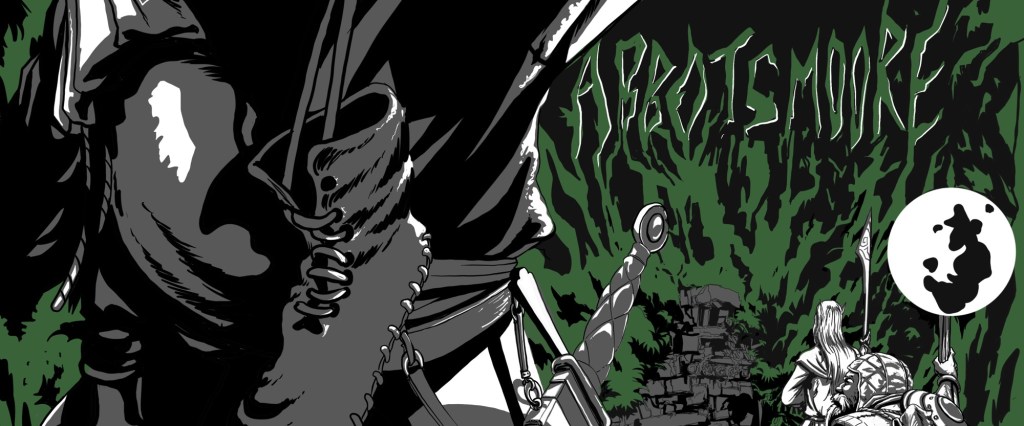
Abbotsmoore is a 25 page system agnostic hexcrawl by Stuart Watkinson, creator of the exceptional but flawed Largshire. Art is by Kiril Tchangov. If you want to see what Largshire looks like when focused in on specific adventuring locations, Abbotsmoore is what you’re in the market for. In it, you search a bog for hidden treasures from the distant past; over it all, a cathedral looms, in which lives an Abbot you have a special interest in. It’s the first part of the Abbot Trilogy, linking to two other modules that crowdfunded simultaneously — Steelhollow and Bitterpeak, by the same team. I will get to reviewing these as well, in time.
The hooks here in the opening all tie directly into the Abbot, limiting the scope of the module to a degree. I like a tight frame, but my primary issue here is that if each player were to roll on this table, they’d all just want something different from the Abbot. What would be more interesting is to put them in conflict with each other: Why not have a player working for the church that want the Abbot removed; or have these requests be at odds with each other. Conflict, ethical or otherwise, is fuel for interesting play.
Watkinson continues to write with a cozy flair: “A pair of compasses that point towards each other.”, “The silence is painful.”, “A terrible wailing can be heard echoing through the passageways. The Abbot is crying.” The writing is just all round lovely, and interesting and for the most part gameable, just like Largshire.
The bulk of Abbotsmoore are 7 small ruins, that litter the bog. These are filled with small puzzles, with clues and many other small relationships interlinking them. These are pretty cool, although I wonder if the linkages will be obvious enough to players. The Cathedral itself focuses on the Abbot as a core character not just in Abbotsmoore but in the trilogy — but here, he largely serves as a quest giver, despite his goals being to do something unclear to an ancient and seemingly evil god. I suspect there is something being held back for the other two modules in the trilogy, but here it’s unclear why exactly the players would ally themselves with someone who seems so suspicious, particularly when he’s very vague about what his gifts will be (they’re all nasty-themed magical items, but for the final gift, a tattoo that allows the Abbot to call for them).
I think to make the Abbot work, you’d either have to prepare your party for working with a villain in your preamble to offering this up, or you’d have to prepare to lay it on thick with his being good — make it saccharine, recast the rat-folk as clearly happy rather than cowed creatures, and make it all round more of a case of deception than the party working for someone who appears soundly evil. As is, without preamble, I think you’d short change the module because they’re going to assume he’s a villain and either scheme against him or outright refuse to interact with him. I think recognising this potentiality in the text would make it stronger, particularly by planting other seeds for the two sister modules and for reasons to seek those items in Abbotsmoore in the case the party are opposed or have killed the Abbot. This could actually be a far more interesting option — the Abbot’s library, or perhaps even communion with the unnamed god itself, could be as compelling as the Abbot himself.
In retrospect, it feels remiss to review this separately from its’ sister modules, as some of my complaints here will likely be satisfied in one or the other of them, and in the context of the larger picture, gaps are a blessing rather than a curse. Abbotsmoore is, however, a lovely module in and of itself — beautifully written, with a fun multiple microdungeon structure, and a striking main character. Watkinson’s writing is a pleasure, and any table would enjoy a few sessions of this.
In 2025 I’m reviewing zungeon zines. They’re stream of consciousness and unedited critiques, just like Bathtub Reviews, but they’ll be a little briefer. The goal here is a little different: I want to spotlight what a craft-based, just-do-it approach to module writing can do.
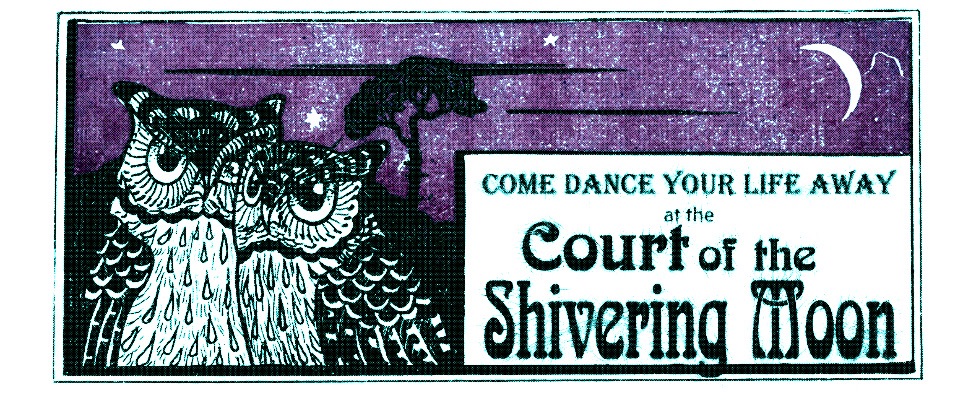
I’m starting with layout, because like a few weeks ago’s Tavurchower, this feels like a lovingly slapped together zine, collaged out of public domain art, pasted-in text, hand-drawn details, and I think illustrations by Mrs Platypus. It’s gorgeous, if accordingly busy, but cleverly structured are kept consistent between contributors and spaces, so it’s still pretty easy to navigate despite being so eclectic, as each room is unique in its aesthetics, while remaining monochrome xerox collage in theme. Each room, is even signed. Lovely work, filled with love.
It’s a small dungeon, but consists two loops which is a nice structure for such a small space. Random encounters are keyed to specific locations, which makes for my favourite type of random encounters, and makes the space feel lived in and dynamic. The rumours are used mainly as window-dressing — they’re all very cryptic, and hence while it suits the space, they aren’t likely to impact play a lot. The hooks are juicier, making your delve into the hall really specific, and they’ll change your focus in the space really pleasingly. I really like the random detritus and graffiti, although some of it is pretty essential to future problem-solving (for example, help solve the puzzles in The Great Hall), so it would’ve been better had it been proscribed in rooms or something.
The creativity in these rooms is exceptional: People are turned inside out, flatworms dance, and more. It shows that every contributor was bringing their A-game, and despite that it’s surprisingly thematically consistent. And it doesn’t overdo it, either: While most of the rooms are interesting, actually puzzles and hostile encounters are appropriately spread out. It’s wall-to-wall bangers. Keep that in mind, though: It could be a lot, if you were running it all at once. Information overload! The main negative I see is that it tends towards the adventure tourism or scene-based design, which means the NPCs are cooked up with ways to interact with each other across rooms, or make demands or negotiations with you, right off the bat. I could see the Shifting Knight, Lady Moon, or the Mole Man all becoming really compelling characters throughout this dungeon, or even beyond, though, so if you’re willing to prepare or improv, this is a hell of a diving board to leap off.
I’m super impressed by the cohesiveness of this collaborative effort. I’ve spoken before about how it’s challenging to bring a collaborative dungeon together in a cohesive whole, and while this is a fairly small dungeon example, it’s exciting to see that it’s possible. This is an incredibly dense dungeon, that will likely take 2-3 sessions to get through. It’s got some borderline uncomfortable, twisted otherworldly vibes, but it’s free, so you can have a read to see if your table would vibe it. More importantly these rooms are really something a good improvising referee can luxuriate in, particularly if you’re into scene-based play. If that all sounds like something that suits your style or table, Court of the Shivering Moon is worth a look see, in my opinion.
I Read Games reviews are me reading games when I have nothing better to do, like read a module or write or play a game. I don’t seriously believe that I can judge a game without playing it, usually a lot, so I don’t take these very seriously. But I can talk about its choices and whether or not it gets me excited about bringing it to the table.
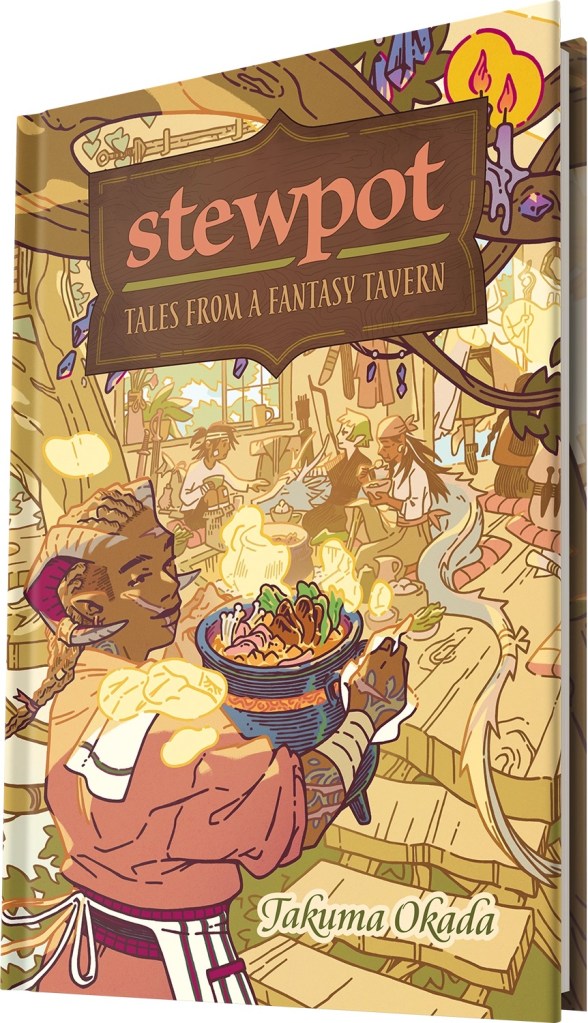
My kids are playing at an adventure playground at the beach, and I came prepared with my new copy of Stewpot, so I decided to read it, finally, underneath this macadamia tree. Stewpot is a 146 page game by Takuma Okada, based on the framework of Mobile Frame Zero: Firebrands. In it, you and your friends create retired adventurers, and together settle down as the co-owners of a fantasy tavern in a fantasy town. The edition I’m reviewing is the new, definitive Evil Hat version,
Today up, we have tavern creation, as simple as name, environment (city or wilderness), look and a few ratings which affect the upcoming minigames. Character creation is also a straightforward affair: A name and a look, an adventurer job (i.e. class), and three associated experiences, and a job around town. The meatiest of these are the adventure experiences, such as “Taunt: Draw enemies towards you” or “Adder’s Fangs Deadly poisons and their antidotes”. My problem here, is that these don’t really result in a character or a setting with a lot of hooks. The character you get is the most rudimentary description a new 5th edition player gives: “oh I’m Kash the Tiefling Warlock, my patron is Bhaal and I have Eldritch Blast”. For the setting, it relies entirely on the table spontaneously coming up with something together, either now, or more likely during play. For me, that’s simply not enough. Here, Stewpot is trying too hard, I think, to rely on and embody the generic Faerunian fantasy that has been so popular since 2014, and in its reluctance to be weird and specific, loses some of its’ edge. The goals, though, are admirable: It’s trying to leave space for these characters to be developed retroactively.
The structure here is simple: Play a “starter” minigame, followed by as many minigames as you wish (taking turns), followed by a “finisher” minigame. The only restriction is that you must choose a specific minigame, accompanied by a break to stretch and eat, every three other minigames. These minigames range from mechanically unique and with a degree of complexity, to completely freeform with few prompts. There are 20 games, although 3 of them have roles prescribed by the rules. Otherwise — in a nice touch — you simply choose what you want to play on your turn, guided by the icons which tell you if a game is freeform, if it’s mechanical, if it upgrades your tavern, or if it’s a good game to start with. Those icons are a clever piece of work in my opinion because they both capture the needs of types of players interested in playing the game, but also make choosint a game — out of 18, remember — much easier, particularly when you’re not (yet) familiar with them. That said, I really wish there were other ways of choosing — as simple as numbering them 1 to 20 and allowing people to choose them randomly if they’re stumped or either don’t have a sense for their developing narrative, or are uninterested in directing their own story. It would be more in the spirit of the game that inspired it, to be honest.
The bulk of the book is, of course, the descriptions and rules for this massive number of minigames. I love these — they are thoughtful, plentiful, and run the gamut of potential ideas for the kind of story you’d expect to tell for a story of this type, as well as catering for a range of different player types at the table. Without going into depth, it’s hard to describe them briefly, suffice it to say that here Okada really nails the brief. The primary criticism, if you could call it that, is that while there’s an icon for “freeform roleplay”, that icon appears on 17 of the 20 minigames — so for people who are reluctant to freeform roleplay, there’s not a lot of room for easing them into this Stewpot. The first minigame, “The First Step”, is entirely freeform — you just describe a scene — with nothing but your character sheet and discussions regarding the nature of your tavern and town to guide you. This could be a deep dive for a lot of people, and I’d have loved more consideration for those people here in getting their toes wet. There’s something to be said here as well, about the quality of the prompts, something I spoke about at length in multiple reviews over the month of December last year. This reminds me a lot of Expect Three Visitors — it depends heavily on the players’ existing knowledge of D&D and other roleplaying tropes, and relies heavily on examples, rather than investing as heavily as it could in clearer or more complex prompts. I think more complexity in the prompts would be very, very welcome, over and above the lists of examples.
The book is gorgeous, though. The art, featuring a plethora of artists, has an imagination that the text often lacks, and as such supplements the vanilla fantasy of the text with much-needed weirdness: Inns on turtle-back, or undersea mermaid inns, Bear-adventurers, Mouse-wizards, blademasters slicing kraken sushi, and lots and lots of delicious meals. The art couldn’t really be better — it brings cosy, and brings it hard. The layout is gorgeous, ornate, and fully decorated, and has lots of space, rendering it very legible. To be honest, the amount of white space is too generous for me, often splitting up lists and concepts across spreads and page-turns, which would be more legible given less space. The leading here is generous at the body text level, but in headings and lists it is often 200% or more, which, in a book presented in single column, makes me wonder if it was intentionally padded out to make the page count more book-worthy (this impression is worsened by the 20 pages of recipes in the back of the book, although they claim to be a stretch goal). I’m sure Evil Hat knows publishing better than me, but I’d have preferred a slimmer book if bulking it up comes at the deficit of legibility.
The core conceit — a fantasy tavern — is a gorgeous, immediately evocative one to those of us with a long history with Dungeons and Dragons and its related literature, immediately evoking to me the Inn of the Last Home, and many other such tropes. There are, too, so few opportunities to play characters with experience and the maturity that comes age, with these characters generally being relegated to mentor and quest-giver roles in fantasy stories. Giving these characters centre stage, and the associated freedom of improvisation that a lifetime of remembrances brings, is just so compelling as a baseline for a game. I’m sold instantly.
But my feelings are complicated. Stewpot was one of the first indie games I ever played, using it as an epilogue to a 5th edition campaign back when I played that weekly, well before the release of this new Evil Hat edition. It feels like I’ve been waiting for this edition to come out for maybe 5 years? There’s a world of differences between my perspectives then and now, though. We came to the game with a bunch of strongly differentiated characters, each with an existing history, although many of it unexplored, and an existing world. Stewpot, in that context, was an expansion of and a loving dedication to the characters we’d spent 18 months with (perhaps more? it’s been a while), completed not long after the pandemic began. But now, with two kids and most of my friends in the same life phase, a regular game is no longer a part of my life. I play pick-up, with short term, disposable player characters, a range of players coming and going, and little long-term development of them. The character creation provided here is intentionally sparse — it’s designed to leave open spaces to fill in through games like Sidequest, AFleeting Moment, or A Bard’s Tale — but I fear for many people it requires too great a leap, to get to the character from the creation process, which effectively amounts to “I’m a wizard with fireball”. You can consider Stewpot a game of character creation, and from that perspective, I think it leaves all the right gaps. But right now in my life — and noting that 5 or more years ago I felt differently, so you may feel differently now — I’d like more support, of the kind that was provided to me through the play of an additional campaign, to provide background.
My complaint here, in a way, could be considered a complaint about Firebrands-framework games. Both the King is Dead and Firebrands expect a similar amount of improvisation; you build the world, and your character, simultaneously. I can’t imagine too many players of Firebrands actually played Mobile Frame Zero for the worldbuilding, before they picked up Firebrands. If you consider the support around those two games, Stewpot is a far more supportive game: twice as many minigames as either of those, with a premise that banks on lifetimes of shared experiences playing Dungeons & Dragons or thousands of hours of watching Critical Role. The menu-of-minigames structure is a clever one, and fruitful I think, but I wonder what it would look like if it leant more into the specificity of setting than it already does.
Overall, Stewpot is a masterpiece, but only for the right table: One comfortable with freeform roleplaying, easy improvisers — a table full of referees or theatre kids. For most players, though, it doesn’t scaffold enough to make play easy — these are the players for whom using this game as an epilogue for existing characters is ideal, as the previous campaign would provide that scaffolding. What it is not, is a way to ease players uncomfortable with silence and a blank slate into free-form roleplay. But if, like me, you’re hooked by the conceit immediately: Just buy Stewpot already, and figure out how to make it work for your table, because it’s one of the cosiest fantasy games I’ve played.
I use affiliate links where I can, to keep reviewing sustainable! Please click them if you’re considering buying something I’ve reviewed! Want to know more?
Have a module, adventure or supplement you’d like me to review? Read my review policy here, and then email me at idle dot cartulary at gmail dot com, or direct message me on Discord!





 Playful Void