• Bathtub Review: Chariot of the Gods

    Bathtub Reviews are an excuse for me to read modules a little more closely. I’m doing them to critique well-regarded modules from the perspective of my own table and to learn for my own module design. They’re stream of consciousness and unedited harsh critiques. I’m writing them on my phone in the bath.

    Chariot of the Gods is a 52 page module for Alien RPG by Andrew E.C. Gaska. It was recommended to me after my disappointed read through of Alien RPG a while back, as a fun player versus player module that benefited from the quirks of the system. Ever bound by the conflict-averse desire to be even-handed, I added it to my review queue. It’s sold as a pretty typical “there’s a distress call and there are horrifying monsters there” module (I don’t hate it, excellent trope), as an introductory module, and as something playable in one session despite the page count.

    Let’s start with the obvious: The graphic design is the same illegible, sparse Prometheus-lite of the core book. I really don’t like it, and it tires my eyes both digitally (as I’m reading this) or in print format (how I read the core book). It also explains the page count; a Mothership module could have fit this into a zine half the size, I suspect. I won’t go into detail here, as I already did that for the core book and you can refer to that for my concerns.

    The module has pregenerated characters with secret agendas that change for each “act”. I quite like pregenerated characters, particularly when they create interpersonal conflict if the players are keen for that (I’ve written about this before). My initial response to changing with the “act” of the module you’re in was hackles up, but it is actually analogous to an event table: When certain events occur, a bunch of possible new events open up, and new agendas relate to these events. As with everything in this module, this is presented in the most clumsy way possible, but you could present it as a neat three-part table and it would be right at home in a Mothership module. Structurally it’s a bit weird, because those agendas and the acts are described at the end of the module, which feels contrary to how central they are to the changing character dynamics which are pretty neat and honestly the selling point of the module.

    The keying of the ship itself are exactly what I expected: Overly wordy, difficult to navigate, inconsistently laid out. There are only 28 rooms in this dungeon, but they would get a lot of use over the three developing acts, and I expect the plan is for the players to gain familiarity with the space in act 1, and then use it against each other and their enemies on act 2 and 3. Clever, then, to keep it relatively compact. Its undermined, somewhat, by spreading the maps over 4 pages and not signally clearly different rooms (some are boxed separately, some aren’t? not sure why?). The descriptions are functional and uninteresting, and given how cliched the location is (not a bad thing for an introductory module), largely redundant. It’s not a dungeon to crawl through, though, it’s an arena to fight in. It is an interesting, manipulatable environment to that end.

    To some degree, colour me impressed. This is a fun, surprisingly complex and compelling module. I’d definitely run this, if it was vaguely legible. I literally couldn’t wayfind in this module without a huge amount of work. It would be the same amount of work if I were just to adapt the whole thing for Mothership, a system I prefer, with a cohesive and legible graphic design direction that I don’t have trouble reading, and I could easily do it in a third of the space. But, it’s a compelling enough module that I’m tempted to do that (if nobody already has). If you actually do run Alien RPG (if so, sorry about how much I dislike it), this is a hell of a fun thing to run for it, excellent first movie vibes, with a lot of backstabbing and body horror.

    Idle Cartulary


    Playful Void is a production of Idle Cartulary. If you liked this article, please consider liking, sharing, and subscribing to the Idle Digest Newsletter. If you want to support Idle Cartulary continuing to provide Bathtub Reviews, I Read Reviews, and Dungeon Regular, please consider a one-off donation or becoming a regular supporter of Idle Cartulary on Ko-fi.

  • I Read Rogue Trader (1987)

    I Read Games reviews are me reading games when I have nothing better to do, like read a module or write or play a game. I don’t seriously believe that I can judge a game without playing it, usually a lot, so I don’t take these very seriously. But I can talk about its choices and whether or not it gets me excited about bringing it to the table.

    Elephant in the room: Rogue Trader isn’t a roleplaying game. Kind of. At least, the future versions of the game definitely aren’t a roleplaying game: The 2nd edition was called Warhammer 40, 000, and the 10th edition is the most popular war game in the world. Published in 1987, written by Rick Priestly, the almost 300 page Rogue Trader, though, is a bizarre beast, focused not on army lists, but on individual “personalities” and their accompanying units, and has equipment lists, and revolves around the players being Rogue Traders, basically state sponsored privateers from the Ages of Sail. Roleplaying games as we know it emerged from war gaming, and in Rogue Trader, you can kind of see the roleplaying game devolving back into a war game. But it represents an interesting direction that roleplaying games could’ve taken, that I’m kind of taken by.

    The book is clearly aimed at combat, but it’s also intentionally vague on the matter: When I got to the last section in combat, I was thoroughly convinced this was a skirmish-sized combat game, that used a referee. Not until the section on player characters, “idealistic, young, inexperienced adventurers” in “adventures in which all of the players are on the same side – fighting opponents controlled by the GM.”, did I see the only mention of the “mass combat, battle and large scale carnage” that is now characteristic of the game; in fact later in the equipment section, it explicitly describes itself as a skirmish game about “clashes of small bodies of troops”. A solid quarter of these rules are dedicated to player characters in this solo hero style of play. And finally, the third of the book that is purely lore feels scarcely engaged with the idea of war at all, and is mainly setting up an arena for faction play, in a very interesting fiction-forward way.

    In that spirit I’ll be reading the game with that roleplaying adventure game in mind, rather than what eventuated, a bourgeois mass combat war game with a focus on scale and absurdly expensive miniatures. And I’m doing it with little to no knowledge of the Warhammer 40, 000 universe, aside from what I remember from playing Space Crusade and the Amiga Space Hulk videogame as a kid. I know there are six-armed aliens and paladins in mechanical armour, and very little else.

    Basically sci-fi Heroquest, and the extent of my experience with Warhammer 40k.

    I’ll start with the section on playing heroes, which isn’t at the start. It’s explicitly intended to be simpler than Warhammer Fantasy Roleplay, the first edition of which was released the year before, but the reference to this is meant to imply that this mode of play is similar to that game, i.e. roleplay. Hero characters can be in charge of a unit, but it isn’t considered important in the game, i.e. they have what is known in the AD&D of the time as henchmen. Hero characters are mostly stronger than base units, level up, and are more likely to have mutations and psionics powers (which we’ll learn later, means likely to encounter relevance of the God-emperor). In this mode of play, those twists are random and reserved for heroes and enemy personalities. This gives a picture of a role playing game that features skirmish scale combat — 2 players, their hero and their hero’s unit, against the referee, participating in some kind of narrative arc. The narrative style described is mission-based, and includes a plot generator — it’s more flexible than the style we saw in 4th edition D&D and in Lancer, but it’s similar, with the players springboarding off a brief given by the referee, and then the referee responding to the action in that session in preparing the next brief. Pretty cool, very 80’s. I’ll be reading the combat rules with all this in mind.

    The organisation of the book puts primacy on terrain, then on the individual units. Combat is obviously supposed to be primarily revolving around range combat and cover, with base size (this is meant to sell Citadel miniatures after all) not being a major consideration. Order is complex and rigid: Move – Shoot – Punch — Psyk, plus two extra turns that feel more targeted at the potential larger battle game that plays a part of it — reserves where you get new troops and rally where you bring routed troops back to the field. These are explicitly optional, though. Order of action is different in each phase — Move and shoot are alternating sides, but close quarters and aerial combat use the initiative score of individuals. My gut feeling is that these contradictions are mistakes, actually, and the intent was either one or the other, because the split doesn’t make sense in terms of turn order.

    The actual combat roll is a little complex, I think. Calculate your range. If it’s half the max range of your weapon or less, get a bonus (depends on the weapon) or if over half, a penalty (depending, again). Roll 1d6, and consult a table, which gives you a value to roll over based on your ballistic skill (but that isn’t your actual ballistic skill). If you roll a 6, it explodes, to allow difficult hits. If you hit, cross reference your weapons strength with your targets toughness, to see if it does any damage, and if it does you do a minimum of 1 wound, or maybe roll a die for damage for more powerful weapons. Then, the target can make a saving throw based on their armour, to ignore the damage. There are various other rules leveraging these rules, but it’s clumsy as, even if it’s a little charming. I’m a little curious as to whether all this has been streamlined in the 40 years since, but not enough to look it up. All the small rules leveraging this and edge cases like grenades, close-quarters, aerial combat honestly make for a pretty interesting combat system — I love the charging rules, flyby attacks, grenade rules — I just feel like it’d benefit from a little more parallelism than it has. A lot of this complexity could be shaved away without much loss of salience.

    There’s some strange and very cool worldbuilding here, regarding armour, and especially regarding dreadnought armour (apparently space marines are curled up in the foetal position inside those suits of armour, and can’t leave it without injury, and are incredibly weak in these full body prostheses), and robots (which are apparently substitute slave labour everywhere) are incredibly powerful but you have to give them orders a turn or two in advance like in Robo Rally.

    Clearly an inspiration for Warhammer 40k

    Other cool, weird things in this chapter I’d love to see more embraced by this weird little game: It recommends dice cups at the beginning; I got excited we were going to get a Perudo-based combat system. There’s a big section on psionics and on mutations, that wouldn’t feel out of place in Gamma World or 2nd Edition AD&D. It’s honestly a little shocking to me how much this game tries to walk the line between roleplaying game and wargame.

    The equipment section opens with some solid Gamma World rules: Tech levels and learning to use unfamiliar equipment rules. It details planet-destroying equipment well beyond the scale of the game. The weapons range from bows to gravity guns to swords to conversion beams. It’s honestly a little goofy pitting all these against each other on a battlefield and I dig it. Vehicles and robots are here, and bionics, as well as a bunch of non-combat devices like snorkels and sunglasses. The latter equipment is surprisingly as fleshed out as the weaponry and armour, and really points towards a role playing game or at least to a much broader mission remit than before. Like most equipment lists, they’re pretty dry, but they support a broad spectrum of play styles.

    We come to lore. I’m excited to see this unfinished version of the 40k universe, just based on what I’ve already read in this book. The galaxy is largely unexplored. Warp space is the source of psychic powers. You can’t jump into solar systems. Warp gates are slow permanent tunnels. You can enter warp space and there are creatures, like Enslavers, that live there and feed on psychic energy. Navigators are mutated humans that steer through jumps. Humans are superstitious, and confuse religion and technology. “This is not a rational age” The God-emperor is real and actually rules, but even in this form murders innocents to allow humans to travel throughout the galaxy by creating a galactic beacon network to guide navigators. There’s a priesthood and inquisition. Mutants, psykers and aliens are considered existential threats. It’s a feudal system. Space Marines are basically unchanged, which is interesting. They live in castles. But there are other, less special Space Warriors which have absolutely been eliminated in times since.

    The titular rogue traders are “free- lance explorers, conquistadors and merchants, given a ship, a crew, a contingent of marines and carte blanche to roam the worlds beyond the Imperium” — they’re space privateers, seemingly based on the age of sail. This is much cooler and nastier than the name actually suggests.

    So much detail given on the imperium is again weirdly suggestive of roleplay. Tech-priests, astropaths that are responsible for communication, the judges (of course also jury and executioners). Witch-hunters seek out psychic or mutant cults, terrorists or individuals. Psychics and mutants represent the two ends of the emperors’ grand spectrum: The future of humankind and its corruption. Psykers therefore must be part of the fold or killed; mutations eliminated or risk the destruction of humanity. It’s all just so compellingly fascist; it also seems to assume we’re playing these fascists without much insight or commentary, but it is Britain in the 80s, so I doubt it was actually as uncritical as it seems. It definitely falls prey to focusing on the powerful and not the masses. This might be a misreading by me, though, again, because I’m not British. Maybe what I’m seeing here is actually an assumption that you’ll play the fascist colonialist empire, and you’ll be interacting mainly with the uncivilised savages of the galaxy. Marne this is just another colonialist fantasy, just a grittier one? It is interesting how much all of these factions have potential for faction play; they just would be better I think were they more ground level.

    There are hobbits, dwarfs and ogres here, basically underdeveloped mutant races, with no interest at all. Psychic space-elves get more attention, travelling the galaxy on mechanical planets. Orks are here, as boring and racist as they seem in the context of the supremacist-fascist humanity, and their gretchen slaves starting to remember what they’d become. There are savage frog-people the Slaadn. Cultureless orangutan-people (yikes). The tyranids are here and their organic spacecraft. There are random encounters here, that decidedly have no place as an army, like warp-spectres. ghosts and vampires and dinosaurs, and void-dwellers that are explicitly not able to participate in battle because they defy physics. Oh, gene stealers are here — they’re different from tyranids! I didn’t realise! At this point it devolves solely into a roleplaying game bestiary. I don’t hate that at all though. It’s just interesting to me.

    Not Tyranids!

    I’ve left a few things out: A cursory scenario, a bunch of painting advice (basically a full on guide!), and song optional rules. But that’s more or less it for Rogue Trader, and honestly I’m impressed and I love it. I love the parts that feel like progenitors to the modern, grimdark 40k, but even more I love how much sillier it is. The presence of halflings and dinosaurs and vampires in this galaxy, and the positioning of the players as galactic, state-sponsored pirates invading and taking advantage of indigenous populations, are strokes of weird and bizarre genius to me. But there are all the missteps of late 80’s design here too: The factions aren’t especially game-able, and it’s incredibly tone-deaf in its approaches to both its core fascist-supremacist-colonialist conceit and things like the orks and eldar. Most of the satire is in the art, which is clearly 2000AD inspired but, ah, less inspired. Basically you could characterise this as “what if D&D but you get to play Judge Dredd and you’d read a lot of Heinlein and also in SPACE” and I mean that as a compliment.

    Like, I’m never going to play Rogue Trader. This book is terrible, and future editions developed in a direction that I have little to no interest in — the 10th edition is further away from what’s cool about the concept than this is. But it’s kind of an OSR system by accident, with so much in common with OD&D. But gosh, a micro-tactical version of this, with a stronger referee-based role-playing chassis, and more bickering and petty takes on these weird factions, would be so cool. And the very idea that the galaxy is so big and that communication and travel is deeply flawed could be leant into. This would result in the explicitly feudal medieval church vibe of the imperium becoming a network of petty and corrupt individuals pursuing their own goals and ignoring the desires of the God-emperor altogether because of how slow communication and travel is. That’s the implicit set up here. The space marines in this rather obvious reading are suckers believing in a dead radio god, pleasureless and trapped in a tin can, not heroes. This feudal piracy concept is such a cool set-up. And it’s an interesting, compelling one. But where they took this world — at least how I perceive they took it — is not for me.

    But, like, Fantasy Name of the Rose in space with pirates? Hell yes.

    P.S. 40k fans, please know that I don’t care to read up on the modern game or the decades of novels, and that I’m aware that there was a Rogue Trader CRPG like last year, and hold yourself back from commenting inanely about these. If you have interesting things to say about this version of the game or about its relationships with its contemporaries, I really want to hear it, though.

    PPS. It’s tradition that I say why I had the time to read and write this: I got a tattoo and then had insomnia after my daughter wine at midnight screaming about ghosts.

    Idle Cartulary


    Playful Void is a production of Idle Cartulary. If you liked this article, please consider liking, sharing, and subscribing to the Idle Digest Newsletter. If you want to support Idle Cartulary continuing to provide Bathtub Reviews, I Read Reviews, and Dungeon Regular, please consider a one-off donation or becoming a regular supporter of Idle Cartulary on Ko-fi.
  • Bathtub Review: The Tragic Curse of Grimhill Fort

    Bathtub Reviews are an excuse for me to read modules a little more closely. I’m doing them to critique a wide range of modules from the perspective of my own table and to learn for my own module design. They’re stream of consciousness and unedited critiques. I’m writing them on my phone in the bath.

    The Tragic Curse of Grimhill Fort is an 8 page module by written by Aleksandar Kostić, and was the runner up in the Shadowdark jam that ran mid 2023. You seek shelter from a savage storm in a ruined fort — what will you find there? In looking at it because I was told in response to my not so positive review of Shadowdark that “the theme really comes across in the adventures, not the rules”. Which, I’d believe, as the author of Shadowdark is an excellent and experienced author of adventures for 5e. I couldn’t find any of said adventures, though (just a zine, on the official website at least). Perhaps they’re kickstarter exclusives? Who knows, but I thought I’d check it out.

    The Grimhill Fort map

    Grimhill Fort is an interesting one: Is it well written? Well, no. And yes. The pedant in me can find no poetry here, little elegance of word choice, and many grammatical errors. But is it whimsical and evocative? Yes. Does it incorporate narrative subtly and environmentally? Yes. It’s a fiddle, rather than a violin, but what it plays is good. A lot of this is in the asides: “Chandelier is hanging from one of the beams. Pigeons have built a nest on it.”, but also in simple but effective design -— the two statues that, when reunited, banish two monsters and end the storm. The storm itself is a character, popping up in window descriptions and places the roof is collapsed. Genuinely excellent stuff, but good in a way that feels fresh and kind-eyed.

    Layout is fine, marred by under-utilised block colour, and repetitive font choices that make it hard to pick sections or direction information quickly. The full colour map on the first page is striking and clever (detailing on the map how to enter), but everything afterwards is coloured anaemically by comparison. Art is colour shifted to match the colours used on the page, which seems like a good idea until you have a page of art in pale yellow. Colour is a powerful layout tool not taken advantage of here. An aside: In practice here, the Shadowdark stat blocks are pretty unobtrusive for something that is based on 5e; they work out roughly the same size as something for Cairn, which is nice.

    It’s only 8 pages, so there’s only so much to say, but honestly, this is a location you need in your campaign. It’s a session or two of whimsical, lighthearted fun, that will probably stick with you.

    Idle Cartulary


    Playful Void is a production of Idle Cartulary. If you liked this article, please consider liking, sharing, and subscribing to the Idle Digest Newsletter. If you want to support Idle Cartulary continuing to provide Bathtub Reviews, I Read Reviews, and Dungeon Regular, please consider a one-off donation or becoming a regular supporter of Idle Cartulary on Ko-fi.

  • Bathtub Review: Sanctimonious Slimes vs Expired Epicures

    Bathtub Reviews are an excuse for me to read modules a little more closely. I’m doing them to critique a wide range of modules from the perspective of my own table and to learn for my own module design. They’re stream of consciousness and unedited critiques. I’m writing them on my phone in the bath.

    Sanctimonious Slimes vs Expired Epicures is a 25 page module for Errant by Nick LS Whelan. It’s fully illustrated by Morriebird, Samantha Miller and the author. It’s almost exclusively dungeon crawl with a strong focus on faction relationships. It consists a history, a faction summary, the 30 room dungeon, a 1-page bestiary, a few pages of random tables, and two testaments, which are religions for Errant’s version of clerics.

    The focus and restraint this module shows is remarkable, almost entirely on the dungeon, with outside concerns only mentioned insofar as they feature the dungeon. The dungeon itself is concisely keyed with a subtle humour that fits well with the existing Errant product line. It uses a key system akin to Miranda Elkins’ Nightwick Abbey and the one I am using in Curse of Mizzling Grove, which is one I’m a big fan of as one of the stronger systems for communicating information clearly. And when I say concise, I mean it: It’s single column, minimal margin layout, with spot sketches only, with 4 to 6 rooms to a page, making it one of the denser keys I’ve read lately.

    The fear with so dense keys is a loss of evocative writing, but while the style is very brief, it succeeds in remaining evocative in the few sentences provided. I must pause here to mention that Nick edited my own upcoming Bridewell, which also leans into dense evocative prose, and in my opinion SsvEE is a triumph here. Nick once said he didn’t have a way with words, and I disagree. There is something lost in the absence of more flowing, effusive writing like that of Gus L or Ben Laurence, but plenty gained in usability in my opinion. This is a very usable book in terms of the key.

    Sadly, a little of that usability is lost in encounter placement and the pages of tables in the back. Suddenly, I’m flicking to and fro to find the random encounter table or the unique hazard roll (both roughly 2/3rds of the way through the book), or for the list of dungeon conflicts. These conflicts — which are really just 12 additional random encounters — are all more interesting than the core encounters, in that they display the factions interacting. They don’t come straight after the random encounter tables, but 4 pages later, bookended by other random tables that detail the effects of the seeds you may find, help you roleplay religious snakes, and things that taken on the surface. As they aren’t clearly signalled in the hazard or encounter rolls, I suspect I’d forget to use them. A cue would be nice. Moving these to the inside covers of the book — where the overworld map and testaments are currently — or the centre spread at least for the print edition— would make the module easier to run without having to xerox odd pages for reference.

    The little consideration the module gives to the surrounding world renders the above-ground factions a little odd and out of place. It definitely feels assumed you’ll drop the villagers, snake cultists and the Church into whatever village is in your own campaign to plant the dungeon there, but their presence in the dungeon itself is negligible, as is the space spent developing them. It might have been better to spend space on providing hooks to encourage exploring the dungeon, or perhaps a brief village key a la A Wizard. It’s a little too much personality for an existing village, and not enough crunch to create its own. Even two or three villagers would do, I think, to make it runnable — and these exist, in the table in the back, just not quite accessible enough. The book opens with a map of the overworld, which is all the more jarring given the people in it only appear in a random table. In trying to walk the tightrope between efficient and elegant world-building and over-reaching and micromanaging design, I fear for me this fails to make the landing.

    The factions in the dungeon, however are unique and vibrant, with skeletal hedonists, intelligent evangelist snakes and (different, opposing) religious oozes all fighting for space in a too-small territory. I wouldn’t have come up with this set up in a lifetime, and that’s exactly what I’m buying modules for, and these strong faction themes make the random encounters and conflicts fairly iconic off the bat. This would be a memorable dungeon to run.

    Overall there’s a focus on simplicity here, that is both a strength and a weakness. The simple encounter tables, the concentration on the dungeon, and the simplified keys, all serve a singularly focused module, which really sings and is where the writing is as it’s best. The auxiliary content to that is where the module feels it needs to spend either more time, or less, but it doesn’t detract from the core of the module, which is an excellently written, faction-focused dungeon crawl in concise words with a particular set up that I’d never come up with myself.

    The core module, in my opinion, is absolutely well worth bringing to the table, if your table likes the kind of weird juxtapositions present in the core factions. If they’re likely to think they’re absurd rather than fun — well firstly you’re playing a game about elves, why take yourself so seriously — but it’s probably not going to be to their liking. But we have a very well put together, simple and enjoyable module here, well worth dropping into your campaign, if it’s compatible with Sanctimonious Slimes and Expired Epicures, at least. Well worth the offensively low price of $8, in my opinion.

    Idle Cartulary


    Playful Void is a production of Idle Cartulary. If you liked this article, please consider liking, sharing, and subscribing to the Idle Digest Newsletter. If you want to support Idle Cartulary continuing to provide Bathtub Reviews, I Read Reviews, and Dungeon Regular, please consider a one-off donation or becoming a regular supporter of Idle Cartulary on Ko-fi.

  • Bathtub Review: Tomb of Twins

    Bathtub Reviews are an excuse for me to read modules a little more closely. I’m doing them to critique a wide range of modules from the perspective of my own table and to learn for my own module design. They’re stream of consciousness and unedited critiques. I’m writing them on my phone in the bath.

    Tomb of the Twins is a 30 page system-agnostic dungeon crawl, with attached stats for B/X, Mork Borg and Cairn, by Luke Simmons. It’s laid out in A5 with monochrome watercolour art and maps by Molomoot. Going into this, I’m a little concerned: I can see that it’s a twelve room dungeon, so it having such a high word count makes me concerned about it being over-written.

    Certainly, the introductory text is clear, to the point and practical about how the module is to be run. It opens with three parallel histories with varying levels of discoverability (landmark, hidden, secret!), and a bunch of characters with terse descriptions and clear goals and methods. Factions are less clear, but intended more as supportive information for their representatives than to play a major part in faction play.

    The tomb, being the tomb of a necromancer, traps ghosts in it, including the ghosts of the PCs if they die. This is a lovely touch, and the d6 table of NPCs is cute, although I’d prefer them to be a little more specific about what their names are, what they know, and how to role play them. It wouldn’t have taken much more space to full them out as full NPCs in a similar way to the three questgivers; if I played through this I’d want them to be the stars of the show.

    But why? Because there’s only one faction inside this dungeon (it’s only twelve rooms, after all), and aside from their leaders and a nameless trapped Swampkin, they’re not given much personality. The twin necromancers have a fair bit of personality, and as an encounter is likely to swing from danger to comedy quickly — something most people enjoy. I think this dungeon would benefit from more internal swampkin politics, though.

    The rooms themselves are competently written, in a classic style of description, seemingly modelled after the OSE house style. However because of the lack of NPC interaction and random encounters (aside from the aforementioned ghosts), it’s a pretty static affair of going from room to room.

    The map quality here is a major failing, in my opinion, as the keying is tiny and difficult to parse, and while it’s thoughtfully included as a minimap in some pages, here it’s even smaller. I appreciate the graphic inclusion of the puzzle symbols though. I appreciate the unique art style here, and how the maps match the art, but overall it’s not a successful alternative approach. The layout however, is a resounding success. Clear, attractive, simple. A little font overuse — we don’t need to use bold, underline and italics in every entry — which makes it less readable on some pages but with a little more restraint it would have been stellar. This is where modules like Tomb Robbers of the Crystal Frontier and Aberrant Reflections use colour to a layout advantage, and where monochrome aesthetics lose out on utility.

    Overall, this is a neat dungeon to keep you occupied for a session or two, but it lacks the strong faction and relationship play that would make it stand out from the crowd. This is all the more disappointing, because the questgiver descriptions strongly suggest that the author is capable of bringing characters to bear. Hopefully we’ll see a fleshed-out second release in the future.

    Idle Cartulary


    Playful Void is a production of Idle Cartulary. If you liked this article, please consider liking, sharing, and subscribing to the Idle Digest Newsletter. If you want to support Idle Cartulary continuing to provide Bathtub Reviews, I Read Reviews, and Dungeon Regular, please consider a one-off donation or becoming a regular supporter of Idle Cartulary on Ko-fi.
  • Bathtub Review: Seas of Sand

    Bathtub Reviews are an excuse for me to read modules a little more closely. I’m doing them to critique a wide range of modules from the perspective of my own table and to learn for my own module design. They’re stream of consciousness and unedited critiques. I’m writing them on my phone in the bath.

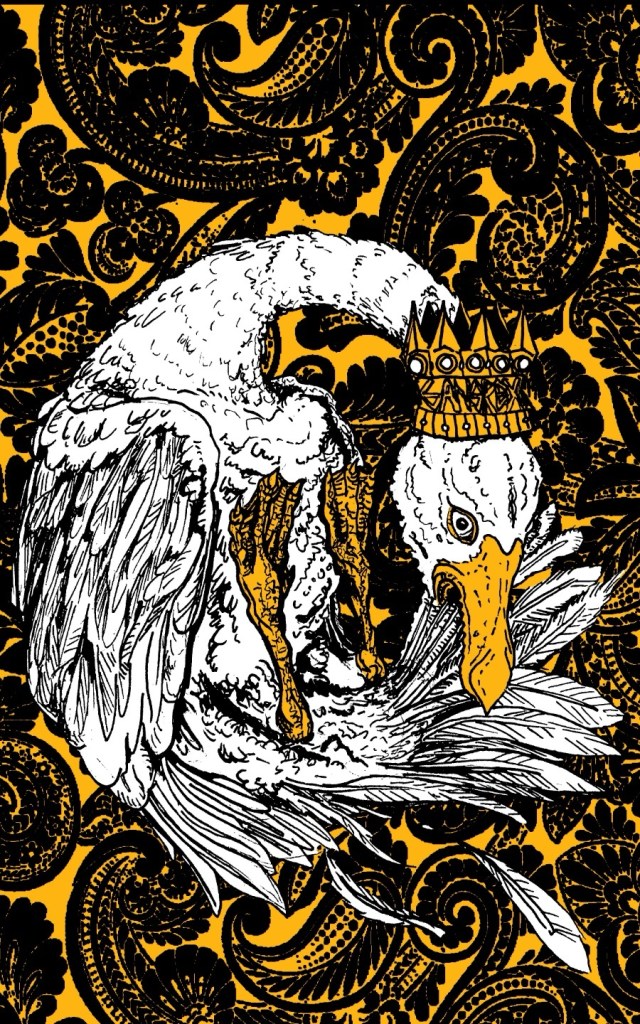
    Seas of Sand is a 264 page setting toolbox written, illustrated and laid out by Sam Sorensen. It’s a fantasy inspired by Dune (as displayed by the magnificent worm on the cover), but that minimises the science fiction elements of its inspirations, and replaces them with a well-curated pulp fantasy focused on merchant caravan style play, the most prominent example of which is Ultraviolet Grasslands. It’s “system agnostic”, which in this case means started for B/X, but with conversion notes for a boatload of other systems. For disclosure, I was comped a copy of this for review but you’ve seen by now that doesn’t affect my opinions.

    At the beginning: The opening summary page is stellar. Evocative as all get out, and an excellent sales pitch. If you’re the type to be attracted to striking, evocative, world building, you’ll probably be sold on this after the first page. There is a bunch of interesting, promising concepts alluded to here: A monotheistic god, the changing sands, a world that rewards knowledge of its environment, and an elegance and economy of design. What I’ll get to a little later, is that the pitch is betrayed by the greater sum of the works, in my opinion. If this affects your opinion of the book negatively or positively as a whole probably is a reflection of what you’re looking for in a setting toolbox, rather than a comment on the toolbox itself.

    The big point of comparison here is Ultraviolet Grasslands, and I feel because of that I should start with layout and art to get it out of the way: While the scale and unique world-building is reminiscent of Ultraviolet Grasslands, this is a far more text-forward piece of work. Sam’s illustrations are simple and elegant and generously distributed, but there’s nothing in the scale of the full colour illustrations of Luka Rejec. What you have here instead is a more traditional, clearly articulated, striking layout. It feels written into layout with usability in mind, as most topics are limited to a strictly hierarchied, high contrast single or double page spread. The appendices (and maybe once in the main text) are an exception, where this visual consistency is compromised with a few absurdly long random tables. I’m not especially a fan of the boldness here, with heavy type being overused, but there are some elegant flourishes too, like subtle interruptions in borders indicating hierarchies and inverted colours signalling optional sidebars. It’s a layout that would probably be better in colour, but it’s a supremely usable layout, better in my opinion than UVG’s for practicality and reminiscent of Hot Spring Island in its functionality and aesthetic.

    The first 35 or so pages are devoted to mapping out your Seas of Sand. I’m not usually a fan of these kinds of procedures — I think an imagination like Sam’s could give me a more interesting setting in the space taken by these generators, and I’d rather that than generate it myself. But there are one or two interesting aspects to the map generation in Seas of Sand that are worth noting. Firstly, there is worldbuilding built into the map making: “The direction of the flow” indicates “The path the worm travelled in ancient days”. This is a really neat approach, and a there’s a decent amount of world building built into this map-building chapter. Secondly, we’re generating a space thousands of nautical miles in scale. There’s a decent chance if you were to simply give me the map and a gazetteer, I’d have trouble remembering it. Making me make my own is a canny solution to this problem of internalising the map. On the other hand: By the end of this you’re given a complete map, more or less. It wouldn’t take too much to turn it into your own Seas of Sand. Would that be better, or worse? I’m not sure. In an ideal world, and this isn’t a short book, I’d get both, so I can bring my Seas of Sand to the table as quickly as possible. The port generation procedure is flavourful and bizarre in the most positive way, although as usual, I think that I’d prefer 15 pages of bespoke ports than this generator. The three example ports are all sparkling, terse, fantastic examples of what these generators can evoke, and we’d have fit an additional 40 or so if the whole port generation space had been dedicated to examples: More than enough.

    Initially the choice to have 7 types of sands didn’t make sense to me. Reading through the next section, which covers sand and travel, made me realise that in this world without terrain, these seven types of sand replace it, making travel less monotonous. We have fantastic terrains, for the most part, but interesting terrains most of all. They can explode, or are tainted by the dead, are suck you beneath the sands, and these can be be manipulated by the people of the world using heat. You can learn about them, and the heat-sensitivity of the sand makes the variable weather more meaningful, with high and more temperatures having palpable impacts on the danger of the sands. Clever, clever stuff, and in retrospect I’m surprised more examples of these extreme weird  terrains aren’t more wide-spread, as I imagine you could make for a lot more weird and interesting effects if you weren’t limiting yourself to things that you can do with sand. This is space ripe for innovation and future settings should learn from it.

    Most notably, the travel isn’t hex-based, unlike so much in the space. You travel in miles, across a thousand miles map. Wherever you will. It calls out that this eliminates a core part of travel procedure, associated with moving through predetermined blocks of space and terrain, that is, hexes. It portrays travel as a ritual, which is, to me, a calming and interesting perspective on what is usually framed as procedure. “Eventually, return to the daily ritual montage of travel across the endless dunes.”, it says, in me of the most compelling sidebars in the book. This conscious choice, tying of course closely to the choices of map-making earlier in the book, is one I really appreciate, and it is the first sign of an interesting level of contrast that feels very Age of Sail to me: The one between the pace and violence and drama and politics of warfare and piracy, and the meditativeness of being on the open sea with little to do for weeks on end.

    The rest of the travel section is somewhat unremarkable, although with elegant theme-reinforcing touches: The distance from trade routes impacts your encounter roll, for example, and there are rules for cannibalism when water and food are scarce. There are also touches which betray the promise of simplicity, though: There’s a lot to those pages on each of the sands, and the rules on starvation and heat exhaustion in particular add complications that I’d have preferred rolled into that elegance on the first page one, which equates water with money. To some degree, there’s an equivalency with inventory and heat exhaustion. If a similar equivalency had been found for food — and to be honest the heat exhaustion rules are a little too complex for my liking, I’d keep having to refer back to them to get them right I suspect — it would simplify book-keeping considerably. I recognise what these rules add to the game, and they exemplify the themes to some degree, they’re just strapped-on compared to how thirst is integrated, and because of the prominence of the elegance of water in the world, I wonder if it would have been a stronger choice to focus on thirst, a conscious decision between survival and riches, rather than to be more “realistic” and include other ways to die from exposure. The metaphor of thirst might be more powerful in the absence of these gestures. That said, there is indication they’re not supposed to be regular occurrences, and further there are humorous and world-building elements here, such as the revelations table which you roll if you’re exposed to near death by the elements add to the appeal of these systems if you choose to use them.

    The time spent on naval battle suggests it’s going to be a not insignificant aspect of play, which is interesting. Bulk, zest and twist are flavourful stats, but it’s not immediately clear what they’re for — it becomes clear as you read the further rules, though. Formal roles emerge as part of this, giving the PCs a task in play, and there are special rules for wages, shares and piracy. The thoroughness of these rules give me an interesting new perspective on the drama of play: Early on, it suggests there is a traditional, dungeon crawl approach to the world and a trade caravan approach, and this is the first time where it suggests that the drama from moment to moment may be in the party’s relationship with the larger crew itself and the pirates who might plague them. Very, very cool, although they are a monolith here, something I suspect this model of play would require individualising (this is gestured towards in a later appendix). But that — that is a fun twist.

    We “finish” the rules — noting that we’re scarcely a third of the way through the word count — with rules for trade and smuggling. This, to me, is something that’s transferable to any merchant caravan campaign, and is just so, so good at supporting interesting and dramatic play around trade. It leans heavily on the very clever and very long trade events table, which, in combination with seers, risks and rewards for smuggling, and risks associated with the crew being in port, make for exciting times both on the sands and off them. It’s filled compelling hooks for further travel, and reasons to avoid otherwise appealing ports. Excellent stuff, the best I’ve seen for supporting this kind of self-perpetuating play.

    I said “finish”, because what follows really amount to a metric ton of appendices. We have a bestiary (including unique plant life, and I’ll throw in the phenomena which are locations and unique weather), which is…well, a work of art if you enjoy bestiaries, although it would benefit from weirder art. I usually don’t care about bestiaries — the last good one I saw was in Beyond Corny Grón — but this is half a book filled with encounters that if you use them one at a time alone, will likely make for a great session in and of themselves (although admittedly, there are a few slow burners in there). This is really great stuff. The best. My only criticism is that it doesn’t point you directly to the strongest asset it has: 7 sets of encounter tables designed to assist you in meeting these encounters, one for each type of sand. This is relegated to an appendix — delightfully, the last one. It would have been perhaps better to frontline them, or to arrange all the flora and phenomena and fauna together alphabetically, to make it easier to navigate all of these encounters as a whole with the tables. A rare mistake in usability, I think. I suspect I’d be printing that particular appendix out.

    Other appendices are very useful for the style of play: Loads of trade goods and contents of pirated holds, rules for surfing and desert magic, and an NPC isn’t bad (and includes crew members, something I alluded to wishing for earlier). It doesn’t hit that key requirement for an NPC generator to be useful, though — the one the Zedeck Siew articulated in response to my complain about his generators in Lorn Song of the Bachelor — which is to tie these random NPCs to each other and the world. In this world, there’s nothing to tie them to, because most of it is designed to be created by you. But, they do make it easier to run your whole campaign from this one book by their presence.

    I haven’t really spoken about the writing here, and I should. It’s workmanlike, rather than poetic in classic actuary-accountancy and naturalistic style, but full of character. And there is so much imagination on display here. That conceptual density is a major factor in my choosing to pick something up, and Seas of Sand has this in spades, and in a format I think can be really challenging: Lots of big, random tables that give you bite-sized inspiration. The entire set appendices — a solid third of the book — reminds me of the classic patch table from Mothership, but at massive scale. Here, random tables are used to their strength, rather than to less powerful uses — like map making and NPC generation. Really good stuff, that will be exceptional at supporting play long-term. And in general, a bunch of fairly subtle additions contribute to the overall evocativeness of the  setting, without being full fleshed out, in the best possible ways: The never-spelt G-d that looks over everything, the unique and unexplained magics, and the odd creatures and phenomena that gesture towards an unexplained and unspoken of apocalypse. Solid anticanon writing after the style of the classic Psychic Maelstrom.

    Overall, Seas of Sand is damned good, but in its desire to be a broad sandbox, I feel it ends up hiding some of its strongest ideas behind simply good ones. The drama of the crew, of survival on the deadly but fantastical seas, of self-sustaining merchant trade, could have served as front-page hooks that would genuinely have me begging to run this at my table next if they’d simply been leaned into harder. It’s a bit disappointing that this isn’t a more directed work, but instead seems to want to render its fascinating world more generic and less iconic and abstract. And I suspect it’s a gesture towards broadening appeal, but what it does is a misdirect, I think, from the power of the unique combination of rules and of worldbuilding, of random tables, that it provides. I think the book I general would benefit from a solid reorganisation with the true intent of play at the forefront, because I took it at face value when it told me it wasn’t just a merchant trade campaign, and not only was I wrong, but it wasn’t until I was a fair way I to the book that I realised it. The sales pitch here shouldn’t be “you can play this as a dungeon crawl or a trade caravan game if you want”, but rather, “this is the best damned merchant caravan toolbox out there, enough for years of play”, and that’s a very defensible pitch in my opinion. I didn’t feel compelled to run one even after Ultraviolet Grasslands, but now I do. In fact, give this an art budget to equal Ultraviolet Grasslands (impossible, I’m aware) and this would easily surpass it as a pitch for that type of gameplay. If you don’t care as much for art, this is a better book, in my esteem.

    I alluded to printing sections of this book out, and that’s both a strength and weakness of Seas of Sand as a product. The organisation of the text is just a bit of a mess, partially because of the aforementioned misdirected play direction, partially because of the piles of tables being difficult to sift through. I don’t know that this could be easy to access in the format it’s in. It’s designed for what I’d call binder play: A big 4 ring binder full of notes on what my players have encounters and easily referenced tables and lists. I’d put together little forms probably, so I can quickly write down notes on my generated locations and the NPCs in the world, and all the delightful drama we’re setting up. But it kind of undermines the physical book as a useful purchase — yes, you get the digital version with it, but this is almost something that would be better in workbook format that in book format. It makes me want to return to the 90s when things were actually released in binder format. It could’ve included those supportive worksheets! And to a degree, I think this format failure reflects a lack of imagination in the broader indie publishing space, where an creativity in graphic design is considered to be sufficient white space or a square page format rather than considering more interesting formats that reflect the style of play of particular products — something that totally also reflects the lack of support in the market for weirder formats. Seas of Sand would thrive in a non-traditional format, though, rather than the generic hardcover half-letter it comes in, despite the beauty of the cover especially, and the striking layout choices. Absolutely thrive.

    Despite what it says, this ain’t a dungeon-crawler. It doesn’t support it well. Most modules you might bring to the table would require a fair bit of modification to bring into this sand-drowned world, and it doesn’t bring a slate of dungeons with it. If that’s what your regular table looks like, and you don’t want it to change, this isn’t the book for you. Honestly, if you really wanted to try, I feel like the best source for those dungeons would be the main competition in the caravan space, UVG, but the aesthetics may be too varied for it to work well.

    Of recent releases, Seas of Sand is the most compelling world I’ve dipped into since Valley of Flowers. It’s very compelling. Many of the modules I review I don’t think about after I finish them. There are exceptions: Atop the Wailing Dunes, Reach of the Roach God, Valley of Flowers, and now this. The fact that is compelling is huge for me. This isn’t something I’m happy to throw on the table for a session or two, it makes me want to scrap my regular table for a change in direction.

    But! For me personally, as someone looking for a low-prep game, I’d choose Valley of Flowers over this. 5 years ago, before my kids got old enough to make significant prep for a regular game challenging, I’d have chosen this world in a heartbeat as a place to spend my time. I can see the Sea becoming a Duskvol-style pressure cooker for eternally sustaining play, where Valley of Flowers will eventually run out of content (at least until volume 2 is released).

    If your table loves unique worlds, is interested in a seafaring or mercantile campaign, or wanted to enjoy Ultraviolet Grasslands but it felt too picaresque or undirected, this is a book for you. What it will require from the referee, though, is a lot of prep work, both before session 1, and between sessions, and a decent level of confidence with improvisational play. I’d recommend Seas of Sand if you enjoy binder play, and doing a decent amount of prep to sustain a campaign that will last you months of weekly play. I think the digital version of this is a no-brainer purchase to anyone interested in elf-games, and if Penguin Ink keep producing such beautiful books, maybe I’ll pick it up in print along with a few others when I get my tax return. It wants to be your Thursday night game, truly, and if you’re looking for one, take a look at Seas of Sand.

    Idle Cartulary


    Playful Void is a production of Idle Cartulary. If you liked this article, please consider liking, sharing, and subscribing to the Idle Digest Newsletter. If you want to support Idle Cartulary continuing to provide Bathtub Reviews, I Read Reviews, and Dungeon Regular, please consider a one-off donation or becoming a regular supporter of Idle Cartulary on Ko-fi.

  • Bathtub Review: Atop the Wailing Dunes

    Bathtub Reviews are an excuse for me to read modules a little more closely. I’m doing them to critique a wide range of modules from the perspective of my own table and to learn for my own module design. They’re stream of consciousness and unedited critiques. I’m writing them on my phone in the bath.

    Atop the Wailing Dunes is a sandbox by Sofinho for the exceptional stone age roleplaying game, Pariah. It’s a 70 page illustrated zine (primarily by Edd0) that is solidly focused on being a complete resource for running a Pariah campaign. As a sales pitch, this appeals to me greatly, because as much as I enjoyed Pariah as a read through, I struggled to conceptualise how to actually play it until I read Luke Gearing’s session reports.

    Layout is functional, but never pretty. The use of colours is quite jarring to me, although I like the colour palette chosen; 12, 13 and 67 are full colour pages, and they stand out in a way that they just shouldn’t. The bulk of the zine consists of the hex descriptions, which are consistently laid out so that you could effectively spend a session just attending to one spread and then flicking back to the procedures in the beginning of the book at the tables at beginning and end; this is a supremely usable tool for the people it’s aimed at, but it also expects the referee running this to be a competent and experienced one. The full page art pieces are absolutely gorgeous, but the spot art looks squeezed into the space in a way that isn’t pleasing to me at all, despite generally being of good quality.

    I’m inclined to treat Atop the Wailing Dunes as simply the second half of Pariah, because it opens with a bunch of procedures that honestly feel like they should have been in that book. They bring a structure and consistency that really helps ground the game in a routine that helps me understand what it means to play as stone-aged nomads, and brings the challenges they’re likely to encounter to the forefront, with a detailed hex-flower weather procedure, a procedure for local spirits and how they interact with the player characters, and procedures for setting camp and travelling by night. I’m not necessarily a procedure-heavy referee, but procedures help to support certain styles of play, so what I think isn’t necessary in all elfgames is very welcome in a game like Pariah where the playstyle isn’t as intuitive, at least for me.

    This is a sandbox in the purest sense, and it’s delivered through two-page spreads that consist mostly of random tables. Each location has a genius-locii or local spirit, and a sub-hex map with a few locations (these appear to follow the landmark/hidden/secret designations, although not overtly, which is an excellent system for an exploration-heavy game like Pariah). The random tables are tied to specific sub-hex types, so you basically look at the hex on the mini-map for the spread, and match it to the icon to know which tables to roll on.

    This is an elegant system that falls down for me on the specifics: Many of the icons are very similarly coloured, which makes it challenging to tell apart, and icons on them aren’t always unique making it sometimes difficult to identify which tables to roll on. The tables are unique to the location (although obviously many themes recur), and aren’t alphabetised, and so it’s often a little frustrating to locate the “small game” table, even though it’s on the same page. Sometimes the table you’re looking for is on the designated random table page (the odd page), but occasionally it isn’t (for example, the rumours table might be on the even page in some cases), and I suspect this is just because of layout issues, but it makes it less usable practically.

    That said, while I can pick on specific problems, this is a powerful technique to iterate on. The negative, for me, is that being such a procedural approach, it leaves little room for Sofinho’s poetry to shine. There is only one “ ancient titan enduring an aeons-long malaise“; “slumbering elephant god around whom a great stone village has been constructed” or “small shrine to the Lord of Sun and Heavens, nestled in a lightning-struck tree” for every twenty “Rainbow arcs across the sky”, or “vultures circling”, or “sudden shear drop, narrowly avoided”. While in those random tables there are some very terse nuggets of gold: “Monkey says hello“, “Dead deer with a pariah’s face“, these concepts are often repeated (there’s a “Dead monkey with a pariah’s face“, too). There are swings and roundabouts to this powerful technique, and I think I’d prefer more of Sofinho’s writing than what I actually got. That said, the sheer amount of writing in this is impressive.

    One elegant addition is that for each terrain type (hills, mountains, or volcano for example) there is a travel speed and a list of common features and themes that you can incorporate into your descriptions easily so that the terrain is unique. Like the dead monkey/dead deer situation mentioned earlier, initially I got very excited, but the further I read, I saw that these descriptions not as unique to a hex, as I expected them to be. I think making them more unique would make the experience of differentiating the hills here from the hills there a little more organic and interesting. But these and the layout of these heavily randomised hexes make the minute to minute gameplay of wandering through an unknown wilderness populated with strange people, awesome creatures and ineffable spirits as intended by the Pariah ruleset, very clear in a way that it hasn’t been for me before.

    All together, Atop The Wailing Dunes is a groundbreaking sandbox, albeit that with extra polish and attention could have been one of my all-time favourite approaches to sandbox modules. As it is, despite the repetition and the concept density being softer than I hoped, it’s an excellent module. If you haven’t brought Pariah to the table, but wish you had, this will give you and your players the support you need. If you’ve only ever vibed with point-crawl exploration, and are curious how to play a campaign which gets into the nitty gritty of travelling mile-by-mile, this is a masterclass in how to make every mile compelling, without keying every mile in advance.

    Idle Cartulary


    Playful Void is a production of Idle Cartulary. If you liked this article, please consider liking, sharing, and subscribing to the Idle Digest Newsletter. If you want to support Idle Cartulary continuing to provide Bathtub Reviews, I Read Reviews, and Dungeon Regular, please consider a one-off donation or becoming a regular supporter of Idle Cartulary on Ko-fi.

  • SLIMDNGN 0.7

    I just release a HUGE SLIMDNGN update this morning!

    In terms of rules revisions, it’s pretty minor except that I’ve excised the character rules entirely from what I’m now called SLIMDNGN CORE and have written 36 classes all with their own unique class sheets and rules specific to them, as well as spells lists and a bonus equipment list.

    Check it out here! It’s free!

    I’ve also added in a whole design commentary, which I’ll reproduce here!


    Design Commentary

    Why write a commentary?

    It helped me with the design process, to be honest. I wrote the most recent version of SLIMDNGN, then I wrote the commentary, and that made me reconsider some of my decisions, so I changed it, and then rewrote the commentary in some unending loop. I’m not sure if this commentary is actually useful or interesting, though. Let me know.

    Why SLIMDNGN?

    Honestly it’s right there in the name. I read and write a lot of modules, and so I play a lot of modules. And it’s a drag, recruiting for and running them in B/X or OSE. They’re not rules light, not for me, not for my table. And the alternatives are either too rules heavy or too characterful, or both.

    SLIMDNGN was my attempt to stick B/X into a 1-page box. I’ll talk about how and why I did that in a moment. But the referee-facing rules are only part of the equation. Also, my table just adores fifth edition. They’d probably adore Pathfinder, too. They love character options. And there are really only two great approaches to character options in the DIY elfgame space: Troika and GLOG. Troika isn’t chunky enough for my table. GLOG isn’t written for B/X.

    So the SLIMDNGN class sheets were born. Troika-style randomly chosen character classes, but with the targeted mechanical heft of GLOG. And they became Powered by the Apocalypse–style playbooks — class sheets I called them, because  I jammed six pages into two — because I wanted it to be as easy to create a character as it is to run.

    From both ends then: Easy to play, easy to run. 

    SLIMDNGN Core

    My basic design goals were:

    1. Fully B/X compatible,

    2. Be able to fit all the rules in my head,

    3. Rolling just D6s

    4. Be able to convert most modules at the table and not before 

    5. It’s really for short-term picaresque play, rather than meant to sustain long-term campaign play

    The idea for the symbolic representation of the dice basically came from my need to make space. I think it works well, although has become unwieldy as the class sheets progressed.

    Actions are clearly based on Blades in the Dark. I originally intended to have a step up / step down terminology, however I realised that due to the limited number range, it’s actually easier to say +2 instead of “decrease difficulty by a step”. I used only 1 die, because I wanted to lean into the X-in-6 of B/X, because I really like the simplicity. 

    So the basic theoretical construct around this, is that environmental affects the action’s target, a risky situation – probably the most common situation – being roll over 5 or a 17% chance of success. Then, you make your roll, which can be modified by character-related factors, specifically class powers and spells. The only kink here, is that I realised that in terms of word count, it’s easier to say –2 to your roll than to say “it’s one step up harder” like you would in Blades in the Dark, and also the smaller granularity in the rolls means that +1 and –1 are very powerful impacts, so you probably want to stick to the very quickly stacking up small modifiers. I didn’t cap these, because by default you have eight or higher for desperate (i.e. you have to have a bonus of 2 or more to succeed), or (one can assume, although it’s not in the text) 10 or higher for impossible. 

    Consequences are very simplified referee moves from Apocalypse World and Blades in the Dark as well. Dynamite sprung from a discussion I had on the Dice Exploder discord about how 2-step clocks make for dynamic, simple activities. The design goal of picaresque play matches with these 2-step clocks. The world reacts in simple, straightforward ways in SLIMDNGN.

    The 5 slightly different saves are a compromise. I preferred to use the original terms, because they’re used in modules, but they’re wordy and unclear. The new 5 saves are basically the same, and intended to use like this: Death is basically a Con save, Wands is now the magic save, Petrify is the bodily transformation save, Breath weapons is the dexterity save, and charm is the will save. The only difference to remember is the one from spells to charm. The original draft had these as 5 additional stats – basically, you were controlled, risky or desperate in a save –  and I put so much effort into avoiding having stats already that I wanted to avoid that. So instead, I adopted a granulated version of resistance from Blades in the Dark here. I like the push-your-luck-iness this brings to the game, but it detracted from that edge-of-your-seat sense you get each time you roll a saving throw. I added a reference to GLOG’s spell dice here, by making them expire on a roll of over 3, to reintroduce that little bit of luck to compensate. One thing that I went in and added, was that “a save can always be used”, because writing spells and powers, I found my self writing “save vs. death to X” a lot, and I decided that’s silly. If it’s pretty universal, I just don’t write that. You always can use your save. 

    Abilities are gone here, kind of: They’re subsumed with proficiencies into skills. I like how this downplays them, and makes strength something you’ve worked hard on instead of something you’re born with.

    Inventory is obviously modelled after Knave and Mausritter. I can’t remember whose heartbreaker I first saw d6-only-damage in, but I liked it. Damage penalties for increasing range is my take on the more typical difficulty penalty for range. Armour is simplified as simply setting the target for attack actions, and shields are from the classic blog post.

    Conditions are pretty straightforward. They always expire at next rest or are dynamite. Here’s a list of conditions in the game somewhere: Fatigue. Blinded. Clumsy. Confused. Charmed. Dazed. Deafened. Fear. Grappled. Hidden. Invisible. Paralysed. Petrified. Poisoned. Restrained. Sickened. Slowed. Stunned. Unconscious.

    Reaction rolls, morale and initiative is all very basic and uninventive intentionally. Connections originated as my wanting to put some allies and foes directly on the character sheet. I added rules for dual-wielding and for unarmed and improvise attacks as a result of getting to the class sheets.

    Dungeon and Wilderness time is the simplest version I could come up with. Random encounter rolls are soft overloaded, so that distance, surprise, and consequences are built into the simple 1d6 roll. I’m pretty proud of the density of this roll. Lunch and bed time is from Skerples, as I adored the neatness of it. Light sources are also the simplest version of them I could come up with.

    Character creation is based in GLOG, so there are four practices (rather than templates) that you gain sequentially. I had to introduce more dice notation here, which I strongly disliked doing. I added d66, weighted d66, exploding d6 and more than 2d6, because spells and powers required it. As far as I know I invented weighted d66, and I really like it as a method to weigh a list of 36 items heavily towards the early items. I created it specifically because I wanted the more “basic” class sheets to be quite common, but the very weird and unique class sheets towards the end of the list to hardly ever come up and be quite special.

    Writing the class sheets put the CORE through its paces. I wrote about 42 class sheets (some were scrapped completely or reworked, and will never see the light of day) each featuring a mechanical niche, which resulted in my being able to remove a bunch of rules to the class sheets and out of core, and also having to add some rules to core because they were required to maintain niches. 

    SLIMDNGN class sheets

    Non-class sheet stuff first: I included an empty class sheet, so that people could choose to multiclass if they wanted to. I had to break my 1-page rule for spell lists: Magician, Impmother, Mentalist, Witchling, Blink, Pantheonist and Riverdaughter all needed a separate spell list, with the Magician and Impmother requiring more than one page extra, sadly. Of these classes, only the Mentalist gets to choose from a bunch of spells at any given moment.

    One significant concession that I made to the B/X compatibility, was the naming of spells. It’s more handy for the spell names to match, so phrases like “as the sleep spell” make sense, but I’m always nervous about borrowing that stuff. I don’t deeply care that other people won’t intuit the spell names, but basically it goes like this: If a spell effect is similar to a B/X spell, then the treat it as that spell.

    Oh, and I made a wee equipment list. This is based on the stuff in the B/X list. It’s the kind of stuff that just comes up a lot, in my experience. I put it at the end of the Class Sheets

    SLIMDNGN Classes

    My approach to choosing and writing the class sheets was to go through the list of fifth edition subclasses and write down all the ones that were interesting to me. Then, I scoured the internet for GLOG classes with interesting approaches to those niches. Some of them (the mystic, for example), I chose to incorporate as their own class, and some were bumped altogether. Skerple’s summoner, for example, ended up becoming the Impmother, a vastly different class, and a Fae-bargain themed class ended up more deeply inspired by Saltygoo’s Nereid when I couldn’t find a more specific mechanical hook for it. The core three classes ended up more niche than in earlier drafts, because a generic fighter, thief and wizard just felt out of place in the larger tableau, and were replaced with Brawler, (Second) Storeyman, and Magician. Also, I could build a flavourful fantasy world that suits my own archaio-gonzo stylings a little better than popular systems out there right now, like Cairn and Dolmenwood.

    The tableau in particular was intentionally ordered, which is why I invented that weighted d66. Originally each group of six had a name; Basic, Common, Uncommon, Rare, Very Rare, Odd and Unique. I scrapped this at some point, but this is still the underlying intention.

    I’ll talk about the stuff that is common to almost all the class sheets first: 

    Names are either off-brand inspirational characters or kind-of-random. Looks are intended to spark your imagination, a bit like the original Apocalypse World ones. 

    Heritages give you a simple power, which I had to balance with the complexity of the classes. My intent was 3 basic heritages (like dwarf or elf or human – which I called gnomon here) and 3 weird ones, but that quickly soured as I realised that the niche powers needed to vibe a little more with the classes. 

    Backgrounds I always had a story in mind when I wrote them, but didn’t tell you it, which is a ton of fun. 

    Skills and foibles are half basic ability scores with a class sheet-specific twist, half proficiencies, half personality traits. 

    Connections are from a cast of about 50 characters, so closely based on Blades in the Dark. 

    Equipment was limited to 3 items by space, which was unintentional but interesting. The equipment list sprang out of this limitation, as I imagine most people will want to spend a few shillings on stuff. Speaking of shillings, I set rules on money quickly in the XP section, and XP is roughly the same as B/X, but is for shillings only, and gets unwieldy at high levels which I don’t mind because this isn’t for campaign play. Further in, we get mentions of pennies and pounds as equivalents to copper and gold pieces.

    A few little conventions emerged in the writing here that reward writing down, I think: A size scale of cat to person to horse to elephant to house emerged as the equivalent of small, medium, large and huge. Whenever I say “a size larger”, I’m referring to this scale.

    One final thought on hit points: Sticking to d6s has an interesting consequence: Fighters have 1 fewer HP per level, and wizards and thieves have 1 more per level. I tried to keep this in mind with the class sheet design: A lot of core practices or powers for wizard-types have HP-spending powers to balance out this over-supply, and a lot of the fighter-types have healing powers to balance out the under-supply. This is intentional, but I didn’t do it consistently, but rather where it made sense thematically, so I’m not sure how balanced it all is.

    Class sheets specifics

    The Bruiser was originally the fighter, but there are significant changes from the first draft to the current one, to differentiate them from the Cavalier, the Toxophilite, the Ravager, the Hunter and the Zealot. Now they’re about wading into the fray and beating down.

    The (Second) Storeyman is the new thief, and was almost Burglar on and off, but Storey-man is so much more flavourful. I scrapped some classic thief practice for practices that felt like they were related to break into peoples houses.

    The Magician is basically the Wizard. Not much has changed from my earlier draft, although it bears little resemblance to the classic GLOG magic-user. They can have a total of 6 memory and 8 to 28 spells, although 50% will have 8 and the chances of 28 are around 1%. Because of their huge variety of powers, their practices are pretty straightforward. I like the Magician labelling because they feel a little more Vancian.

    The Cavalier is basically our noble, non-magical paladin. We get a nastier, more religious paladin later in the Zealot. They can inspire their allies, duel their enemies, defend their allies, and are better at slaying dragons.

    The Hunter was a Skerples class that I split in two, making the Hunter half into a companion class with a  hound or falcon, and powers related to observation and stalking. On first draft, it seemed a little too niche, so I added the capacity to fight with your beast in battle for a little more combat utility.

    The Jekyll is was originally the Ravager, our barbarian class. On first draft, taken largely from Skerples, it was pretty uninventive, and I don’t really find the archetype to be particularly interesting. So, I rewrote it to be a Hulk-like secondary personality, developing their own independent goals even as they become more powerful.

    The Toxophilite is our archer class, the other half of the Hunter. The practices that were devoted to environmental stuff, are now for flashy archery. This is our Robin Hood character, and it really feels like it.

    The Warrior-nun is our second gendered class sheet, a decision I actually struggled with a bit, but I thought that gendering the class sheets was actually an interesting world-building decision, and also the whole game is built around rulings, so you can just change it. Everything here is a suggestion, after all, not a rule. This class sheet is a scholar-fighter, with unarmed attacks, but also skills with reading and writing. I quite like this subtler take. 

    Artificer was a complex mess of a class. I didn’t love the vibe of the original draft, and so it evolved through two other classes, first to the automatonist, which had too much overlap with the Iron Man (that became the Automaton), then to the biomechanist, which involved physical upgrades to himself, and finally to the Grafted, inspired by Elden Ring’s Grafted boss, which leads to a much more satisfying open-ended class in my opinion. I don’t think the Artificer will come back, mainly because of the overlap with the more-interesting variant, the Alchemist.

    Xaositect is my wild magic class, largely adapted from Skerple’s sorcerer, with a bunch of additions. I really think this feels chaotic, which is what I want, in a core way that most wild magic classes don’t. I like the simple three powers a lot (not my idea at all), and it’s the only class sheet where I brought across mishaps, which are a common theme in GLOG.

    The Animalist was originally my druid class, but I decided to focus it in on wildlife rather than both wildlife and plant life, basically because an earlier draft of the Witch was plant life based. It initially had wildshape, which I scrapped, to focus on it’s theme of animal control, and to carve out space for the rarer Thereothrope. I moved the combat abilities earlier, as well, because of this. I think this one is a lot of fun, with you gaining animals and gaining ways to interact with them over time.

    The Cantabank is our bard, removed from music. This is our first re-used mechanic, having one similar to the Warrior-Nun’s reality warping knowledge ability, and I’ve incorporated a more powerful version of the Cavalier’s inspiration to buff the Cantabank as they weren’t feeling an appealing class to take.

    Part of why the Cantabank was a little weak, was because I prefer the Jongleur, our acrobat type. This one is primarily mine, and has been a favourite subclass of mine since 2nd Edition. I’m very happy with the five repertoirs that you can gain four of by the end, and the four practices (one of which is in common with the Cantabank, but less powerful) are interesting and applicable to a range of situations. Just a great utility class sheet.

    The Alchemist is a much more inspired Artificer, I think. You too, collect things, then turn them into things that you can later use. The alchemist is a much stronger archetype though, so the practices are neater: You get a homunculus, and you can turn lead to gold. Lots of fun, as the gold turns back.

    The Exorcist is our cleric. I’m not a fan of clerics, but I like this one. It’s a simplification of Skerple’s exorcists. The problem in the original draft is that they were too niche and focused on undead to be fun to play. So, I expanded their powers to utility, removing some combat, and added some utility to their exorcisms outside combat.

    The Powder Rat is my gunslinger. This one is all my own, because most gunslinger types are heavily themed as wild-west, rather than as a very particular type of artificer, which is what this one is. The fire arts are really fun, in my opinion, and I like how I managed to include firearm rules here, and still have significant advantages for being a powder rat. 

    The Assassin has a small overlap with the Hunter (actually it went the other way, I stole the Assassin practice for the Hunter), and we have some random poisons and slowly learn different methods of applying poisons. I love the bespoke poison power, which I think is from Skerples, but otherwise the first draft was just a little soft, so I increase the number of poisons, added limitations to them, and then added some more Hitman-inspired practices.

    Impmother was the one of the last classes I wrote, as it used to be the Summoner, and really the strength of that Skerples class was the huge list of very cool entities. I didn’t really want to steal things wholesale for SLIMDNGN (I don’t know why, I’m adapting enough I feel obliged to use a CC BY NC SA license anyway), so I struggled for a while, until I realised that Skerple’s summoner just wasn’t what I wanted out of a summoner. A summoner to me is like a necromancer, raising legions of the dead. But that also doesn’t make an interesting class sheet (and also, we have Warlord which is similar in theme). So instead, we have a family of imps that live with you. I like these imps, their mutations, and love the idea of growing a family of NPCs, however challenging that might be at the table.

    The Illusionist is another one that is all mine, largely because most of the wizardly classes out there are pseudoclasses that use wizard spell lists, and I was trying to minimise that. I like the power and simplicity of the Illusionist, and I maintained their uniqueness in the spell-list choices for the magician, which I really like too.

    ThePantheonist is a later draft of the earlier God-bothered. The God-botherer was a good idea I struggled with implementing. I wanted a polytheistic cleric, that got their powers from whatever gods they were encountering at the time. Basically, though, this means you had to generate a god for every biome you enter. So I scrapped it for a list of biome-specific gods and scrapped the animist type practices for some more cleric-like ones.

    The Mentalist isn’t based on any GLOG class, but rather on the 2nd edition class, because most of the GLOG classes were the wrong flavour. Some GLOG psychic concepts made their way into the Voidblight and of course I introduced the Mystic whole cloth because it was such a cool take. They’re a classic psionicist, and I love their uses and the focus point system. I love how they get whole disciplines at a time, easy and hard. I love that you lose focus points when you’re interrupted, specifically. Some sciences are a little OP though.

    The Warlord was me wanting to have someone whose specialty was in their followers. I don’t like everyone having followers – it becomes challenging to run. So, trying to load it into a class (similar in concept to the Impmother), is cool. And this one, unlike the impmother, isn’t a caster, so they’re good in combat, and simply have an extra force to direct. They’re very cool, but again, you need to want to manage a cast of characters. They were heavily inspired by the Hardholder from AW.

    The Zealot is the other type of paladin, a kind of cross between ravager and paladin, driven by their religious dogma. Ravager was the first draft Jekyll, and with it gone it preserves the Zealot’s angry niche. I love this one. Simple and flavourful. I got the core idea of an idea from someone, but it’s scrambled up with paladin and things to make it a little more interesting.

    The Quaker is my Avatar homage. I decided making someone to bend all four elements was overkill, so I made them an earthbender, and gave them powers from all the elements. These are drawn from the bender class in the acknowledgements, but are a significant reworking of it.

    The Sage is a little bit of Dwiz conversation and a little bit of Sam, but I tweaked them a lot, because I really liked them as a traveller rather than as a Gandalf. I’m a big fan of this class.

    The Apiarist is the bee-keeper one. On first draft they became more a mutant than a bee-focused druid. After significant revision, they became this more hive-focused class, which I’m much more happy with.

    I adore the Soothsayer, which was a whole cloth creation of mine. I initially made them a real future-teller, and it was a profoundly uninteresting class sheet to play. I revised it to be a charlatan, and it became so much more vibrant. I love how it’s unclear whether or not they are supernatural – practice 2 and 4 seem clearly magical in some way, but 1 and 3 are clearly con-artist territory. Great stuff.

    The Witch is a direct adaptation, but much simplified. I loved how Bottomless Sarcophagus really nailed it feeling like a witch, but it was immensely complex, more than I wanted for any of these classes. I simplified significantly. I liked the little touch of including a coven in the connections on the front page, too.

    The Wormtongue was initially envisioned as a Lich Warlock, and scouring the GLOG sphere I found a series of cultists, and then I stole parts of all those cultists, and then made them into a single, negotiation and lie-themed cultist, which ended up tying back into the name Wormtongue which I really liked. The dying breath thing is very creepy, and I love it. 

    The Sporecerer (previously known as a bunch of things including Fungomancer) is a class sheet I’m having trouble naming. The only real thing I had in mind was hive-minds from Out of the Abyss and being able to raise people from the dead, and so adapted a bunch of this from the fungal colony horror GLOG. I like them a lot, as one of the peak weirdness later class sheets.

    Thereothrope is our werewolf class sheet. There’s a significant amount of overlap with the animalist, but I like the relationships you have with other lycanthropes, and the fact that you’re really all about these specific physical changes. Weirdly, twilight and Buffy ended up being major touchstones in making it more interesting than the classic d&d lycanthrope. 

    The Horologian is a fun reworking of the clockwork man, and I really like it overall. Simple and flavourful, and not too powerful. It got a strong buff on second draft, after we did a lot of work on the Automatonist, and then scrapped it again. 

    Riverdaughter, as I said previously, was originally a fae-blessed or changeling type class, but I couldn’t make it work, and she transformed into this nereid-inspired class sheet instead. She’s all about charm, and water, and it’s a nice theme. I switched her to a siren rather than a water-elemental controller, though.

    The Blink is all me, and is all about having a large amount of very specific niche teleportation powers as a result of their being severed from reality somehow. I imagine them glitching everywhere. I really like the Blink, especially that they get 3 random blinks each day, and that they slowly fix up to 10 blinks that they can use whenever they want. I’m really happy with the absurd utility of all the blinks I came up with, too.

    The Voidblight is a weird one, and ended up more inspired by Skerples Void Cultist than I wanted it to be, particularly in terms of the first practice. The Void gifts are from the Cultist GLOG class, although much rarer. 

    The Mentalist was something I decided to adapt wholesale, because it was so cool. It was intended as a psionicist class, but I felt like it was much bigger than that. Seems like it’d be a lot of fun in play, but it’s almost definitely OP.

    Also, it might be interesting to go through deleted classes. The Summoner was scrapped, as both too heavily derivative of Skerples and also just wasn’t vibing for the simplicity I was aiming for with these class sheets. The Artificier was scrapped after this design commentary was started, as a result of the design commentary, for the Automatonist, who has a robot friend they can upgrade.The God-botherer was scrapped for the Polytheist, who got a list of 36 gods they can switch freely between depending on the Biome they’re in, in order to gain a specific but limited power set. 

    So, how do you build a class sheet, then?

    Names. 3 names inspired by specific characters, 3 names I like for the role. 

    Heritages. I tried to hew to 3 classic heritages (human, dwarf, elf, halfling, orc), and 3 unique weird ones but this quickly devolved as my imagination ran dry. I ended up with a list of about 20 heritages, so by the end I was just picking role specific ones.

    Skills. 3 role specific synonyms for the traditional D&D ability scores, and 3 things that would otherwise have been proficiencies.

    Foibles. 3 role specific synonyms for the traditional D&D ability scores, and 3 things that you’d consider personality flaws.

    Equipment. Necessary and iconic, and a maximum of three. 

    Connections. 3 shared and 3 new. Try to make ones that are interesting either as debtors or allies.

    Backgrounds. Have a story in mind with each background but don’t tell it. They got a combination of 2 of: Trait, Item, Shillings, Mechanical Boon, Relationships.

    Saves: Just choose whichever feels right.

    Practices are unique and thematic. Anything is game for theme, but I kept in mind that thief and magic user classes have a bonus +1 HP per level and combat classes have –1 HP level compared to B/X which I’m balancing against, so I tried to provide balance in terms of HP expenditure for powers or additional healing or defence. A few attempts were made to use non-d6 based mechanics but they never felt worth it. 

    Based off Dungeon Antology’s analysis, I basically considered how powerful the practices were relative to each other, and tried to assign them roughly the following:

    1. Defensive feature or a special skill

    1. Offensive feature or a special skill

    2. Niche ability or progressive ability

    3. Build on a previous practice, authorial power, or quantum feature

    4. Capstone ability

    Attributions and acknowleDgements

    When I look at B/X and most other people’s GLOGs, I love them, but they’re a bit much and I want running them and playing them to be easier. But I love modules. 

    While SLIMDNGN’s rules themselves take no particular inspiration from GLOGs, the class sheets do adapt wholesale huge swathes of the work of others.

    Some class sheets are entirely my own, such as the Blink, Soothsayer, Impfather and Pantheonist, some are frankensteins of many people’s work, such as the Jongleur and Toxophilite. Some are adaptations almost whole cloth, such as the Riverdaughter and the Mystic.

    Accordingly these class sheets are, like the rest of SLIMDNGN, CC-BY-NC-SA 4.0. 

    Here are the attributions, where there were direct adaptations.

    • Skerple’s Many Rats on Sticks 

    • Skerple’s Coins and Scrolls

    • Arnold K’s Goblin Punch 

    • Arnold K’s GLOG

    • J.N.Sinombre’s Playthings of Mad Gods

    • Ancalagon’s Of Slugs and Silver

    • Dan D’s Throne of Salt

    • Phlox’s Whose Measure God Could Not Take

    • Alex C’s To Distant Lands

    • Spwack’s Meandering Banter

    • Saker Tarsos’ Tarsos Theorem

    • Velexiraptor’s A Blasted, Cratered Land

    • Sam S’s Caput Caprae

    • Type 1 Ninja’s Two Goblins in a Trenchcoat

    • Martin O’s Goodberry Monthly

    • Vayra’s The Mad Queen’s Court and the Mountain at the End of the World.

    • G.R. Michael’s As They Must

    • Rowan Monseur le Battlier’s Bottomless Sarcophagus

    • Xenophon’s Ramblings

    • Salty Goo

    • Princesses & Pioneers

    • GLOG Extra Classes

    • Dungeon Antology

    I encourage you to check out all of their websites!

    There are also very obviously a bunch of games that inform this game, not the least classic Dungeons & Dragons, but also Blades in the Dark, Knave, Cairn, and Troika are all clear inspirations, as are a bunch

    Most importantly, I always play with Dr Wifey, and she was my sounding board for bringing a broader range of references and tropes to appeal to my table, full of princess-playing character optimisers, who’d want to experiment with a broad range of interesting classes.

    Final Conclusions

    I’m proud of the work, I think, although it goes a little against the original super-slim directive. I think the rules are both neater and more thorough that the earlier versions, and also there’s a whole lot more interest as a player for the kind of people I tend to play with. 

    I think I’ll need to leave 0.5 available, though, because it’ll appeal to the slim-purists a little more than this version. And there’s a translation! Overall it worked really well for what it was, I just wanted a little more, it turns out. 

    I imagine there’ll be a long hiatus on updates after this, because it’ll take a very long time to get all of these classes to the table. I hope in the meantime, you enjoy SLIMDNGN!

    Idle Cartulary


    Playful Void is a production of Idle Cartulary. If you liked this article, please consider liking, sharing, and subscribing to the Idle Digest Newsletter. If you want to support Idle Cartulary continuing to provide Bathtub Reviews, I Read Reviews, and Dungeon Regular, please consider a one-off donation or becoming a regular supporter of Idle Cartulary on Ko-fi.

  • Bathtub Review: Nirvana on Fire

    Bathtub Reviews are an excuse for me to read modules a little more closely. I’m doing them to critique a wide range of modules from the perspective of my own table and to learn for my own module design. They’re stream of consciousness and unedited critiques. I’m writing them on my phone in the bath.

    Nirvana on Fire is a 35 page module for Mothership by D Kenny with art by Jerome Berthier. In it, the player characters are sent to save a colony of monks by retrieving a power converter from a manufactory, one that is controlled by an AI who believes itself to be a god.

    In the first location, the colony, I like the stylistic, first-person maps and the simple, evocative keying a lot. The keying is elegant and evocative, although not beautiful or poetic, and swings wildly tonally in a way that is really pleasing and thematic. I’m not a fan of the random encounter table, where events occur without fail whenever you enter a new location. This timing falls down as well, because rolling blackouts happen with the same trigger, meaning I’m rolling 3d10 and using those dice for different things. Most of these encounters don’t add anything to the adventure; they’re flavour. Using random encounters in this way is interesting, but as they’re all atmospheric in nature, they also feel very insubstantial. The exceptions are if you roll a 1 or a 10; a 1 is a concrete encounter with an interesting character; a 10 is the revolution starting! But also there’s a 10% chance that the revolution will start the first time the player characters take a walk; it almost assumes you’ll fudge the dice by the lack of any mechanism to avoid this. Overall, I think the point of this location is simply to communicate a sense of civil unrest and push the player characters to the main “dungeon” of the module, but it’s a little overwrought and complicated for such a simple role.

    In that “dungeon” — Bishamontem’s Sanctum — everything is stronger and more meaningful. The random encounters are punchy and all interesting, foreshadowing or actively engage the player characters. Three of these concern the stalking monster of the space, which is really simply and well handled — unlike the meaningless complexity in the colony. The maps, however — these are the node-based maps — are neither as visually intriguing or as clear as those in the earlier (admittedly simpler) area. They work, though, and use colour as a differentiation, which is elegant although I’m not sure how accessible it is. Closely examining these maps, the whole complex is freely accessible, and only limited by specific access cards; I’d have to get this to the table to see how this feels, but my gut is that this won’t be an interesting or complex puzzle to solve. It’s a small enough space — only 10 rooms — that things like the written out admin password seem a blunt instrument, rather than a fun discovery. This same place has the password to kill the boss, which means if you don’t get this one spot, you can neither finish your job or find out what happened. I can’t find even on rereading how to get access to the final areas, which are marked for Straylight Official access only but I can’t see anywhere how to get that access; it also speaks of Genma the Prophet and I don’t know where he is, although he gets a write up early on. It’s all a bit vague, too vague for me to really feel like I could run with any confidence. I could be missing something, but if I am when I’m rereading large module chunks to find information, I’d argue it’s a failure of information design, rather than my wayfinding. This isn’t a long module; I should be able to find what I want with a find and search function let alone a re-read.

    That’s it for the actual module; 24 pages in total. The rest is what appears to be stretch goal additions: Two additional modules and a custom class. Custom classes are cool, I guess, but I just don’t vibe with them for Mothership. The Acolyte should scream the religious zealots of Alien 3, but it doesn’t sing for me. Both of the modules are better than either location in the main part of Nirvana on Fire: Better, more interesting maps; Clearer, more interestingly keyed spaces; both Noora and Roz’ writing is less florid than the main module, but I’d run either of these interacting, interesting and equally large (or larger) spaces over the main section any day.

    Thematically, I really like the twist at the core of Nirvana on Fire (which I won’t relate here). It brings the module from a bizarre religious twist on Mothership to solidly back under the working class science fiction horror banner. I think it’s neat and fitting.

    I’m not usually a nitpicker for proofing in these reviews, but this zine really needed a good proofread. There an enough small jarring errors, missing words and missing capitalisation that it stopped being a one-off and started becoming a pattern. This team really needed to be one person bigger. This isn’t complex work: You just need someone to read the thing and circle the mistakes.

    The layout in this is clear and bold, but not as hyperdense or complex as in house Mothership layouts. I think it makes a mistake here, as it chooses small condensed point sizes which aren’t especially legible at this page size, and could use the space more wisely. The art is unique and fantastic in my opinion, and very evocative of the religious undertones of the module as a whole. Maps are abstract and modular, which is not my preference, but they’re pretty good as far as modular maps go, particularly just the stretch modules, and better than in, for example, Gradient Descent which operates itself in a similar manner.

    Overall, Nirvana on Fire is a promising concept with interesting themes, that utterly fails for me on execution. I’d have no confidence to run this. There are no playtesters listed and yes, it shows that nobody has run this. I’m honestly pretty disappointed that something with such great art direction and conceptual cohesion was fritters away into such a mess of a module, and that I paid for it. The positive, though: There’s room for another big, artistically innovative religious take on Mothership, for anyone else who cares to take that leap. Both the stretch modules though, make for some decent one-shot material, and particularly if you wanted to introduce someone to Mothership in one night, they’d make an excellent choice.

    Idle Cartulary


    Playful Void is a production of Idle Cartulary. If you liked this article, please consider liking, sharing, and subscribing to the Idle Digest Newsletter. If you want to support Idle Cartulary continuing to provide Bathtub Reviews, I Read Reviews, and Dungeon Regular, please consider a one-off donation or becoming a regular supporter of Idle Cartulary on Ko-fi.

  • Bathtub Review: Spectacle!

    Bathtub Reviews are an excuse for me to read modules a little more closely. I’m doing them to critique a wide range of modules from the perspective of my own table and to learn for my own module design. They’re stream of consciousness and unedited critiques. I’m writing them on my phone in the bath.

    Spectacle is a 55 page setting for Troika by Seth Ian and illustrated by Mark Conway, inspired by Jack Kirby cosmic superhero comic books. Spectacle had a complicated funding journey — a failed Kickstarter, and then a re-evaluation and relaunch. Did the challenging landscape of indie development cause this module to falter, or does it thrive despite the cutthroat competition?

    Spectacle opens with an introduction, written in purple and opaque prose fitting the silver age of comics that inspired it, and presenting the premise: People of all worlds are thrown together onto a prison planet to fight in an arena for the pleasure of some kind of god-planet. I am filled with excitement for the premise.

    It follows it up with 36 Troika backgrounds. This is the meat of the module. These are written in the same florid prose as the introduction, and they’re excellent and communicating the world through implication. I’m truly impressed by the author’s style here, as much as it’s aping Kirby. The backgrounds tend towards combat-centric play — there’s an arena so of course — but surprisingly there are hints of non-arena focused play as well in the Bound Haruspex and Tailypo the good dog. Many cleverly imply their goals here too, which could drive play in a way that the original Troika backgrounds failed to do for me — take the Living Bullet’s need to consume star matter or the Knave of Nihil’s desire to bring oblivion. This is clever writing and I’m here for it.

    Next up we have 36 enemies to fight in the arena. Aside from the Occulants, which are specifically servants of Spectacle, I’m not sure what differentiates these enemies from backgrounds. Many are also, simply creatures brought into the arena. However, more clever world-building is here: The implication of rest time between fights, bathhouses, bureaucracies that record information for the Eye, medics and wildlife is all interesting, but leaves me wondering if I’ve missed the point of this module altogether. I thought I was telling a slight tale of rebellion and battle, but perhaps I’m supposed to be telling a tale of living in servitude and under persecution? The Eye itself is started out as number 37: A clear indication to me of the implied story arc here. The player characters are to kill the Eye. After this come a few random tables: Firstly a gladiator name generator, which I appreciate and helps me get into the right state of Kirby-an mind. Then an encounter table suggesting a larger world, endless wastes and a shantytown, but needlessly limiting itself to a d66 table when it probably needed to be more to really communicate this larger world and the activity of the arena in a meaningful way.

    This feels like the intended end to the book. The back matter that follows is firstly another six enemies — mini-bosses of a kind, the minor gods of spectacle. These add an interesting wrinkle of faith on Spectacle, but fail to do the interesting thing and provide us with factions with clear or competing goals. Then comes Bitter Herbs, which is intended to be a 2-page scenario, set in a village on Spectacle, however its illegibly laid out, the only place in the book where the purple prose renders the text unusable for me. If written more clearly and with some headings or any layout choices at all to make it usable, this two page scenario has promise in terms of competing factions and is full of seeds about what Spectacle is supposed to be about: Not the arena, but rather existing in this horrible political climate. An unexpected twist I didn’t anticipate, to be honest, is that this is truly a campaign setting, albeit likely a short one, rather than a one-off arena module.

    And that’s helpful, and I could see uses for this module, but specially with the glaring omission from the Kickstarter promise of “detailed rules for creating and running adventures on the planet”. These are simply not present at all, and this absence is my most significant problem with Spectacle. Because I would have to do a lot of work to make this playable, given the dearth of locations, and the lack of true hooks into play, and lack of information on the arena or how it works. Too much work, to be honest. Perhaps I could get more inspiration from reading Secret Wars or a similar comic that inspired the setting (I’m sure there are others), but that should be here. The nature of the setting — full of characters from other worlds — means that there isn’t enough here about the world in this format.

    Now art. I get the strong impression that the key difference between the first (unsuccessful) and second (successful) crowdfunding campaigns was to do with the art budget on this module, because Mark Conway featured heavily in that first campaign, and contributes 9 pieces of art to my count (aside from the covers) to this. Based on analogous products and of course Troika itself, I would bet that the intent was to have him illustrate every single background here. That would have made for a spectacular book of art, as what he has contributed here are for the most part half-tone masterpieces. But this absence of that art combined with an incredibly pedestrian layout — readable, but not at all compelling or remarkable in any way — Spectacle, sadly, is anything but a feast for the eyes.

    Spectacle is a module after the vein and design of Fronds of Benevolence and Acid Death Fantasy, two modules that have been sitting on my desk to review for some time. And Spectacle also shows the reason why they’re sitting in my desk: This background-forward approach to setting is highly appealing to a writer’s writer, an exercise in iteration and communicating setting through implication, and one that I’d enjoy performing myself, but as a playable product, for me it falls terribly short. This is because I don’t want to pay money for a quantum world that only exists by the whims of the players. Spectacle promised more than that — it promised a structure to support an unusual style of play — but it doesn’t fulfil that promise. What I’m left with is the implication of a grander world full of twisted creatures and interesting politics, the planning of a rebellion and the defeat of a malevolent cosmic god — but all I actually have is an arena where characters with different Troika backgrounds fight. And Troika combat in a desert arena isn’t going to keep my table interested for very long.

    Could I make Spectacle interesting? Yes, if I tried hard enough. But I don’t want to try hard, I want Spectacle to provide me with an everything I need to run at least a few sessions in this battle-torn world. And sadly, Spectacle fails to do that for me. If you sport a deep familiarity with silver age comic book lore, and think you could improvise the setting or are willing to develop it out yourself based on the nuggets here, then Spectacle is the module for you. Its Dark Sun meets Troika in space with cosmic superheroes! But sadly, Spectacle is not for me.

    Idle Cartulary


    Playful Void is a production of Idle Cartulary. If you liked this article, please consider liking, sharing, and subscribing to the Idle Digest Newsletter. If you want to support Idle Cartulary continuing to provide Bathtub Reviews, I Read Reviews, and Dungeon Regular, please consider a one-off donation or becoming a regular supporter of Idle Cartulary on Ko-fi.

Want to support Playful Void or Bathtub Reviews? Donate to or join my Ko-fi!


I use affiliate links where I can, to keep reviewing sustainable! Please click them if you’re considering buying something I’ve reviewed! Want to know more?


Have a module, adventure or supplement you’d like me to review? Read my review policy here, and then email me at idle dot cartulary at gmail dot com, or direct message me on Discord!


Recent Posts


Threshold of Evil Dungeon Regular

Dungeon Regular is a show about modules, adventures and dungeons. I’m Nova, also known as Idle Cartulary and I’m reading through Dungeon magazine, one module at a time, picking a few favourite things in that adventure module, and talking about them. On this episode I talk about Threshold of Evil, in Issue #10, March 1988! You can find my famous Bathtub Reviews at my blog, https://playfulvoid.game.blog/, you can buy my supplements for elfgames and Mothership at https://idlecartulary.itch.io/, check out my game Advanced Fantasy Dungeons at https://idlecartulary.itch.io/advanced-fantasy-dungeons and you can support Dungeon Regular on Ko-fi at https://ko-fi.com/idlecartulary.
  1. Threshold of Evil
  2. Secrets of the Towers
  3. Monsterquest
  4. They Also Serve
  5. The Artisan’s Tomb

Categories


Archives

January 2026
M T W T F S S
 1234
567891011
12131415161718
19202122232425
262728293031  

Recent Posts