• Bathtub Bonanza: Three Keeps on the Borderlands

    Bathtub Reviews are an excuse for me to read modules a little more closely. I’m doing them to critique a wide range of modules from the perspective of my own table and to learn for my own module design. They’re stream of consciousness and unedited critiques. I’m writing them on my phone in the bath.

    This is a special Bathtub Review: I’m going to read Keep on the Borderlands, and compare and contrast it with two modern reimaginings, Beyond the Borderlands and Bastion on the Frontier. Why? It’s my 50th Bathtub Review, and so I thought something special like reviewing a classic module was in order. There were a lot of other takes on the material out there (thanks to everyone who helped out on Discord to suggest them), but on first pass I felt these two and the original would yield the most fruitful discussion. I picked them based on a quick read and their contrasting approaches, but surprisingly they shared some creators despite this.

    Keep on the Borderlands is a 26 page module for Basic D&D by Gary Gygax. It is sparsely illustrated and features some incoherent maps. It is also one of the most iconic modules in the history of the hobby. Keep on the Borderlands is a blank slate of a module at best, and a bad module at worst: A hyperdense, poorly written, incoherent module that is nevertheless inchoate of everything that followed it. It’s not exactly fair to judge something written in 1981 based on my modern sensibilities, but in short it is poorly laid out, terribly mapped and minimally illustrated, though in the pleasingly janky style of the time. Let’s focus in on the interesting and good parts: It’s designed for a party of nine players. The rumour table could be shortened to be more interesting, but most rumours, false and true, refer to specific encounters. In the context of such a big rumour table (20 rumours!), it seems you’re supposed to hand them out like candy, which I like. The Keep itself is over-keyed, and with no personality given to any character despite this; NPCs encountered are supposed to be randomly generated with a perfectly adequate procedure in the back of the module. These aren’t bad, though: A friendly but wasteful ally is actually a nice archetype, for example, but I’d prefer the NPCs be actually described. The Keep is supposed to be a living, breathing place, and with a bit of effort it is. Everything is there: You just need to put all the disparate pieces together.

    The Keep is designed to be looted, and tough penalties are in place to those who are caught; as Prismatic noted, it’s a weirdly fascistic little society that really begs to be interpreted as a place where the law is maladaptive. The lack of interrelationship means the NPCs feel often robotic, and that those that aren’t part of the failing military apparatus feel like they have something to hide, even though only one is actually described as having a dark secret.

    The overland travel is anemic, largely because while the rumours point you to encounters out there, the encounters themselves are on the face of it uninteresting. I’d want the lizard-folk, lion-hermit and brigands to be connected to the Caves of Chaos in some way, for them to have value in the interplay. It should be noted that there is a 1-in-20 chance of linking these in through random encounters, if the referee is quick on their feet. There is an implication that that shrine that turns people evil is the reason there is a traitor in the keep, but it’s the most subtle of hints.

    In the Caves themselves, faction play is encouraged in theory (a single sentence, really), but no goals are provided beyond “warring monsters”, and so truly playing chaos politics isn’t possible without adding a lot of context. Basically there are six warring tribes down here, with a few unique powerful monsters that feature on their own. This is ripe for interaction, with a little supplementation. But Gygax wants us to know that chaos is evil, in the few descriptions he provides still cast the foes as evil: “something evil is watching”, the bugbears are slavers, the gnolls mercenaries. I’m not going to spend time going into the particular problems with the themes in Keep of the Borderlands, in my opinion it’s an overdone topic, but recently RTFM expounded it at length, so go listen to that. I don’t care to argue them, but effectively the play style here was described well by KTrey of d4Caltrops: “Room to Room, Hack and Slash, Retreats to the Keep to Recruit new Characters when ones would fall or to trade for supplies/better Armor/Weapons.” While technically the tools for interesting faction play are here, it’s designed as a genocide simulator that only works if the denizens of the caves deserve death. That said, if you wanted to write this up with battle maps for 4th edition or Pathfinder 2 or Icon, this genocide simulator would actually be a interesting, multipronged campaign with the potential for a lot of superheroic fun. As a B/X module, though, it leaves a lot to be desired, especially by modern standards.

    This review, then, will explore what a fine line there is between genocide simulator and compelling sandbox. From a design perspective, all I’m really left wanting to add to the Keep in the Borderlands is character descriptions, relationships and faction goals. Practically, I’d link things together in ways that make clear the connections (if, indeed, the connections are intentional). Thematically, leaning into the who of all the people and factions and eliminating the evil chaos removes the genocide simulator aspect. Everything else is surprisingly adequate for play. This is a very dense dungeon with a lot of factions supported by more surface factions and a potentially complex home base. I just want sometime to capitalise on that providing what is missing.

    There wasn’t a cover image easily available, so this is the clever map I dislike so much, for your analysis.

    Enter Bastion on the Frontier. Branded a “Bastardized Classic” and released for free as advertisement for the series, it’s written by Jon Davis who wrote the excellent A Tower Darkly, Alex Demaceno who wrote the three-part Beyond the Borderlands that I’ll talk about a little later, and Micah Anderson who wrote Bastards but is better known for their sparse and stylish layouts. Ostentatiously and thoughtfully laid out by Matthew Morris (behind exceptional module “What lies within the pools…”), it nevertheless falls short on presentation despite its clever touches: I despise the node-mapped dungeons which are nigh illegible, despite their clever depth mapping. The bold 70’s themes font choices are both anachronistic in their reference and difficult text to read at a brush. Even the standard, slightly bold serif used often sports less than 30 characters per line, and often twenty, causing font sizes to swing wildly between pages. I like that the “warring tribes” of the caves are summarised to usually single pages, although the faintly backgrounded room numbers add another level of illegibility to using these practically. Even the stat blocks are at right angles to the rest of the text. It’s an exercise in form over function that is really disappointing.

    The true travesty of Bastion on the Frontier, for me, though, is that it doesn’t add much any of the things I wished were added to the original. The things that make it more runnable are decidedly absent, and in their place superficial changes such as the lizard-men becoming lungfish-folk, or the Hermit becoming an insane druid with a puma. These superficial changes stand out all the more when the rumour table is almost identical, and when the authors seize upon but do not reinterpret the few strong iconic moments in this, such as the goblin cry “Bree-yark”.

    The main innovation of Bastion on the Frontier, to be honest, is its brevity. The ponderous, over-keyed monstrosity of Keep on the Borderlands becomes much more readable in brief, but that brevity doesn’t bring with it a consistent strength in every key; it often becomes “4d6 guardsmen”, or preserves Gygax’s strange predisposition with “3 males, 5 females, and 9 kids”. There are a few neat touches added to the original, and a few nice evocative flourishes — a “bloodthirsty ape-beast” here, “rats in the walls, whispers in the night” there. Not enough to make this compelling, though. It lays bare some of the implications in the original in a way that I feel is useful (the princess is a Gorgon!), rather than the weirdly opaque original that rewards multiple readthroughs of dry and dreary High Gygaxian. The Forgotten Caverns are an absurdity that I’d be embarrassed if anyone had asked to pay for: “Here’s a dungeon with no map, key it yourself” is the absolute dregs of module design, I’m sorry.

    The problem, however, is that it doesn’t really remove the genocide simulator aspect of the original at all. The foray into “bastardization” here feels like either a cursory phone-in to drum up interest in the series of classic reimaginings (it’s a failure, for me, I wouldn’t look any further) or so unwilling to engage with its subject matter I question its value as a response at all. It doesn’t feel entirely uncritical, just only willing to excise and not willing to actively respond. Does that make it worth it? Well, it’s free. It’s probably more usable than the original for many modern styles of play, due to its brevity. But is it good? No, it’s not good either, it’s just less impenetrable and has marginally more personality.

    Alex Damaceno, who wrote the Caves of Chaos conversion for Bastion on the Frontier, first wrote the lengthy, three part, fully illustrated Beyond the Borderlands. The polar opposite in presentation than Bastion, it is densely illustrated, explains itself at length, has amateurish layout, and is full of personality. It has all the hallmarks of a project that grew in the making, with the earlier issues projecting items that never came to be, or came to be out of order. It’s garishly coloured, it’s sumptuously written, and it doesn’t ape Keep on the Borderlands as Bastion on the Frontier does, but rather builds on it. It feels the work of an artist who tried to run the original, and produced this in the process.

    There are relationships between the characters in the Keep, and they get descriptions, if simple ones. These are stereotypes, but they work. The rumours become a notice board, which while not being quite as powerful as the original, is definitely more flavourful and has provides more active encouragement to engage with the world at large.The fascism of the keep is attributed to a religious order, and in doing so, the colonialist wild west of the original is transmuted into the crusades of the middle ages in a compelling way. The borderlands themselves are expanded upon in beautiful and thorough manner. Everything in the overland travel section of the original Keep is expanded upon in interesting manner.

    The underworld itself, isn’t quite as strong as the overworld, although it’s just as beautiful. Damacino’s style lends itself to small, intricately detailed spaces, and so the sprawling unknowability of the Caves of Chaos are lost here to a cutesy and structured grouping of underground dwellings. This, combined with the simple but homey writing, humanises the inhabitants of the caves in a way that, to me, seems an intentional follow-through of the crusader-keep above ground. Even Damacino’s undead have feelings and don’t want to be disturbed; the monsters have character traits ( an earth elemental is “Barly’s loyal friend, deeply introspective“).

    I hoped the third issue would expand upon the compelling, growing response in this to the violent, fascist and colonialist themes in the original, but sadly it doesn’t, and instead is the weakest entry out of the three, not because it doesn’t expand the world, but rather because it doesn’t preserve any of the characterisation that came in the first two issues. It’s a very mechanical, randomly generated dungeon, that brings a lot of gonzo fun, but none of the interesting and compelling characters. But in general, the genocide simulator of the original has been replaced with a compelling theocratic religious state in opposition to friendly and compelling indigenous folk, in a way that would make for a far more interesting and engaging campaign than the original, despite my wishes to lean into this interpretation with a lot more weight.

    It’s a sadness that the beautiful art and compelling writing isn’t supported by a stronger layout. It’s often difficult to read, the headings and bullets aren’t strong and the decorative font choices are a little too decorative. I’d love to see that when this is released inevitably as a book (and it deserves to be!) that it be gifted with a solid developmental edit and a full layout so it can achieve its full potential.

    Looking at all three of these, what’s most worth commenting are both the contrasting approaches to the appearance of each of the derivative works, as well as the contrasting approaches to the themes. Keep on the Borderlands has an explicitly fascistic keep and an evil, othered Caves of Chaos. You are expected to slaughter every “male, female and child” in the place. Bastion chooses to excise the themes rather than respond to them; the Bastion is no longer fascistic, but lacks any overall personality. The inhabitants of the Grotto are no longer portrayed as explicitly evil and worthy of death, but they aren’t de-othered, but left as blank slates. In something based on something that is largely a blank slate, it renders Bastion on the Frontier both a pointless endeavor and an easier option to bring to the table. Beyond the Borderlands, reinterprets the themes, making the fascistic keep a theocracy, crusading upon a land full of “monsters” that are, in fact, personable, kind, and largely want to be left alone. It doesn’t explicitly reverse the power dynamic, but in play it will implicitly do so, and likely would fill the campaign with both whimsy and moral dilemmas.

    Are any of these three good, or perfect? Keep on the Borderlands is not good, but not without its sheen. If you actively attempt to engage with its flaws, like its fascistic keep and its genocide simulator caves, it’s not an unusuable module, although I’d question whether it’s worth the effort. Bastion on the Frontier feels either cursory or unwilling to engage with its subject matter, especially given the talent involved. Beyond the Borderlands is good, in my opinion, although it needs to be a little stronger to get a strong recommendation. Factions are still not expounded, character linkages are still weak, connections between places and people are still lacking. I would like to see a version of Beyond the Borderlands that feels actually complete, as both a response to the themes in the original Keep on the Borderlands, and as something that provides compelling play in and of itself. A solid revision of Beyond the Borderlands would approach this, I think, especially if it leant into its implicit theming; in the mean time, it’s a strong contender if you have to bring a classic to the table.

    Idle Cartulary

    P.S. What classic modules would you like to see me review and compare to their modern counterparts? This was obviously a more time consuming endeavour than the average Bathtub Review, but if you have any favourite reimaginings, please let me know in the comments and I can start preparing for my 100th review!


    Playful Void is a production of Idle Cartulary. If you liked this article, please consider liking, sharing, and subscribing to the Idle Digest Newsletter. If you want to support Idle Cartulary continuing to provide Bathtub Reviews, I Read Reviews, and Dungeon Regular, please consider a one-off donation or becoming a regular supporter of Idle Cartulary on Ko-fi.

  • Dice Exploder Guest…me!

    Hey! Dice Exploder is a great podcast full of design interest and people being excited. It’s great stuff!

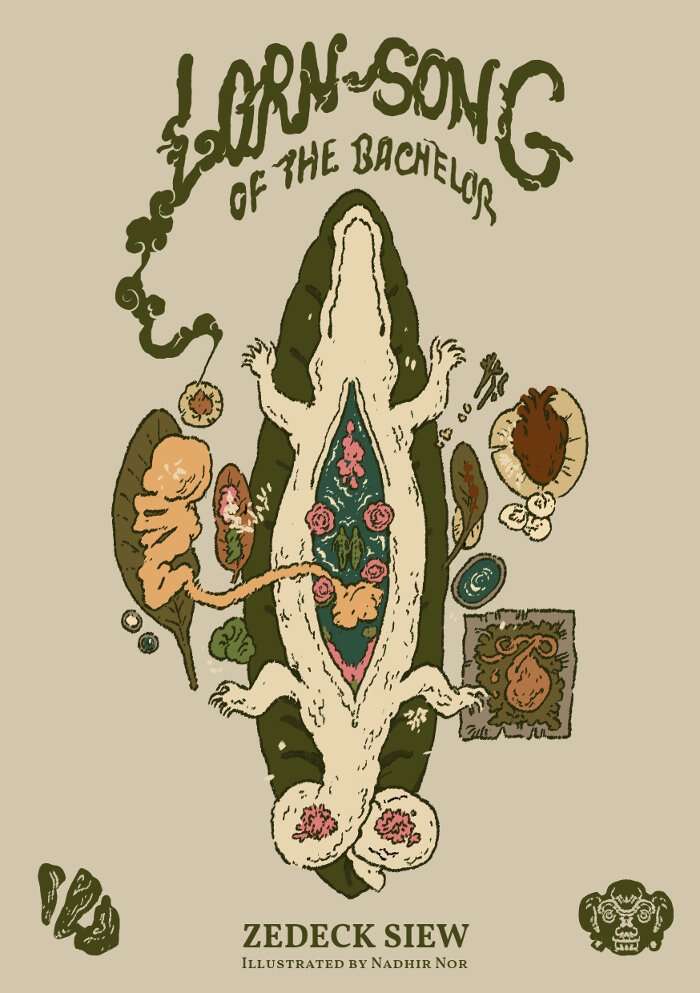
    I’m on there repping the DIY elf game scene this week! We talk about Lorn Song of the Bachelor, the Isle, Rumour Tables and random tables more generally!

    Check it out here! I can’t figure out how to embed it sorry.

    Idle Cartulary


    Playful Void is a production of Idle Cartulary. If you liked this article, please consider liking, sharing, and subscribing to the Idle Digest Newsletter. If you want to support Idle Cartulary continuing to provide Bathtub Reviews, I Read Reviews, and Dungeon Regular, please consider a one-off donation or becoming a regular supporter of Idle Cartulary on Ko-fi.

  • The Curse of Mizzling Grove

    My kickstarter for Zinequest: the Curse of Mizzling Grove is now live!

    Check it out here!

    I’m really proud of this one! I’m holding myself back a little compared to all my other projects, and so this is a constrained, 20 room dungeon and its immediate surrounds, laid out clearly with a one location per page layout.

    The layout is clean and easy to follow with a few excellent innovations I’ve drawn from Nightwick Abbey (Beyond the Pale does something similar too, but less elegant and I didn’t see it until afterwards) and it looks good. Niosis is doing stellar work on the art.

    It’s completely written and laid out. I’m hoping to playtest it a little more before I send it out to backers and the only thing we’re waiting on is the last few pieces of art before we send it to print!

    It’s 100% funded and I hit launch one hour ago, so I’m pretty confident the next two weeks of campaign will go just fine.

    If you’re interested in a little location to drop into any fantasy adventure game you’re running (it’s statted for B/X, but it’s not mechanically difficult to convert at all), this is a module for you, and the digital copy is only about USD$10!

    Anyway, back the Curse of Mizzling Grove! Every little bit counts!

    Idle Cartulary


    Playful Void is a production of Idle Cartulary. If you liked this article, please consider liking, sharing, and subscribing to the Idle Digest Newsletter. If you want to support Idle Cartulary continuing to provide Bathtub Reviews, I Read Reviews, and Dungeon Regular, please consider a one-off donation or becoming a regular supporter of Idle Cartulary on Ko-fi.

  • Designing an overworld-like megadungon

    I stalled on my in progress no pressure megadungeon project, partially because I’ve been busy, partially because I wrote my Megadungeon as an Overworld post and I want to try that out. I’ve been trying to figure out what a theme for a betwixt could be, and I’ve found a theme: “Theseus’ labyrinth crossed with sun-bull cultists” so I’ve started refining the procedure set out there and coalescing some of the posts I mentioned there into one place. This is the practicalities of designing an overworld-like megadungeon.

    • Where is the town? Is it at the surface, or in the dungeon?
    • Why is my megadungeon hostile to visitors?
    • Why visit the megadungeon if it’s hostile to you?
    • What’s the common, recognisable sub-dungeon entrance?

    Introducing Labyrinthine Mythras

    Labyrinthine Mythras is a giant, underground maze built by the chained imagination of a broken god to trap an undying beast, the Mythras. The inconsistencies of the gods’ mind caused their glitshen in the labyrinth. This bull-headed beast stalks the labyrinth for survival and for pleasure, but slips past the glitshen. Over the centuries, it became common for criminals to be thrown into the labyrinth as punishment for their crimes. Many of these folk built sanctuaries in these glitshen, walled off homes within the labyrinth that are protected from the Mythra; they are not always friendly.

    The labyrinth is all yellow stone brickwork and ionian arches, crumbling from age, vaulted to the height of the Mythras. Glitshen are recognisable from the queer mist that seeps from the portal, and obscures the view of what lies behind.

    The town of Yundun stands above the labyrinth, a town built upon the ruins of a city built by giants, full of crumbling towers and aqueducts repurposed by clever minds. Canny hawkers sell the labyrinth as an attraction, and nobility travel in trains for leagues to throw their into the pit.

    Why enter the labyrinth: 

    1. You made an enemy of Baron Wilhelm von Troomph, and were thrown there to rot.
    2. You stole from Baron Wilhelm von Troomph, and were caught. To repay him, you must venture into the labyrinth to recover the Ruby of Unincantible Order, or face death.
    3. The greatest thief in all the land, moments from capture, leapt into the labyrinth with his greatest prize: The Crown of Verdant Grace (as well of a large sack of other treasures). If it is returned to Queen Astraia’s hands, your reward will be land and title.
    4. Your dearest younger brother was thrown into the labyrinth despite his innocence. He must be rescued!
    5. The great hero Thessalys, one fought the Mythras to a standstill. Your vow is to do the same, after claiming Thessalys’ sword which he left implanted in a stone in the labyrinth’s depths.
    6. The Mythras can be killed, and is the key to immortal life. But the answer to how to kill it is buried deep in the labyrinth as well.

    The Whole Labyrinth

    Henceforth then, the betwixt is renamed labyrinth, and the sub-levels are renamed glitshen in this megadungeon.

    1. 2d6 x 100 rooms. Add a second town if larger than 300 x 1d4 rooms.
    2. 7-item labyrinth encounter table, 2d4, number 2-8, rarest is 1.
    3. Definitions:
      • Scenes are unique, non-hostile one-note puzzles or encounters. 
      • Lairs are unique, hostile encounters.
      • Utilities are hidden merchants or sages. 
      • Empty rooms in a labyrinth are typically scenes of carnage, just empty or signs of a traveler. as per the type table below.

    Individual rooms in the labyrinth 

    1. For type (d12): 1-2. Glitshen entrance; 3. Hidden Utility; 4-5. Lair; 6-7. Scene; 8. Scene of carnage (empty); 9. Signs of a traveller (empty), 10-12. Just empty.
    2. For connections (d12): 1. Stuck door; 2. Locked door; 3. Secret door; 4-7. Portal; 8-11. short hall; 12. long hall.
    3. Every 4 rooms, for subsequent elevation change (d12): 1. Increase (hidden); 2. Increase; 4-10. Remain the same; 10-11. Decrease; 12. Decrease (hidden).

    Thoughts

    I rolled a 700 room labyrinth, potentially with a town (which makes sense to be roughly half way). Now, this seems really intimidating, of course! 700 rooms???!!! PLUS glitshen???!!! Let’s math for a moment to rationalise.

    40% of those 700 will be empty (292), and 17% of those will be cut for glitshen (117). That leaves us with a much more manageable goal of 291 populated labyrinth rooms. I’m going to place that town whenever it makes sense after about room 250 (probably to replace a gitshen).

    The bigger challenge are the glitshen, which are absolutely huge in number. If I’m getting my mathematics right, the 117 rooms cut for glitshen will be replaced with 2 glitshen each. This makes me reconsider glitshen size, or at least, glitshen detail. Accordingly I’ve made a revision here: 1-2 is not necessarily a new glitshen, but rather a glitshen entrance, connecting with the glitshen criteria of multiple entrances, and also potentially reducing glitshen load. by up to half.

    Contents of a glitshen:

    1. Entrance description
    2. Unique visual or sensory theme and ecosystem 
    3. Number of rooms in sub-dungeon (2d6): 2. Trick or trap, perhaps a utility or scene 3. 5 rooms; 4. 10 rooms; 5. 15rooms 6. 20 rooms 7. 25 rooms 8. 30 rooms; 9. 35 rooms; 10. 40 rooms; 10. 45 rooms; 11. 50 rooms; 12. Trick or trap, perhaps a lair.
    4. Room type (d20): 1-3. monster with treasure, 4-6. monster, 7. trap with treasure, 8-9. trap, 10-12. special, 13. hidden treasure, 14-18 empty, 18-20. Combine 2 rolls.
    5. Connections: 1. 1 entrance; 2-5 2 connections to different levels; 6. 3 connections to different levels.
    6. 1d2 factions, with a monster punnett each.
    7. 7-item unique glitshen encounter table. 2d4+8, number 9-16, rarest is 16.
    8. It’s own independent little story or drama

    I reduced the room numbers in the glitshen from the first post, basically because of the mathematics earlier, but still want them to be proper stand-alone dungeons on the outsides. They should, however, be predictably 20-30 rooms, 40% of the time. That’s still huge!

    Encounters

    1-in-6 encounters can’t communicate. 3-in-6 have a combat (or escape) strategy. 3-in-6 need a trick to defeat them. Look at the last 5 encounters: If they’re all similar (same faction, species, approach) make the one weird.

    That Random Encounter Table

    So, the random encounter table from a few weeks ago has changed. Now we have a bit more detail: When we’re in liminal areas, we roll 2d8, when we’re in labyrinthine areas, we roll 2d4, and when we’re in glitshen, we roll 2d4+8. The latter + is just so they marry up easily, but here’s the idea:

    Dice roll2d4 chance2d8 chanceSuggestions
    26%2%Recurring travellers
    313%3%Labyrinth caretakers
    419%5%The Mythras
    525%6%Signs of the Mythras
    619%8%Scavengers
    713%9%Roaming hunter*
    86%11%Second-tier predator
    90%13%Labyrinth/glitshen interaction
    106%11%Ambush predator or interloper
    1113%9%Guardian or patrol
    1219%8%Beneficiary of the glitshen
    1325%6%Products of the glitshen
    1419%5%Common glitshen folk
    1513%3%Noble glitshen folk
    166%2%Mythic creature or exile

    The right column suggestions are inspired by Martin’s excellent encounter table. This is a bit neater than my earlier idea, simply because there’s a curve on the liminal spaces table here, and there’s a bit more space in 7 items each to make the encounters more detailed rather than have sub-tables. Recurring travellers are characters that the players may meet over and over again, and will probably be unique to any given campaign. Roaming hunters are deadly characters that I’ll make a list of, I think. Across 291 rooms, I think it would make sense for the labyrinth to evolve to some degree as well, which means I may iterate on the labyrinth encounter table.

    Overall Sit-down Procedure

    1. Generate Labyrinth (until we roll a Sub-dungeon)
    2. Generate Glitshen
    3. Repeat

    Concluding thoughts

    This really only leaves me with one concern, based on the theming of my dungeon: What do scenes and lairs mean in the Labyrinthine Mythras? Well, to support lairs, I’d be inclined to say that the Mythras will retreat when injured (even the powerful don’t like pain), and so lairs have something to block it away (small entrance) or traps to drive it away). And to support scenes, I’d say we have a combination of encounters with travellers, and also come up with a series of  blessings of the broken god — things like teleportation portals, healing pools, resurrection points, and shrines that contain riddles and quests that lead deeper into the labyrinth.

    The rest, I’ll write on my own, as my new no-pressure megadungeon. I may tweak this procedure, of course. Maybe, one day, you’ll see the Labyrinthine Mythras, but I’m not going to rush this one. I’ll hack this up into the minimum necessary document for me to keep up on the screen so I can write a little bit each day, and then start listening to Pandora’s Jar again to get my Greek-themed inspiration going.

    Idle Cartulary

    PS. I drew from a LOT of other peoples ideas here. Marcia B’s bite-sized dungeons, Yora’s similar ideas, Warren’s punnet monsters, Martin’s encounter tables. I didn’t refer back to anything them directly, but look them up!


    Playful Void is a production of Idle Cartulary. If you liked this article, please consider liking, sharing, and subscribing to the Idle Digest Newsletter. If you want to support Idle Cartulary continuing to provide Bathtub Reviews, I Read Reviews, and Dungeon Regular, please consider a one-off donation or becoming a regular supporter of Idle Cartulary on Ko-fi.
  • Bathtub Review: Tomb Robbers of the Crystal Frontier

    Bathtub Reviews are an excuse for me to read modules a little more closely. I’m doing them to critique a wide range of modules from the perspective of my own table and to learn for my own module design. They’re stream of consciousness and unedited critiques. I’m writing them on my phone in the bath.

    Tomb Robbers of the Crystal Frontier is a 62 page module written and illustrated by Gus L. The version I’m reading is for OSE, but it’s also available for Errant. It’s a module designed to introduce the inexperienced to the experience of dungeon crawling, and while the introduction implies that this is for the players, the referee gets a decent lesson too. A bonus module is also included, Common Grave, as well as a wealth of appendices expanding on the Crystal Frontier, itself a unique and interesting fantasy setting with a strong western twist, although the dungeon itself could drop into any setting, albeit as a fairly gonzo addition.

    I’ll start with the thing that initially strikes you: This book is hot. Gus’s art is excellent and stylish, as are his maps, which are very legible in addition to striking. There’s a piece of art for most spreads, but colour on every page, as the signature lavender is used to differentiate a range of texts, as well as some decorative flourishes. The layout is incredibly striking, and up there with Ultraviolet Grasslands with regards to strikingly good looking modules. However, the lavender highlights can be deceiving: there is some differentiation between stat blocks, alternating table rows, and referee advice (referee advice is all bold for example), but not enough, I feel like the lavender may be a little overused as a background colour, as it means you can’t differentiate at a glance between these things, and perhaps the lemon highlight might have been better for differentiating one of these. Bolding is used judiciously in the main text (although overused in stat blocks and referee advice), and no italics or other typographic variations are used making for a very clean looking page with clear indicators for points of interest. While I like the choice of font as a cover title choice and high level headings, I think it’s overused in lower level, small text headings where it’s less legible and appears transformed in various ways depending on the need of the page, which is jarring.

    The referee advice is clear and succinct, providing a defence of the elements of a dungeon crawl that the author believes are essential to play being enjoyable. I think it’s excellent, and helps the referee, especially a new one, answer the question of “why” when it comes to the procedures. I really like the way it describes combat, in contrast to the Principia Apocrypha: “Asymmetrical-encounters encourage treating combat as a puzzle rather than a gamble.” I’m reading the original version of the module, for Old School Essentials, and the main lack here is the fact that I find encumbrance in Old School Essentials somewhat clumsy and finicky to interact with. There is a new version of the module for Errant, which uses a slot based encumbrance system, and I feel like this version would lean into some parts of the author’s advice much more strongly.

    The dungeon itself is keyed clearly in a traditional style, with a strong voice evocative of the unique setting. Interesting choices are made early on about revealing the history of the dungeon that I appreciate — a viewing room, but one that punishes you excessively lingering there. It’s a little too wordy for my taste — some of the traps could have afforded less explication in my opinion — but given the stated audience of the module is introductory, clarity appears the priority here. It does appear to be aggressively edited for a particular degree of brevity, which is about half a page per room. This is perfectly digestible, although for me the choice of prose rather than dot points for this particular dungeon would slow play.

    “But Nova!” you say, “While the text is wordy, there’s a map in the endpapers that contains a complete, much briefer key to the dungeon!” I want to love this, and I love the idea, but I’m left a little unclear as to what the purpose is: I can’t run most of these fairly complex rooms from the map by itself even if I knew the rooms well and it doesn’t reference page numbers. My gut is that it is best positioned as a way to get room descriptions across in a simple way, but it’s a little too terse on this point. A very clever idea, that needs to be iterated on to maximise its usefulness. A rare occasion where I’d have preferred a busier page, I think.

    It’s an 18 room dungeon, and room for room these pack a punch. One particular excellent feature (it helps that the author is also the illustrator), is the trap visualisations for areas 8, 11, and 12, making some complex traps far more legible. Blank players visualisations for these traps come attached, as well. The rooms are heavily interrelated, so paying attention in room 2 will help you draw connections throughout the dungeon. There are key factions — characters, really in this case — that will almost definitely interact in such a small space. There are killer traps, but they receive a huge amount of foreshadowing. This dungeon would be a pleasure to play in.

    But it could be easier to run, I think. The summary of the factions at the beginning are too brief, for me to run from, but the appendix is overwhelmingly detailed for me. I could boil it down, and admittedly the prose is a pleasure to read, but it’s a layer of prep I don’t want in a short dungeon crawl. The referencing in text is unclear and often a source of confusion rather than clarity. The intent is to make clear the connections between rooms and factions, but it’s unsuccessful. This is somewhere a page or room reference would have been far preferable, as used in Lorn Song of the Bachelor and Reach of the Roach God. I think some of the appendix contents might be best placed elsewhere, especially the faction and crystal rules, which appear likely to be a major part of play. In the context of the clear intention for this to be a minimum setup straight-to-the-dungeon module, the appendixes expanding the local settlement Scarlet Town and frontier in general, feel like they belong elsewhere, perhaps in a future Crystal Frontier setting or sandbox (if I recall, the Crystal Frontier is the authors home game). A few missteps here then.

    The bonus Common Grave is a disappointment by comparison to the titular module, not featuring a fraction of the attention to history or to character. Still well-described, it becomes an exercise in risk management, choosing extracting treasure from the many tombs in fear of impending random encounters. It’s pitched as a low level module, but I wouldn’t play it before playing the main module as it’s less successful as a teaching tool, and afterwards it would be a disappointment. Sadly, there’s no clear levers for this module to incorporate additional character or to communicate the history in the text to the players, and it wouldn’t be amenable to hacks, but it might be salvageable as a tournament style crawl, in competition with a real or fictitious second party. I wouldn’t buy this for the bonus module.

    Tomb Robbers of the Crystal Frontier is an exceptional module. Its clarity of intent goes a long way in creating a strong, cohesive whole. Almost all of the authors guiding principles are clear and well elucidated, and work in concert with the content. It’s not a long dungeon, but not short, with probably enough content for three or four sessions, and it outperforms both Lair of the Lamb and Tomb of the Serpent Kings at their stated goals. Something that would be a pleasure to run for either beginners or for a more experienced group, in my opinion, and one of the better dungeon modules out there. I imagine it would perform even better in Errant, so if that’s a system you’re interested in running, I’d pull it off the shelf.

    Idle Cartulary


    Playful Void is a production of Idle Cartulary. If you liked this article, please consider liking, sharing, and subscribing to the Idle Digest Newsletter. If you want to support Idle Cartulary continuing to provide Bathtub Reviews, I Read Reviews, and Dungeon Regular, please consider a one-off donation or becoming a regular supporter of Idle Cartulary on Ko-fi.

  • Diagetic advancement and inventory

    People really seem to have trouble with diagetic advancement in games like Cairn, which is really disappointing in many ways, because I prefer diagetic advancement to mechanical advancement almost universally. Like, it makes more sense, right? I was chatting with Sam on discord about something, honestly, completely different, and I came up with this approach to making it make compelling for a wider range of people.

    Animal Crossing badges

    Whenever you do something in the world that advances your prestige in the eyes of a faction or powerful figure, you get a badge. This thing goes in your prestige inventory, which is a separate, infinitely large inventory for stuff your friends and allies give you. You can invoke the badge when it’s appropriate to get a specific special bonus or to get cool stuff or something, whatever makes sense for that particular powerful figure.

    Now, of course, it doesn’t have to be a badge and in fact shouldn’t be a badge, I’m stealing that term from videogames because it feels super appropriate here. It’s a challenge coin, or it’s a medal or trophy, or it’s a sash that you can wear, or it’s a tattoo or your knowledge of a secret handshake. Write what the badge actually is down when you get the badge.

    So, in play it looks like this:

    Phonos the Thief saves the High Moose of the Guild of Merry Murderers in Ashfield City, and they owe him now. She gets a Black Token, a cast iron coin used in exchange for a single assassination. This Black Token can be used at any time to gain the attention or assistance of guild members, or can be cashed in permanently to have anyone she wishes assassinated, by depositing it in an envelope in a secret drop location in Salmony Square.

    Or perhaps like this:

    Galliard impressed the Unicorn Council in the Forest of Blades, after working tirelessly for peace between the Sparkling Herd and the Grimsby Hoblins. The Queen of the Forest lays her horn upon Galliard’s forehead, leaving a mark that only the fae can see. Now, whenever she encounters a fae in league with the Unicorn Council or the Grimsby Hoblins, she gains advantage on reaction rolls, and whenever she encounters the Sparkling Herd or the Grimsby Hoblins, they will grant her any aid that does not inconvenience them greatly.

    I think badges as a form of advancement work best in a game that already has a slot-based inventory system, simply because it feels like it should be part of the system already. And having your “prestige inventory” on your character sheet suddenly makes people go “wait, how do I get prestige loot?” and your response is: Help other powerful people and groups achieve their goals. And suddenly, part of your character sheet becomes a hook by which the players grasp the campaign with both hands.

    Anyway, cool idea.

    Additional ideas from responses to this post:

    Skander suggests these could replace money altogether in some campaigns:

    Yash suggests they could also represent negative reputations as well!

    Idle Cartulary


    Playful Void is a production of Idle Cartulary. If you liked this article, please consider liking, sharing, and subscribing to the Idle Digest Newsletter. If you want to support Idle Cartulary continuing to provide Bathtub Reviews, I Read Reviews, and Dungeon Regular, please consider a one-off donation or becoming a regular supporter of Idle Cartulary on Ko-fi.

  • I Read Mausritter

    I Read Games reviews are me reading games when I have nothing better to do, like read a module or write or play a game. I don’t seriously believe that I can judge a game without playing it, usually a lot, so I don’t take these very seriously. But I can talk about its choices and whether or not it gets me excited about bringing it to the table.

    I was going to go to a BBQ today, but my kids are sick, so instead I decided to read Mausritter. Mausritter, by Isaac Williams, is a free fantasy adventure game where you play teensie tiny mice, doing teensie tiny things in a huge and dangerous world, full of magic. I’ve never read, watched or played any of the animal fantasies in the acknowledgements section, so I’m not sure exactly what it’s vibing off. I read Duncton Wood and its sequels as a girl, but they’re about moles — totally different vibe from mice. I’m not reviewing the free adventure, though, because I was lucky enough to snag the boxed set directly from the author (who’s relatively local, and had a spare copy in his garage), and in addition, I’m going to read the Estate, the second Mausritter boxed set. These two boxed sets are what I’m reviewing (because I only understood Mausritter after I read them together), but I’ll talk about the free version too.

    Cutting to the chase: Mausritter (plus the Estate) is the best game I’ve ever bought. It might be the best game I’ve ever played (that’s a complex beast). It is nigh perfect. It is a better fantasy adventure game in the style of D&D than any game that has ever been called D&D, and any game that has attempted to better it before. The reasons for that are multifaceted, and I’m saying things as a collection: For me, Mausritter and the Estate should be considered as essential purchases for the understanding of each other as the Dungeon Masters Guide and the Monster Manual are for most editions of D&D.

    The rulebook is 44 pages, and only 12 pages of those are the actual game rules. And those rules are basically just Knave but More. Why isn’t Knave the best game I’ve ever played, then? Maybe it’s in the extra pages? No, but they help. The additional 24 pages are one of the best how to run a fantasy adventure game sections I’ve ever read, covering best practices, a bestiary, how to build a hex crawl (including settlements) and how to build adventure sites. Those 24 A5 pages are a better guide to running a game in this style than anything I’ve read, aside from perhaps the Mothership 1e’s Warden’s Guide. But you know what? I’ve been playing these games since 1993, is there anything in this rule book that’s new? Nah, not really. It’s masterfully put together, it excises any chaff, but there’s nothing at all here, I think that’s actually new.

    The internal art is cute and thematic. I don’t think it could be better, for the theme. The manual itself is waaaay too dense, and could easily have been spread over a few more pages and given space to breathe. It’s not hard to find your way around, but it’s not easy. It’s not laid out excessively, though, perhaps to its detriment: The blackletter font choice is a little hard to read at small sizes, and those headings could have benefited from a third font choice. It would have made the current blackletter headings easier to differentiate, I think, as it’s overused. It’s supposed to be simple enough to remember, I think. It’s not far off, but a lot of the tables could be pulled out and put in a rules reference instea — wait, no, they thought of that. Everything you want is pulled out into a rules reference in the back.

    You don’t really need the book. In fact, if you have any experience running games like this, you could run this game from the rules reference. It even includes an example hex crawl and adventure site, which you can just use to start playing immediately. If you don’t need the book, and the book’s not that innovative, why is this such a good game? Well, let’s open the box…the first thing I see is that a lot of my complaints of the digital layout don’t apply to the print copy. It’s a hardcover A5 book, with a window in the front of it, peering through a tree hollow into a view of an exploring mouse. The text is so much more readable in print than in digital. It feels lovely and cool in my hands, and it smells like fresh bookery. It’ll last a lot of play. Next, a pad of character sheets: Ahhh, characters are dispensable. Good to know. They’re illustrated and simple as; you can see it’s easy to play this game. There’s a cardboard tracker, with a wipeable marker, to render travel easier and to keep notes on the player mice if you’re the referee; this game isn’t centered around combat, but around travel. Huh, interesting. There’s a referee screen, with every piece of information that felt crammed into the text given space and arranged logically. The art on the back of the referee screen is full colour, gorgeous, in the style of Wind in the Willows, or at least what I’ve seen on covers of those books. There’s a rules reference to sit with the players, as well. And there are pages and pages of punchcards: These are spells, magical items, they’re items, and they’re conditions. You place these on your character sheet, you don’t write on it. You play tetris with them. There’s something lovely and nostalgic for me, with punching cards, like we used to in wargames that came in envelopes in the 90s. Mausritter is so damned tactile.

    It comes with a module, as well. Honey in the Rafters is a single-colour, trifold, with A5 pages. Its single colour is yellow — that becomes important later — and it’s fully illustrated. Everything for the module fits here — stat blocks, a keyed map, hooks, treasures, random encounters and a summary, as well as a “cover”. Between this and the stuff in the rule book, you’ve got tools to play for a long time.

    But! You cry, We’ll lose all the items inbetween sessions! That’s so annoying! Yeah it is, unfortunately there’s nothing we can do about tha —We come to the Estate. The Estate is the apparently optional second boxed set from the Mausritter team. The box is lovely, full colour, a view of the Estate within. Wait, did I mention that the Mausritter box was sturdy, just big enough to fit an A5 book and hence, just big enough to fit on a bookshelf with your other roleplaying game books, and also full-coloured and gorgeous with unique art? It was. So is the Estate’s box. I open it and… oh! Will you look at that? Little paper backpacks, to keep all of your equipment in. And more punchcards, for all the unique equipment and conditions in the Estate! And…wait, I thought this was an adventure location? Where’s the book?

    Spoiler alert: There is no book. Instead, there are eleven (why eleven? strange number choice) single colour A5 trifolds. Not one of them is yellow, but they’re all unique colours otherwise. Oh, right. There are twelve: The twelfth was in the first boxed set. It also comes with a reference card to assist with running a race that occurs in one of these trifolds, a big A3 poster map of the entire estate to sit on your table, and a 6 page zine that pulls it all together (that was actually at the top of the box, I lied earlier for the sake of the segue).

    What we have here is a 19 hex hex-crawl, with 11 adventuring locations, 5 settlements, 4 major factions, and a boatload of connections. Each of those adventuring locations gets its own card, and would take a session or two to run. They’re written by a veritable who’s who of module writing, people like Amanda Lee Franck, Diogo Nogueira, and Nat Treme. Each and every one of them is excellent, but acts within the same limited format of the aforementioned Honey in the Rafters. They each have a number of connections, so you’ll be pulled from one adventuring location to another. They are, by design, brief and minimal: The design brief here was clearly keep it simple and the result is that I could give these to my 5 year old to run. Does it mean they’re as robust as they could be? No. But they’re beautiful and usable.

    Have I answered why this is the best game I’ve ever bought? It might seem like I had, but actually I haven’t. I’ve just told you a lot about how close it is to perfect. It’s a well put together game, perhaps the best put together I’ve ever seen. It’s better than the Pathfinder and D&D 5th Edition boxed sets, with all the money that goes into them, and in addition it contains all the rules and if you get the Estate, play for a year. So…why then?

    First, I’ll talk about the counterargument. I bounced off Mausritter and hard when I read the pdf many years ago. It’s better, now, and the boxed set is better again, but it wasn’t the rules that I bounced off, it was the setting. I didn’t quite understand the particular melange it presented of classic, low-fantasy dungeon-crawling and English countryside talking animal-land. I couldn’t picture what play would look like. What’s a car in this scenario? What happens when we finally confront a human? I just couldn’t wrap my head around it. I didn’t know what a session would look like. I could see the rules as elegant ones, but my thoughts were more: Let’s take this cool Knave hack and hack it back into classic fantasy, because I don’t get the mice. It took the Estate for me to get the mice. To understand how cats in this world are dragons (I should’ve gotten that from the manual, but I didn’t), that owls are wizards and frogs are goofy knights. That I could just decide to make the world work the way I chose. That a mouse could be corrupted, perhaps, by a gluttonous centipede, but that they could as easily be tricked by a vanilla faerie. You might feel the same way: You might not get the mice.

    Stop rambling, you cry, why, then, is this the best game you’ve ever bought, and perhaps played? It’s the mice. Those very mice I didn’t get until I laid my hands on the Estate: Those mice. The classic mode of play of the fantasy adventure game — the you’ll see me talking about people like Gus L trying to rehabilitate, and with success in my opinion — is one where your player characters are weak, and the world is dark and dangerous, and where caution is necessary. Not necessarily the grim dark we see in many takes on classic play, but cautious and dangerous, and gleeful in the havok and clever avoidance of death. And when my friends with their experiences of World of Warcraft, Skyrim, and the Lord of the Rings movies show up with their tiefling warlocks and dragonborn paladins, they charge in, die, and get upset. And fair enough. A demon-fathered spellcaster and a paladin who’s part dragon himself should be able to stand toe-to-toe with a dragon. They’re clearly, clearly playing superheroes. But as my friend Warren of Prismatic Wasteland once said: No mouse can stand toe-to-toe with a dragon. Everyone knows this. There’s no question that if you’re a mouse, and you come up against the dragon, you’re a fool if you go toe-to-toe with it. And thus, Mausritter is the purest and most perfect distillation of what Dungeons and Dragons in its classic mode, is supposed to feel like. You don’t have to teach anyone a new (old) style of play. “You’re a mouse, with a needle for a sword, in a dangerous world” is shorthand for it.

    I haven’t yet mentioned the community yet, either. here are, at a cursory glance, translations into seven languages. There’re random online generators and VTT modules. Printable templates of everything for free if you run out of what’s in the boxed set or they get destroyed or overloved. There’s a Mausritter Library of hundreds of supplements, bestiaries, and adventures. There’s a collaborative megadungeon called Tomb of a Thousand Doors that was built on the Mausritter discord, on Kickstarter right now, that looks wild and has raised $100 000. And that discord is booming. There’s support behind this game unlike any other indie elfgame I’ve seen. Honestly, the community seems more passionate even than the Mothership crowd. If you choose to wade into this pool, you won’t be alone in the water.

    I wouldn’t recommend you download the free version of Mausritter, because if you do, I suspect you’ll have the same response as I do, unless you’re intimately familiar with the texts that inspired it. But with both the Mausritter and Estate boxed sets in hand, this is perfect. I’ll play with my children when they’re old enough (very soon now!), long before I suggest playing my own Cairn or Old School Essentials or my own Advanced Fantasy Dungeons, let alone actual D&D of any edition. I want this perfect game to be their first experience of the hobby. I couldn’t think of a more perfect gift.

    Idle Cartulary


    Playful Void is a production of Idle Cartulary. If you liked this article, please consider liking, sharing, and subscribing to the Idle Digest Newsletter. If you want to support Idle Cartulary continuing to provide Bathtub Reviews, I Read Reviews, and Dungeon Regular, please consider a one-off donation or becoming a regular supporter of Idle Cartulary on Ko-fi.

  • Bathtub Review: The Valley of Flowers

    Bathtub Reviews are an excuse for me to read modules a little more closely. I’m doing them to critique a wide range of modules from the perspective of my own table and to learn for my own module design. They’re stream of consciousness and unedited critiques. I’m writing them on my phone in the bath.

    The Valley of Flowers is a 150 page setting and module for Old School Essentials and Cairn by Jedediah Berry & Andrew McAlpine. This is a monster undertaking, and features everything you need to adventure in the Valley of Flowers, an arthurian-inspired setting, including multiple points of interest complete with unique maps, a full area hex map and a city map.

    It’s so massive I’m having trouble figuring out where to start. The layout here is impeccable and has great vibes — floral borders, clear, readable headings, ornate initial lettering, clear signalling such as grey boxed text for characters and yellow boxed text for other points of interest, as well as text colour changes. The borders change colour with section, while remaining ornate. Statting a module of this size for two systems is usually a mess, but here it’s completely unobtrusive. It uses every aspect of its typography and layout to strong effect. More colour releases should use their money this well.

    It opens with 15 pages of general information and introduction; this was a stumbling block for me I admit, the long prose and unclear applicability really put me off continuing to read for some time. Once we get past that, though, we hit the jackpot with a pointcrawl of back-to-back locations. They reasonably vary significantly in complexity, but the most complex (major population centres, a whole bucketload of dungeons) are up to 8 or 9 pages, with the briefest at 2 pages. A lot of these are neat enough to review on their own — but that’s too huge an undertaking for this particular bath. Suffice to say, they’re all solid, and just with these two thirds of the book, you could certainly run an arthurian-style romantic fantasy campaign that looks to be a hell of a lot of fun, something the last book I reviewed that attempted it — Barrow Keep — failed to do so in comparison.

    But that’s only two thirds of the book accounted for. The final third is a city, Cimbrine. It comes mapped, with major points of interest detailed. It falls short compared to a city module like Fever Dreaming Marlinko, but it’s very strong. A major failing is a reliance on character and location generation, intended I think to magnify the scope of the city. Instead it just makes it harder to run. I’m not opposed to generators — they use a similar method for generating merchant encounters which is honestly perfect for a bustling market. But just give me a list of nobles and their relationships, or a list of the towers of the city, please.

    Is it without flaws? No. There are locations — the market and bazaar for example — that lack descriptions that I’d have liked to differentiate them from the rest of the nearby locations. This is representative of a lack of attention to detail that prevents the Valley of Flowers from being a five star act.

    A major criticism I have of the book in general is a heavy reliance on rumour tables to direct traffic to points of interest. I’d have loved to see this in random encounters as well, but their use to this end is limited. For something of this kind of scope, a little procedure for restocking already seen encounters and rumours would have been beneficial as well; I’m not criticising the choice of 6 encounters and 6 rumours per area, but I could see them drying up quickly without a method to either restock or to add variety to those encounters, perhaps a second d6 roll to diversify the details of the encounter.

    Another criticism is the map of the Valley. we have five hexes, with seven or more points of interest in each. Most of them are connected by trails — that’s a nice touch — but you definitely can’t wander through this wilderness. I’d have preferred if this had had a smaller hex key, or had just chosen to be a point crawl instead. Hopefully that hex crawl will become more meaningful with the promised expansion?

    It’s heavily illustrated and for the most part the art is just fantastic, but the I find the lack of style matching in the artist selection a little jarring; it swings from inked to painted to sketched and back again very quickly. The maps similarly are of massively varying style. This is a case where I think the scope of the book met with the budget and the presentation has suffered. That said, while some of the maps are flat out ugly in my opinion (the Abbey comes to mind), most of the art individually is a perfect match with the vibes; it just clashes tremendously amongst itself.

    Y’know what, I haven’t talked about the writing itself. There’s a lot of it, but in short, terse sentences, just like I like it. What’s the sun doing today? “Sneaking along the horizon like a cat, casting long shadows.” What’s happening tonight? “Settling a dispute between two phantoms possessing the same woman.” Who’s in the inn? “Sir Amis the Indefatigable (haggard, tired, knight).” I didn’t cherry pick those, I opened the book randomly to three pages and picked something compelling. There places, though, where this beautiful writing fills three paragraphs at the top of a new location my players just arrived in, and I don’t really want to pause for a few minutes while I figure out what’s going on. There are some locations that use for points to separate out salient information; this probably is a feature that could have been used less sparingly.

    Individually, nothing in Valley of Flowers is a five star effort, but the whole package? Nothing else compares that I’ve seen. This is a success on a scope I see only expansive and expensive products like Dolmenwood attempting, to be frank. You could play in this for a year, and on the cover it says there’s a second volume coming. You could start here and strap yourself in for the long haul. I’m talking 37 locations on the map, and a city to boot. If you’re looking for something to keep you and your table occupied for a while, and you’re looking for a romantic vibe, this right here? Has it in spades. Honestly it’s such a pleasant surprise, if I’d read this in December when I’d planned to, I’d have given it a Novie Award.

    Idle Cartulary


    Playful Void is a production of Idle Cartulary. If you liked this article, please consider liking, sharing, and subscribing to the Idle Digest Newsletter. If you want to support Idle Cartulary continuing to provide Bathtub Reviews, I Read Reviews, and Dungeon Regular, please consider a one-off donation or becoming a regular supporter of Idle Cartulary on Ko-fi.

  • Jaquaysing

    Anne wrote this post about the background on the use of the word Jacquaysing: Xandering is slandering. It collects a lot of evidence of bad faith acting of the author of the term “Xandering”, and reflects strongly how I feel about the term. I’d encourage you all read it.

    Thanks, Anne.

    Idle Cartulary


    Playful Void is a production of Idle Cartulary. If you liked this article, please consider liking, sharing, and subscribing to the Idle Digest Newsletter. If you want to support Idle Cartulary continuing to provide Bathtub Reviews, I Read Reviews, and Dungeon Regular, please consider a one-off donation or becoming a regular supporter of Idle Cartulary on Ko-fi.

  • Rules Sketch: Safe Zones

    Thinking about saving throws for NPCs, after a comment last night (thanks Tuck!). Now, there needs to be some mechanism to account for monsters having special responses particularly to spells and area of effects, so I’d been including Saving Throws as Class, like in some versions of B/X.

    But Psionic Combat opened a new angle on this for me, because it uses blackjacks, like some other popular games like Errant.

    The average saving throw rolled by a PC will work out about 10, with a standard deviation of about 2.5. That can give us a few convenient zones for monsters, who save as a warrior equal to their hit dice. So, if I abstract this out to a Blackjack, we can give each monster a “Safe Zone” for special effects. We can place these at saving throws of 12, 15 and 18 to represent increasing levels of difficulty, and render those instead as a blackjack number of 2, 5 and 8.

    For our poison resistant creature, 8 (Poison). For spell-casters, we might give them 2 (Spells). We’ll key these into the saving throws generally, I think, but there’s flexibility here. Like, for our agile monster who can avoid areas of attacks easily, we might give them a safe zone of 5 (Breath weapon).

    Actually, now that I think about it, we can tie these straight to HD, which relates to how AD&D 2e actually does it. So, the strength of an 8 HD creature’s safezone would generally be 8; half that for a weak safe zone.

    Monsters that have special defences have a safe zone. This safe zone is generally equal to half their hit dice, or half that again if it’s not a primary part of their theme. Safe zone is the number you have to roll higher than in order for them to gain the full brunt of certain attacks. If a PC rolls lower than the safe zone (but also lower than their ability score) on the attack, the monster takes half damage or limited effect. If a PC rolls higher or equal to the safe zone (and lower than their ability score) on the attack, the monster takes full damage or effect. Safe zones are typically equivalent for saving throws, but can often be more specific.

    Ok, this is my quick revision of saving throws. I keep figuring out new things, so keep revising hahaha. I guess it’s good Marcia B persuaded me to make some monsters then.

    The Advanced Fantasy Dungeons index is here!

    Idle Cartulary


    Playful Void is a production of Idle Cartulary. If you liked this article, please consider liking, sharing, and subscribing to the Idle Digest Newsletter. If you want to support Idle Cartulary continuing to provide Bathtub Reviews, I Read Reviews, and Dungeon Regular, please consider a one-off donation or becoming a regular supporter of Idle Cartulary on Ko-fi.

Want to support Playful Void or Bathtub Reviews? Donate to or join my Ko-fi!


I use affiliate links where I can, to keep reviewing sustainable! Please click them if you’re considering buying something I’ve reviewed! Want to know more?


Have a module, adventure or supplement you’d like me to review? Read my review policy here, and then email me at idle dot cartulary at gmail dot com, or direct message me on Discord!


Recent Posts


Threshold of Evil Dungeon Regular

Dungeon Regular is a show about modules, adventures and dungeons. I’m Nova, also known as Idle Cartulary and I’m reading through Dungeon magazine, one module at a time, picking a few favourite things in that adventure module, and talking about them. On this episode I talk about Threshold of Evil, in Issue #10, March 1988! You can find my famous Bathtub Reviews at my blog, https://playfulvoid.game.blog/, you can buy my supplements for elfgames and Mothership at https://idlecartulary.itch.io/, check out my game Advanced Fantasy Dungeons at https://idlecartulary.itch.io/advanced-fantasy-dungeons and you can support Dungeon Regular on Ko-fi at https://ko-fi.com/idlecartulary.
  1. Threshold of Evil
  2. Secrets of the Towers
  3. Monsterquest
  4. They Also Serve
  5. The Artisan’s Tomb

Categories


Archives

January 2026
M T W T F S S
 1234
567891011
12131415161718
19202122232425
262728293031  

Recent Posts