• Advanced Fantasy Dungeons

    Advanced Dungeons and Dragons, Second edition has a place in my heart, as my first edition, that filled my eight year old imagination with wonder.

    It’s not very good though. I was wondering if an retroclone of second edition, like the many versions of Holmes, Moldvay and BECMI, and like Iron Falcon, would be a fun exercise. Let’s call it Advanced Fantasy Dungeons.

    The thing is, second edition was transitional: A shift from high lethality low fantasy dungeon crawl to heroic high fantasy narrative play. What is it’s identity? Does it have an Exandria, a Nentir Vale, a Ptolus, a Ravenloft, an Against the Cult of the Reptile God or a Keep on the Borderlands?

    Perhaps not. There was so much of second edition! I think I’m going to try to find it, as an exercise. I think I’m going to initially focus on the primary texts of the PHB and DMG, but also dip into the MM, simply because AD&D stat blocks are one of my favourite things about the edition.

    I have an overwhelming feeling that Advanced Fantasy Dungeons will be a lot like fifth edition, because although I’m aiming for a retroclone, it’s still a retroclone of a game that isn’t very good, a transitional game. It’ll need a lot of “in the spirit” decisions, extending decision making to its logical conclusions, and simplifying things unnecessarily complicated.

    So, some principles for my initial read through of the PHB, DMG and MM:

    • Be intentional with what dice to roll
    • Draw optional and new systems to their logical conclusions
    • Use these concluded systems to simplify the system overload that’s present in the originals
    • Remain in the intent and spirit of the original, and use historical context to help to understand what that intention was
    • Excise discrimination
    • In the light of the above, consider the role of the expanded product line in the identity of the original

    These are very individual design goals, for me. I think I’ll take a break from Infinite Hack for a while to focus on Advanced Fantasy Dungeons, and see what I can draw out of it.

    If there’s any interest voiced, I’m happy to write a read-through here on Playful Void, before I start to write up something based on what conclusions I’ve drawn. So like or comment, if you’d like to see that.

    Idle Cartulary,

    22nd March 2022

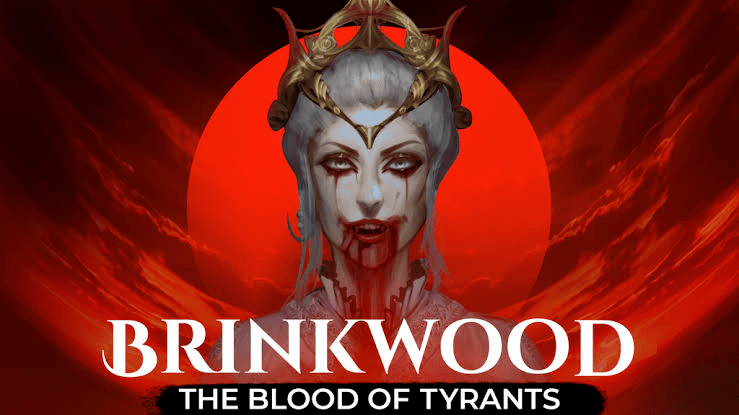
  • These boundaries are pleasing to me: An Intentional Review of Brinkwood: The Blood of Tyrants

    I’ve been reading Brinkwood: The Blood of Tyrants by Eric Bernhardt (available in digital and print). This is a review with an eye for canon-text, mech-text, and anti-text, and I hope to gain insight into how minimise mech-text, and maximise anti-text. I hope it’ll lead me to reassess the principles I’ve previous drawn; or at least add to them. Disclaimer: Erik is a twitter mutual and I backed Brinkwood on Kickstarter.

    Header image from the Brinkwood Blood of Tyrants Kickstarter

    Brinkwood has a pretty clear premise (1): You’re Robin Hood, and you make pacts with fae to gain enough power to defeat Vampire Sheriff of Nottingham. This gives it a win state and a goal for ‘forays’ that limits player decision making to a significant degree that I find pleasing. Why is this limitation pleasing to me? By comparison, Doskvol, the city in which Blades in the Dark is set, is arguably a fantastic anticanon text. Why is less, more, for me?

    The basic thesis of The Monomyth Thread, an article by Hy Libre (2) is: There is comfort, safety and enjoyment in “Playing to find out how our characters experience this specific story”, in contrast to the open-ended goal most games of the Apocalypse World lineage claim: Play to find out what happens. Brinkwood, has a clear arc for your character and your rebellion: The rebellion will eventually overcome the Vampire Lord, and your character will go from driven by tragedy to driven by hope. The pleasure is in the journey; there is comfort in knowing you’ll arrive at the destination irregardless, and that the surprise is in how you’ll get there. For me, this is a strength of Brinkwood’s, and brings a brevity and clarity in the text that I appreciate as well.

    The Introductory chapter spends talks a lot about genre expectations, what the game is about, a few pages about the setting, and then a bulky getting started section including safety and subject matter. I fully recognise this is fairly boilerplate, but for me it’s difficult to get past. I understand the purpose here: We have a potentially unsafe subject matter, a very specific world and goals, and so Bernhardt needs to address these out of the gate. But the way it’s presented dilutes the effect.

    I don’t have a solution, though. Do we need to talk about safety tools in detail in every book, do they need to be baked in like Wanderhome does, or can we refer out to the primary sources and expect people to be responsible for their own safety? Brinkwood is well organised, do we need a getting started section at all? As much as I understand the urge to define Castylpunk, pose dramatic questions, and talk about the potential themes different Vampire Lords might lend to the game, I think most of this is neatly folded into the text already, and the additional text feels like it doesn’t trust me, the reader, to grapple with the text on its own terms.

    The worldbuilding in the Introductory chapter, though, along with the overview of the Vampire Lords, is excellent anti textual writing, especially the Vampire Lords. The setting summary is four headings, about twelve paragraphs, and while I feel it could be terser, it covers everything you need to know to drop into a complex world. The Vampire Lords have a mood-board list, and two or three sentences each. This could have been the entire chapter, and I would have been hooked instead of exhausted when I got to the mech-text that follows.

    I like the Forged in the Dark rules a lot, because they articulate a lot of unspoken conventions such as negotiation, shared worldbuilding and phases of play and in doing so sets clear expectations that result in consistently fun sessions. In terms of absorption, opening with a list of changes, most of which are concerned with the existence of a developing rebellion or your pacts with powerful Fae, is a good way of focusing in on canon-text, in what is necessarily a mechanical, ‘copied from the SRD’ chapter, and there are innovations like Threat which make running a fluid, improvised game easier, which I appreciate a lot.

    While I think Chapter 3 betrays some antitextual potential in the name of a smoother process, it’s pretty great. Every associate a player is assigned is dripping with promise, as is each tragedy. The example bonds listed are varied and inviting, but encouraging unique connections. The collaboratively designed Fae, the nature of Masks, and the ritual of the Pact are delightful and open ended and allow the whole table a huge impact on the story that unfolds.

    Chapter 4 is an entire chapter about a significant new mechanic, Masks. As is the habit in Forged in the Dark games, Actions, intended to be widely applicable, are often over-described unnecessarily: “When you disarm, you remove the ability of another to harm you. You might use snarling and threats to convince an enemy to give up a fight, or a deft twirl of a dagger to knock a blade aside, or soothing words to convince a would-be ally that you wish them no harm.” For me, second sentence is entirely unnecessary, especially in the context of actions already been given this treatment in Chapter 2. The mask’s personalities and possible looks are very neat, messy, and evocative, leaving mystery as in the last chapter. The special abilities are mechanical as Forged in the Dark abilities tend to be, and these decrease their magic, but their names are evocative writing that expand on the possibilities given by the actions and the personality of the mask. The next few chapters do the same, and with similar effect. Lots of mech-text, not much in the way of canon-text or anti-text. Forged in the Dark games often do this (it might be fun to review CBR+PNK or another “Forged-Lite” game soon as a response to Brinkwood, actually), but it’s difficult reading for me. That’s not all negative: There’s a special kind of enjoyment and safety in mastery of a mechanical system, and Forged in the Dark games smartly spread their mechanics out over the entire narrative arc, using them to drive story in ways other than combat. I don’t want to optimise a 5E character, but I do want to optimise my Brinkwood character, because it promises complex and interesting stories will evolve from it.


    So, skipping to Chapter 8. It’s a mech- and canon-text chapter about the Vampires, and it’s neat. Innovative in terms of categorising foes, and full of names that are mysterious and evocative – Dramcoats, Bit-bloods, and Wisps. Vampiric Abilities are left vague and brief, in the best possible way. Lords have five-line lieutenants with two-word schemes, and unique mini bosses like Kidnapped Dryads and Roaming Goremass. I think it chooses to expand upon some of these too much, and some too little, but overall this is an exceptional anti-textual achievement, and leaves you excited to improvise campaigns in the demesnes of these Vampire Lords. Chapter 9, at the other end, develops an approach to both individual scenes and complex end-game scenarios that is approachable, terse, and interesting. Very cool anti-textual work, which I appreciate, but less exciting than Chapter 8.

    So we have a book of 150 pages, half of which are solidly procedural and the other half of which are not. The procedures in the book make clear that they’re expected to be followed, and I think that’s interesting, because in my experience Forged in the Dark games work as advertised. The rules actually do reduce ambiguity, set expectations for play, and make for a fun time. And, for the most part, they’re replaceable: Bernhardt literally writes that: “[…]pull on your experience with Forged in the Dark, your ruling will likely be accurate enough […]”. Having played Blades in the Dark, I could wing running Brinkwood with just a skim of the rules and the various play sheets in front of me.

    The void in Brinkwood: The Blood of Tyrants is a fascinating one then. By contrast with the complex and well-developed Duskvol of Blades in the Dark, Cardenfell is only touched in in pieces, a map is given, but no locations (aside from a blink and you miss it map), characters are given, but they may not exist if you choose a different Vampire Lord, even factions are two or three sentences of description, without even schemes or clocks attached. Brinkwood leaves the world blank, with the primary actors being the Brigands and the Vampire Lords against which they rebel. Blades in the Dark wants Duskvol to be a real place before you set foot in it. When I run Blades in the Dark, I have to sift through a complex and unending list of factions and locations, choose which act and which don’t, which exist and which do not. Brinkwood factions and locations only exist when they are brought into play, and they are brought into play through conflict with the Vampire Lords, if that conflict is perceived by the Brigands.

    It’s a fascinating backpedal, actually, towards the narrative-first verisimilitude of Apocalypse World, from the megadungeon-inspired verisimilitude of Blades in the Dark. It’s neat, it’s simple, and for me, it’s way easier to play, to run, and to prepare. Blades in the Dark was not, because for me it’s anti-text was sprawling, poorly organised, difficult to choose from.

    The Forged rule set does impede understanding and reveal intent here, but by leaning on the work of it’s predecessors minimises the dangers thereof. The textual void, similarly, is compromised by a lack of trust in the readers to interpret the intentional broadness of it’s choices. But the lore and the rules being around structure and interaction, mean that reckless creation is encouraged, and the evocative and cryptic world-building leaves me buzzing. The main new principle I can draw from reading this is that the amount or organisation of anti-text is as important as it’s how evocative and cryptic it is. And this, interestingly, brings us back full circle, to the Monomyth Thread: The limitations, spoken and unspoken, set by Brinkwood, create a more pleasing antitextual playground more pleasing to me than the sprawling, diverse possibilities developed by Blades in the Dark.

    How do you feel about this principle? How did you feel about reading or playing Brinkwood: The Blood of Tyrants?

    1 Although honestly I’m puzzled why Erik didn’t choose to front up with it more clearly.

    2 Disclaimer: I participated in the conversation that initiated the article and game in the Monomyth Thread being written.

  • Everyone’s a dragon

    “Dungeons and Dragons, but there are ONLY Dungeons and Dragons. Every place is some variety of Dungeon. Every creature is some variety of Dragon.”

    For real, this is how I prepare places and people, often while play goes on, on scratch paper. I discussed the fractal dungeon in a previous post, and here I’ll quickly talk about the everyone’s a dragon character sketch that I use.

    Everyone’s a dragon in a fantasy world. I use this as shorthand, because dragons – think Smaug the Magnificent – are complex enough to be unpredictable, but simple enough for a child to understand. That’s the sweet spot I’m looking for for most of the people in my worlds, because I want it to be easy for the other players to think, in retrospect: Duh, of course they responded that way.

    So, Smaug has:

    • An Obsession Accumulating, but never using, wealth
    • A Horde Gold and gemstones
    • A Weakness: The missing scale over his heart.
    • A Mask Magnanimous and witty
    • A True Self Jealous and petty

    This works for any character and is pretty easy and quick to sketch in the margins, so long as I use the terms loosely:

    Farmer Giles has:

    • An Obsession The sheep-raiding goblins at it again
    • A Horde Seventy-two silver-hide sheep and six daughters
    • A Weakness: Will accept no risk to his daughters, but for a fear of flying insects
    • A Mask Inept and galumphing
    • A True Self Brave under pressure, when his Horde is threatened

    Here ‘mask’ is more what he appears and believes himself to be, having not been put under pressure to reveal his true self. I also try to imply a personality in here: I can picture Giles waving his fist at the silhouettes of the goblin raiders as they disappear over the horizon, but also standing his ground when he finally faces them, likely armed with a pair of shears.

    Obviously this is not a perfect technique for sketching personalities, but I find this one evocative, easy to do in the margins, and means it’s possible for me to wing a character much more easily.

    So, when I’m surprised by a place or a person, I simply treat it like a dungeon or a dragon. What are your tricks for easy improvisation with depth and potential for depth? Like, comment, and share, please!

    February 15th, 2022,

    Idle Cartulary

  • What’s necessary for combat in Oracle

    In previous instalments of Fixing the Fifth Age, I pondered which form the Oracle would take, and conjured a very different Action Resolution system. In this one, I will be disgruntled regarding combat, because for me, combat shouldn’t be special in a story about dramatic fantasy heroes. It’s not tactical, it’s a reflection of the heroes conflicts and psychological states as much as anything. 

    I don’t like combat being unique. Does Oracle need to make combat special? I don’t think Fifth Age does, it just makes it feel like 2nd Edition. So I have to make a choice: 

    1. Don’t develop combat rules, utilise the action resolution system, and simply add in an armour and a damage rule to leverage combat through that system.
    2. Develop combat rules that make the combat feel weighty and heroic, like a superhero movie.

    The first is easy, although it could use a polish:

    • A PC has wounds equal to the cards in their hand, a foe has wounds listed in their stat block.
    • PCs or foes have armour. Armour is expendable (“1 Armour”), but also has special conditions (“Negates all damage from arrows”, or “Absorbs all magic attacks to increase armour by 1”) in addition to any expense.
    • When a PC suffers a wound, they ‘tap’ a card face-up on the table. It can still be played, and any card replacing it is tapped as well.
    • When a PC’s hand is entirely tapped, they are defeated. Defeat can mean disabled, taken hostage, killed, or retreated. This is a negotiation between the players based on context, but death can never be forced on a PC.
    • A PC can heroically sacrifice their life in combat during any action, in exchange for a significant success. While the goal is agreed upon by all players prior to the sacrifice, the nature of the success will be interpreted by the GM through an interpretative draw (of a nature to be determined later, when I write more interpretive Oracle rules).

    The second…doesn’t feel like it suits the original game’s goals or the rules of Oracle developed thus far. Reading through Fifth Age, you can see what the authors think is important: Surprise, moving between Ranges, heroes Attack, enemies Counterattack, Wounds (in damage points), Armour (directly decrease damage points), Death Spiral (wounds decrease hand size), and Death (if you’re attacked after you’ve lost your last cards, you die). 

    The major issues I can identify:

    • Range is boring. Heroes who wield bows or guns still fight at close range.
    • Armour is boring. Heroes dodge, parry and brace shields.
    • Death Spirals are not fun for Heroes. Hand size corresponding to experience level corresponding to resistance to attack is neat, but it’s not fun that a hero becomes less effective as they are wounded.
    • Heroes only die in a blaze of glory.

    Honestly, I can see a fun little tactical system in the corrections to these major issues, but I’ve been sitting on these for days and I can’t see a solution that wouldn’t stick out like a sore thumb in the context of the design so far.

    Next, I think we’ll dive into the GM section, and think about position, effect, consequences, and how to interpret the cards to assist decision making. I’ll take a break next week to read something a little denser then come back to this in a fortnight.

    What do you think about this very simplified combat system? Sufficient, or insufficient for combat to feel heroic? If it’s lacking, what is it lacking? What do you think should reside in the Heroic Sacrifice Oracle draw? Are you interested in me developing out this Oracle Tactical System that is floating around in response to this analysis, but doesn’t fit the Oracle that is forming? Comment and let me know!

    9th February 2022,

    Idle Cartulary

  • Oath Souls

    So, lots of talk about Dark Souls lately. This is my Dismal Combat Game, unplaytested. Released under CC BY license: Do what you want with it so long as you say “Based on Oath Souls by Idle Cartulary at playfulvoid.game.blog.” I hope you hack it, fix it, enjoy it.


    You are honorable souls are struggling to fulfil your oaths in a world that they barely remember.

    The GM is a decaying world and the furious and despairing creatures in it.

    Build the world recklessly together. It is dark and terrible and full of horror. Light inevitably fades.

    When in combat, battle foes to the death. Between battles, wander the world seeking desperately to fulfil your oaths.

    Your Soul

    Your name is grim or terse.

    Your honour calls you to fufil two conflicting oaths. Record them.

    You have but six memories. Write a sentence or a three line poem for each of them.

    Stance and Health

    Your Stance (SP) is 5 and your Health (HP) is 5. When your HP is reduced to 0, you die. When your SP is reduced to 0, you’re susceptible to a Death Blow. SP can be increased to greater than 5.

    Initiative

    Each opponent puts three tokens of a unique colour into a bag: A potent attack, a quick attack, and a move. As tokens are pulled at random, it is that opponent’s turn.

    When your token is pulled, choose to set it aside or play it immediately.

    When you set aside a token, you can play it before any other pulls a token, or it is played when you are attacked.

    When you are attacked, you must play a token set aside, and you substitute a quick attack for a parry, a potent attack for a block, or a dodge for a move.

    The turn finishes when all either all have acted or all remaining tokens have been set aside. Draw again.

    Arena

    The arena is 10 x 10 squares. Any terrain within the arena should be dangerous or useful, and should occur only once.

    Intimate weapons can attack only if foes are in the same space. Melee weapons can attack only if foes are in an adjacent space. Long weapons can attack only if foes are two spaces away. Ranged weapons can attack only if foes are more than two spaces away.

    If you take the move action, you can advance or retreat one space. You can substitute any attack action for a move action.

    Weapons

    A weapon can make a quick or potent attack. Potent attacks cause 2 damage and quick attacks cause 1 damage.

    Example Weapons:

    Dagger. Intimate. Quick. Potent against unaware opponents.

    Glaive. Long. Slow. Perilous Sweep.

    Bear Hug. Melee. Slow. Perilous Grab.

    Soul Arrow. Ranged. Quick. Deplete.

    Weapons have features:

    • Range is the band they operate in (intimate, melee, long or ranged)
    • Slow weapons limit the weirder to only one attack token per initiative round.
    • Quick Weapons get a free attack if a foe dodges within range.
    • Potency or ineffectiveness grants +1 or -1 damage in those cases.
    • Depleting weapons roll 1d6 when used use it. On a 1, you cannot use it again until you rest.
    • Heavy weapons take two inventory slots, but have a bonus special effect.
    • Unique actions are described with brevity. Be consistent in your world.
    • Spells are found imbued into items, so are effectively a weapon.

    There can be many other weapons. Imagine them yourself.

    Perilous Attacks

    Certain weapons have perilous attacks. They cause 3 damage to HP unless countered. If they are countered, you are vulnerable to attack.

    There are three perilous attacks:

    • Grab: Until the attacker takes their next action, the target cannot change band.
    • Thrust: An opponent one band further away than your range is attacked.
    • Sweep: All opponents within a band are attacked.

    Avoiding Attacks

    You can always block your enemies attacks, but risk consequence. Roll 1d6. On 1-2, the weapon or shield you block with, breaks and cannot be used until repaired. On 3-5, you take damage to SP. On 6, you take no damage.

    If you parry an enemies attack, heal SP by the parried damage.

    If you dodge, but a foe with a quick weapon can take a free attack if you are within range.

    If you counter a perilous attack, cause 2 damage to SP. Your token is wasted if your opponent does not use a perilous attack.

    If you wear armour, you do not take damage to HP the first time you are hit, but after that your armour is disabled until you rest.

    Death Blow

    When your SP is reduced to 0, any attack will kill you. This is called a Death Blow.

    Death

    Each time you die, roll 1d6. If you roll under your remaining memories, you rise again, and choose a memory that you forget. If you roll over your remaining memories, your soul is lost. When you die, have two health points and choose how teo distribute them between your HP and SP.

    When you die, your shade travels invisibly with your companions. When all your allies have died you rise with them at the last place you rested together. When your allies rest, you rise again as the dying sun rises.

    Rest

    When you rest, things that need repair are repaired, and HP and SP reset back to their base values.

    Inventory

    You have five slots for armament. Armour, shield, and all weapons including spells take up one slot. Heavy weapons take up two slots.

    You have five slots for other items. Empty slots can contain anything interesting and relevant to your character’s memories. Decide when it becomes relevant.

    Non-combat Actions

    When you want to do something not everyone can do, refer to your memories. If a memory would suggest you could do it, you succeed if it is straight forward.

    If a memory would suggest you could do it, but it places you or others at risk, roll 1d6. If you roll equal to or above the number of your memories remaining, you succeed.

    Running the Game

    Spit cryptic sentences between bloody lips. Answer with laughter or despair. Never straight answers or monologues.

    Reward victory with unique items, that have unique stories. When you write a story for an item, always have one thing in common with another story. Weave a grand narrative with the rewards you hand out, because the world itself is decaying and hopeless.

    Reward failure with clues on how to succeed next time. Show through violence and description, not through speech or explication.

    Balance is for fools. Surprise, trick, murder.

    You play the world, but it is not yours. When souls are faced with a challenge, and they choose to seek a weapon that kills memories, riddle them what decrepit tower or dark pit it is hidden in and let them find it if they defeat it’s guardian.

    Foes

    Make foes weird. Invent descriptions that must be overcome through collaborative world building.

    Phases each have their own attacks. When a foe dies, enter their next phase.

    Foes have three initiative tokens, or as many initiative tokens as the Souls do. They are all interchangeably attack or move.

    Name. Cryptic description. Move X. SP X. HP X. Armour description. Phase X: Attack X, Attack X+1. Loot.

    Skeleton Warrior. Bodies bereft of souls, remembering enough to spur violence, flesh dripping like rags from their bones. Move 1. SP 3. HP 7. Scimitar (Melee, 2 Damage). Perilous Thrust. Whirling Attack (Advance 2, Area of Effect 1, 1 Damage). Will rise again if slain with a non-divine weapon.

    Cannon Bearer. Scarred and trembling, cassettes of black powder on their belts. Move 1. SP 2. HP 8. Cannon (Melee, Slow, 1 Damage). Canon (Ranged, Slow, Heavy, Push 2, 2 Damage). When killed explodes Area of Effect 1).

    Undying Ape with Giant Swords. White and scarred, mouth burnt, swords like trees, blazing eyes. Phase 1: Move 2 (Leap). SP 10. HP20. Perilous Sweep. Perilous Grab. Swords (Long, Quick, 1 Damage). Charge (Advance 5, 3 Damage). Phase 2: Headless, moves like a centipede. Move 5. SP 5, HP 15. Perilous grab. Swipe (Push 3, 2 Damage). Roar (Area of Effect 2, Push Away 1, 1 Damage).

    Aggregated Memory Slug: Bloated, luminous, hungry. Move 1. Size 3. SP 0, HP 30. Crush (Move sideways 3, 2 Damage to all in path). Vomit (Ranged, Quick, Potent against Flesh, 1 Damage). Eat (Slow, all wielded weapons and armour broken. Spat out with 1 damage).

    There are many other foes. Imagine them.

  • The fractal dungeon

    For real, this is how I prepare places and people, often while play goes on, on scratch paper.

    “Dungeons and Dragons, but there are ONLY Dungeons and Dragons. Every place is some variety of Dungeon. Every creature is some variety of Dragon.”

    The Fractal Dungeon is my version of the the five-room dungeon (1), but I’ve largely scrapped the granularity of the original version. Instead, I have a [first] Impression and around four Features. The key thing is that these rooms need three things each: Description, hook, and twist. I try to keep them to a sentence each.

    For the town of Valley Quay (I’ve been running a gender-bent Loft of Ravens for the past six months), the town is the first ‘layer’ of the fractal and my ‘rooms’ are the most important places and people in the town. I won’t write the whole town, but rather an example of an Impression:

    The Gate

    Description: A pale rictus grin with dull eyes is revealed through a hatch in a claustrophobic and mouldy gate.

    Hook: Guards annotate and sketch your weapons, indicating attendance to festivals is mandatory.

    Twist: Captain Claw has a bargain with Lady Danbury to trade unique weaponry for information; Burgomaster Vallison thinks it’s to track violence.

    And an example of a Feature:

    Winking Raven Inn 

    One of two older gentlemen welcome you to a warm space where a rangy bard sings unusual ballads and two children under ten bring sweet-smelling stew and mulled wine to customers.

    Wynn the Barkeep knows and tells secrets to lead heroes to their goal; Danyeel shushes him with a frown.

    Wynn and Danyeel are shapeshifting spies allied against the Devil; they know everything about the people of Valley Key and nothing about upcoming dooms.

    Now, we fractal Winking Raven if it becomes more important into Entry and four or so Features. We’ve already written the Impression, so we just need the rooms, each with their own description, hook and secret:

    Zeno Vallison’s Room

    Do not disturb hangs on the door. Musty and unkempt. Tomes are stacked high beside a makeshift desk, thick with dust. A white cat feeds from a bowl on the floor.

    Zeno’s notes and books focus on demonology and breaking trapping curses. A locket hangs by the bed with a picture of Eleanor Danbury, Lady Danbury’s daughter.

    Eleanor was body-swapped with the white cat when Zeno attempted to escape Valley Key. The Eleanor kept isolated in Danbury Tower is isolated because Danbury believes she was driven insane by Zeno.

    Combine this with Zeno’s presence in a Taproom feature, and multiply it by four, we have a solid tavern. And it’s probably important to note that I’ve written it out more than I would have for myself. Mine would be more like this:

    Zeno’s Room. Do not disturb. Tome with the face of a demon caps a stack concealed by dust. White cat. Locket of Eleanor Danbury, body swapped with cat. Body is in Danbury Tower. Danbury thinks Zeno drove Eleanor insane.

    Conjured from nothing, in the margins, as it were. Which means the entire Winking Raven is five paragraphs, each paragraph an adventure.

    Anyway, I think it’s a neat way to write locations. What do you think? Comment and subscribe! Next I’ll write a little more about the Everyone’s a Dragon method of characterisation that I use for similar, keep it simple stupid reasons. I mentioned it in Challenge of the Week #1.

    1 I can’t find the original blog post for the five-room dungeon, actually, or I’d link to it.

  • Resolving acts in Oracle

    Previously we focused on the Oracle system, what we can use it for, what potential it has, and then we put a pin in it and decided to finish later after we have a better sense for what the rest of the system looks like.

    Let’s begin with the action resolution system. The system as it stands:

    1. Player declares the action or GM declares an action is required (equivalent to a save).
    2. GM names relevant ability.
    3. GM chooses difficulty score and doesn’t tell the Players.
    4. Player selects a card (for opposed actions, GM chooses a value to oppose)
    5. If Player Card + Ability is greater than Difficulty + Opposition Value, Success.

    The major issues I can identify:

    • Doesn’t leverage the Oracle very well. This procedure might as well just have dice.
    • The difficulty score not being shared negates the ability for negotiation around position and effect, which compromises the heroic feel the game is going for.
    • Failure does not introduce excitement. It’s a ‘No.’, not a ‘Yes, and…’
    • Difficulty scores are boring. I know, I know, that’s a personal preference not a major issue.

    My goals then:

    • Leverage the Oracle
    • Negotiation around position and effect
    • Failure results in a ‘Yes, and…’

    To achieve this, I’ll define some terms:

    • Skill Level: Each Action has a Skill Level, and they are Unskilled (o), Skilled (1), Expert (2) or Master (3). If you are Unskilled you have Disadvantage, if you are not, you have 1, 2 or 3 Advantages respectively.
    • Disadvantage: When you choose a card from your hand, draw a card from the deck in addition to it and play the lowest card.
    • Advantage: When you choose a card from your hand, draw a card from the deck in addition to it for each advantage you have and choose which one to play.
    • Trump: The suit of a card matches the suit of the Action being used. If two Trump cards oppose, neither count as Trump.
    • Playing Cards: After a card is played or drawn, it is discarded and a new card is drawn from the deck to replace it.

    The Procedure:

    1. Declaration:Declare your goal and propose an Action. The GM should negotiate and explain logical consequences of using that Action to achieve that Goal.“I want to use Wreck to wedge the door open, so that I can hear the conversation.” “If you use Wreck, they’ll probably hear you regardless of how careful you are, and the door won’t be able to be closed again. If you use Tinker instead to listen at the keyhole using a makeshift ear horn, the door won’t be damage and they won’t be able to hear you, but you mightn’t get the information you want.”
    2. The Play: Choose a card from your hand (and any additional cards according to your Skill Level), and play one (and only one) of these cards onto the table.
    3. The Draw:The GM draws a card from the deck and places it on the table. If your position is desperate, they have Advantage. If your position is controlled, they have Disadvantage.
    4. Compare:
      • If the Play beats the Draw and the Play is Trump, you succeed without consequence.
      • If the Play beats the Draw, you achieve your goal and suffer a consequence.
      • If the Play beats the Draw and the Draw is Trump, you succeed but your effect is reduced or you suffer an additional consequence.
      • If The Play does not beat the Draw, you do not succeed and suffer a consequence.
      • If the Play does not beat the Draw and the Draw is Trump, you do not succeed, and you suffer a additional or more severe consequence.
    5. The GM describes what happens in line with your negotiation. 

    This achieves my goals: Negotiation is present, mixed success turns failure into ‘Yes, and…’, Trump tying into consequences directly and effecting both Play and Draw is very neat and couldn’t be done with dice (as elegantly, at least). Difficulty on the GM side being Advantage and Disadvantage is a neat re-use of a mechanic and symmetrical in a way I like.

    We can leverage the Oracle further by adding to our final implementation of it a clear indication (or an interpretative technique) that can use the Draw to help improvise the nature of Consequences. We’ll have to look at that when we come back to the Oracle.

    Trump, Advantage and Disadvantage are levers that can be pulled by spells, special abilities and for more powerful foes, if we’re in need of levers down the line.

    Ok, we’ll put a pin in that, and see what else comes up down the line. Next we’ll move into Combat and see how we can reduce the pointless complexity of combat in Fifth Age into something more pointed, simple and heroic. This might also require a diversion into the GM section of Effect, Position and Consequences, I’m not sure yet. I’ll take a break next week, though, to review and talk about Spire, taking a similar approach to it as I took to Troika, looking at it’s anti-text, mecha-text, canon-text and layout to see what I could learn from it to apply to Infinite Hack and Gaoltown.

    What do you think about these quick development of an action resolution system? Is it interesting enough to want to act? Does it balance randomness and tactical choices sufficiently for interest? Does it take advantage of the Oracle in a way that justifies the lack of dice? Would you change anything, or have I forgotten anything? Comment below!

    27th January 2022,

    Idle Cartulary

  • Any rainboblin

    This is the first Challenge of the Week. The rest will be paid subscriber only, and this one serves as a taster for what will serve as tiny morsels of character, encounter or game design.

    Challenges (1) are meant to be easy to read and to scale easily. Consider Luke Gearings tweet:

    “i used to care a lot about each class and monster having mechanical differentiation now i spend like 4 hours making 6 1HD monsters with AC as Leather and Damage as Sword”

    For challenges, I want even less. I don’t need or want all of threats, conditions, effects and triggers. We want the minimum to describe the challenge and to provide a launching pad for roleplay. The parts of a challenge aren’t necessary, they’re tools to cover our options.

    A rainboboblin is a mook, and they should be weak and easy to defeat alone, but as a group unique interesting and varied.

    any rainboblin

    small and pale, ragged clothes, broad hat concealing chromatic hair, crooked wand hip-holstered

    prismatic pistolet: will it be flame, concussion, lightning chain, acid contagion, frozen, or bone-jellifying?

    cowardly but persistent, true believer in the Caged Dragon, follower of the great Prismot

    That’s any rainboblin. Not bigger than a Ludicrous Compendium entry (and, as intended, you could easily use an LC entry as a challenge). What makes our individual rainboblin unique is how the vary.

    I can change a line to do this, adding a mien to any rainboblin:

    true believer in the Caged Dragon, follower of the great Prismot: cowardly but persistent, jealous evangelist, grovelling snitch, incongruously proud

    Or, I can sketch out a personality for the rainboblin

    Samyul, the Rainboblin

    dogged evangelist, dragging handcart of idols and prayers, protect them at all costs

    bitter and vengeful and full of spite, masked in grins and kindness and colourful pastries as a mask

    This little personality sketch, by the way, is my the Dragon technique of sketching personalities: Everyone in a fantasy world is a dragon: They have an obsession, a horde, a weakness, a mask and a true self. There are a bunch of techniques for sketching personalities, but I find this one evocative.

    There! Our first challenge, despite the fact that I’ve decided to tear Infinite Hack from the seams. Thoughts and comments?! Is this something valuable to you as a paid subscriber, or should I make all future challenges free?


    1 To recap, a challenge consists some number of:

    • Threats that oppose the heroes
    • Conditions that prevent, punish, or encourage certain courses of action
    • Effects that impacts the heroes’ choices
    • Triggers for new challenges, consequences or conditions

    A short description, context, history, mien, character traits, or whatever else you choose might be included as well.

  • Dancing around the rules

    This week, I’m going to read all eight Anti-Sisyphus zines by Jared Sinclair (1).

    Disclaimers: I like and respect Sinclair and considered him a friend, although our interactions have been limited since he departed Twitter. We engaged around AS and the philosophy of roleplaying a lot in good faith. My discussions with Sinclair informed a lot of my approaches to writing, best exemplified in Ludicrous Compendium and Blow Up Hamlet, two of my best works. Ludicrous Compendium #3 was released through Spear Witch. I shall venture forth regardless of my biases, also saying that you should probably buy these zines and read along because, as they are designed to be played, this may not make sense without them.

    It appears I understood AS largely through conversation with Sinclair and a few other friends, rather than through successfully reading them. I have trouble with attention, and until recently wasn’t medicated, and as I read through AS for this post, I realised that I recall reading AS3 and AS4 clearly, though not the others. My memory isn’t what it used to be, or at least as far as I remember it. This then, despite previous beliefs, could be considered my first read of AS as a whole.

    In the foreword to AS1, Sinclair presents a thesis that he then attempts to develop in each proceeding issue. In AS1 he is concerned that the procedures in our games do little to facilitate meaning, despite the ‘universal human desire’ to find meaning in story. Any meaning, Sinclair says, is imported by us, smuggled through the space between the rules, rather than being provided through procedures by the designer. By providing procedures for an activity, we render it meaningless, and so procedures are best chosen for unimportant activities.

    I’m not convinced by the argument developed by the rules included in AS1 (2). My immediate thought is to look beyond TRPGS: Monopoly. Monopoly is a game where meaning lies largely in long-held house rules, previous experiences and trauma, long-held feuds and relationship. Monopoly sucks, but it is such a vacuous game that it holds meaning well.

    I don’t think AS2 provides a stronger argument either, however, a pattern begins to emerge more strongly regarding what Sinclair believes creates “inducement to meaning” at this point in the development of his thesis: Vagueness. So, ‘The Buying and Selling of Goods’ and ‘The Tracking of Light Sources’ of AS1 fail because they are certain, elegant subsystems. You know when they occur, you know how to modify them. They have depth and clear aims. ‘Dice Pool Skills’ and ‘Treacherous Weather’, however are vague: ‘and so on.’, they say, ‘based on their class/background’, ‘appropriate tools’, ‘especially dangerous weather’, ‘stands until the GM decides’. The vagueness in these two tools feel like the “vacuum into which meaning flows” Sinclair seeks in AS1. To a degree AS2 asks the question, if unclear rules provide inducement to meaning, then are clear rules more, or less meaningful?

    […] we can listen to our dungeons and the dreams they have together [..]they are perfect already, and full of the terrible things we gave them. (3)

    In AS3, Sinclair goes farther afield. The rules here are planted deeply and directly in the surreal. For me, the seed of anti-text is not just present in AS3, but blooming. It takes AS2’s question and applies it even more directly, and in my opinion this further proves that by placing vacuities into procedures, they become more meaningful. 

    Sinclair continues in this direction from here: AS4 is an adventure, where there is nothing to interact with but rumours and an imagination. Here, it seem to me that Sinclair’s sense of where his proof lies has moved away from procedures – “often those things that are least interesting about [the game]” as he says in AS1, and instead anti-text is in full bloom (4): Enigmatic (not just vague) rules and lore that may or may not be true, and may or may not be written in the text at all.

    AS5 is a case for Game Masters turning over their sovereignty to their players, and lays out a kind of hierarchy of agency that speaks to the primacy of the players that create the meaning, and by implication the insignificant of the procedures which are simply channels through which players to induce meaning. It is the most didactic issue; maybe for that reason I feel it is not the strongest in the sequence, despite it’s relevance, particularly looking forward to AS8.

    The eight procedures of AS6 are the most enigmatic yet. Even the foreword is a poem attributed to a anachronistic Antiphon, “From behind the screen where I hid, I advance personally solely to you”. Here Sinclair might be considered his most self-indulgent, but I think his argument is to show how far text can be pushed in terms of procedure and of world-building.

    I’m not convinced that AS7 is the same step forward in strengths and development of the theses that the previous issues are. The questionnaire format brings character sheets to mind, implying to me that here Sinclair is coming to character creation as he did Adventure and System. My approach to anti-text character descriptions as you can see in Tattoopunk Antebible, is basically Sinclair’s here, so it feels less absurd than intended? But regardless, while Sinclair is famed for a shitpost on Twitter, this is the first issue of AS where the content veered towards that, largely because it’s so game-designer centric.

    AS8 is clearly Sinclair’s conclusion to the AS thesis. It is, for the first time, an entire game, in the vein of Dungeons and Dragons, in one page. It hails back to AS1’s original thesis, departing from the anti-text direction he has taken since AS3, and instead providing an example of what a full anti-Sisyphean procedure would look like. Opening with intentionally mundane OSR (5) procedures, I think to emphasise that they are the least interesting part of the game, Sinclair sets the scene for ‘Playing the Game’, which nihilates all resource management in all environments, and does not further define either resources or environment. This takes the familiar structure, and turns it completely on it’s head. Without internalising AS5 and 7, I suspect it’s unplayable. Leaning on the system will result in no play. Allowing play to flow around environments and resources will result in play. AS8 is a solid conclusion to AS, brings it full circle back to AS1 in a satisfying way. As Sinclair says in the foreword to AS8: “invent the rest: a past that lives only in the spaces between neurons, a future that is blank.“

    Having finished Anti-Sisyphus, I’m satisfied with Sinclair’s thesis, and it was fascinating watching it develop in different directions, back tracking and re-forming arguments over six months and eight issues. It’s also fascinating to see how much impact it’s had on my philosophy, reflected in the principles I laid out earlier this month in Four Challenges. I think re-reading it right now provides me more guidance regarding system development than I remember it providing when it was first released.

    There are, however, gaps that I can’t see are addressed (perhaps intentionally). On face value, it seems Sinclair would prefer a a blank page; however that is clearly not the case. Procedures are a necessary channel, but how do they channel, How do you choose your procedures? Is it relevant? Chosen procedures often imply what the author regards as important or implicit (see Four Challenges), so what is the interaction between saliences and vacuous procedures? This could be paraphrased as ‘Do all rules nihilate, or just some?’ This relationship feels worthy of discussion to me, and if the conclusion is ‘just some’, why? And how?.

    I cannot discuss Esoteric (a salient consideration worth reading and considering in this context), but instead consider the Invitation, a lyric game that is largely procedure (technically) but is also aggressively enigmatic and collaborative. Is the shallow bowl mundane, or the instruction, Does it simply create space for meaning? Do we fill all rituals with meaning by and disregard their procedures? Are lyric games anti-text brought to bear on our own psyches? My feeling is yes, but it’s something unaddressed by these zines despite abutting against it.

    Finally, consider Dungeons and Dragons 3.5e. With rules covering every contingency, is this text the best example of inducement to meaning? Sinclair could have developed this argument based on AS1: If everything is procedure, a game is all vacuum through which meaning flows. If this us the case, are D&D players truly playing unintentional homebrew or simply creating meaning in a way more obvious than in games with less vacuity?

    I don’t know the answers to these questions, but they seem worth answering. What are your thoughts regarding Anti-Sisyphus? Have you read them? Do we agree with our conclusions? Did I misunderstand anything in your opinion? Would it be valuable to continue this series by reading Anti-Gorgias as well? Let me know in the comments. 

    18th January 2022,

    Idle Cartulary


    1 Anti-Sisyphus #1 is shortened to AS1, #2 to AS2, etc.

    2 Probably because Sinclair is good at game design, and so these procedures are interesting, and my designer’s mind cannot divorce from the meaning that is supposed to flow around it.

    3 Honestly I’m truncating these quotes because AS is so brief I fear quoting everything Sinclair writes, but also occasionally he says things in a way that doesn’t benefit from paraphrase.

    4 My gut feeling regarding why AS4 is such a success is because in the type of game Sinclair is referencing, the adventure or module is the game, and the rules are largely immaterial and interchangeable. Sinclair accidentally took aim against the wrong target, and has finally found.

    5 I know I’m not supposed to use the term, but seriously look at these procedures you know what I mean.

  • Challenges!

    In the current draft of Infinite Hack, a challenge is what any encounter is called, be it social, combat, environmental, or fluid. It has a rough framework to it, and is designed to be very flexible in the way it’s presented.

    A challenge consists some number of:

    • Threats that oppose the heroes
    • Conditions that prevent, punish, or encourage certain courses of action
    • Effects that impacts the heroes’ choices
    • Triggers for new challenges, consequences or conditions

    In addition, a short description and context that helps place the challenge in the narrative. If a challenge consists some people, it might have details on their characters included.

    Within the game, repercussions and goals for a challenge are set during play by the players, and how to succeed is set by narrative position and so won’t be addressed in anything I write here.

    I’m looking to to test out the viability of some of these anti-canon procedures I’m developing for Infinite Hack and to see if this challenge framework is able to be pushed as far in strange directions as I hope it can be.

    So, I’m going to start working towards posting a challenge each weekend, if I can. I hope you enjoy them and can implement the ideas into your play as well!

    15th January 2022,

    Idle Cartulary

Want to support Playful Void or Bathtub Reviews? Donate to or join my Ko-fi!


I use affiliate links where I can, to keep reviewing sustainable! Please click them if you’re considering buying something I’ve reviewed! Want to know more?


Have a module, adventure or supplement you’d like me to review? Read my review policy here, and then email me at idle dot cartulary at gmail dot com, or direct message me on Discord!


Recent Posts


Categories


Archives

April 2026
M T W T F S S
 12345
6789101112
13141516171819
20212223242526
27282930  

Recent Posts