• Critique Navidad: The Belle of the Bog

    Each holiday season, I review different modules, games or supplements as a thank you to the wider tabletop roleplaying game community. All of the work I review during Critique Navidad is either given to me by fans of the work or the authors themselves. This holiday season, I hope I can bring attention to a broader range of tabletop roleplaying game work than I usually would be able to, and find things that are new and exciting!

    Belle of the Bog is a 79 page module by Tom Lagier for Dragonbane, and OSR system I’m only passingly familiar with. In it, you are aboard a steamboat investigating its shady owner when you are lost in a fairy swamp. Will you return? Will you solve the mystery of the swamp, or the crime on the steamboat?

    First up I love this theme. It is bringing Maverick and that episode of Over the Garden Wall with the frogs; it’s a unique setting for an OSR jaunt and it’s one that’s instantly appealing to me. The decorations, illustrations and the back cover mock advertisement all really bring the theme home in a neat way. The layout is uncomplicated, and feels text-heavy, but that’s largely because there are few illustrations for such a long book. That said, the maps, while it’s hard to bring a lot of interest to limited spaces like a paddle-steamer, are absolutely gorgeous. The length isn’t inappropriate, and most relevant information is kept to the page or spread, which I like. There’s smart use of highlighting here, and plenty of page references, and section “headers” that sit consistently in the right page margin, for easy browsing. The information design has a few missteps, though, despite being otherwise excellent; the main one here is that important pieces of reference like the character index and the map really belong in the front or back cover of the book, and you’ll be using them a lot, given the structure of the game. I’d be printing these off to minimise the impact of this misstep.

    Ok, so we open with a spread showing the history that lead to the events of the module. Then, we have a few hooks that tie them into specific characters or aspects of the module; each of them has the seed of a juicy worm, but they don’t quite take the extra step to expand on them. I’d give the player’s a payment or additional reason to pursue “Sloppy” Joe Benton’s ruby, rather than simply wanting a gem, for example. Then we have details on how to end the adventure; these I really like, as they all tie into places, items and characters in the module itself. I love having solutions buried in different parts of the module, but only if you pursue certain plot threads.

    Then we have the Belle itself; we cover the big twist first; it’s really meaty and I can see both the potential glimpses through the illusion being really intriguing, and the final revelation being incredibly satisfying. The mechanics of the engine are very important to some potential outcomes of the story, and they’re covered here; they cover a whole page, but honestly they are a lot simpler than you’d expect from the amount of description they receive. There are 12 characters that we get an index to; sensibly, given the nature of the map, this is a module that relies on interesting characters. I honestly think the index descriptions could’ve been more consistently thorough, but it’s pretty good. We have a random gambler generator, and crew summary too. Random encounters use a ladder table so that rarer encounters become more likely the longer you’re on the boat, which is a smart mechanic. It also varies based on the damage level of the engine, which is a nice touch, because it gives the players control over which random encounters they meet — I’d be telling the players which table I was rolling on, just to let this influence their decision making. The characters and the random encounters here, in particular, are really neat and I appreciate that they’re connected, and also play a role in progressing the “narrative” and also in introducing the players to various plot threads, but in a randomised manner. Two playthroughs of this will turn out very differently due to this randomisation, in a decent way. The only thing I don’t like is the criteria: “spend a lot of time doing something, the tension is low, or they draw attention“.

    Then we get to the actual key. There is a lot going on here, 28 locations in total, most of them complex enough to cover a spread, although that does include the referred to earlier character descriptions. They’re pretty consistently clear and evocative, it’s easy to identify relevant information; they’re solid, interactable locations. Just excellent stuff. The character’s aren’t limited to their primary locations — that’s right there in their description — but have an appearance, goals, manners, likes and dislikes; often they have a little history as well in a separate box for the referee in case that helps them. Overall, the key really slaps. The bestiary and magical items are relegated to the back of the book, along with supplementary rules for gambling and fishing, as well as some pre-generated characters that fit the unique setting.

    There’s one major issue with this module, and that’s its’ proximity to the Scintillating Swamps and the importance of the fairy realm to the story. I’m not saying that it’s a requirement for a module to cover everything mentioned in its’ pages, but when there’s a strong possibility that the player characters will end up in either one or the other, the lack of some support for overflowing into those spaces is rather jarring for me. That said, this is the author’s first module — there’s a strong implication that these spaces might feature in future work, and I’d look forward to seeing that; given the uniqueness of this setting it would be hard to shoehorn this into an existing campaign. That said, you could run it as a one-shot, and there’s a suggestion for how to run this as a one-shot in the sidebar.

    Gosh, Belle of the Bog is a damned good module. I’m really impressed, given this is the author Tom Lagier’s first major effort. The unique setting is refreshing, it’s well organised, it’s interactive and full of fun and interesting characters, the visual design and especially the maps are excellent. You need to be prepared to improvise or create a fairy realm and a Scintilating Swamp, if you’re not going to place guardrails on the module, though, because any table of mine is going to find themselves lost in one or the other. But I’m pretty certain plenty of you saw “gambling river boat” and decided you were already going to check this out, and that additional work is barely a consideration. I’ll definitely be keeping an eye out on Lagier’s future work.

    Idle Cartulary


    Playful Void is a production of Idle Cartulary. If you liked this article, please consider liking, sharing, and subscribing to the Idle Digest Newsletter. If you want to support Idle Cartulary continuing to provide Bathtub Reviews, I Read Reviews, and Dungeon Regular, please consider a one-off donation or becoming a regular supporter of Idle Cartulary on Ko-fi.

  • Critique Navidad: Hardcase

    Each holiday season, I review different modules, games or supplements as a thank you to the wider tabletop roleplaying game community. All of the work I review during Critique Navidad is either given to me by fans of the work or the authors themselves. This holiday season, I hope I can bring attention to a broader range of tabletop roleplaying game work than I usually would be able to, and find things that are new and exciting!

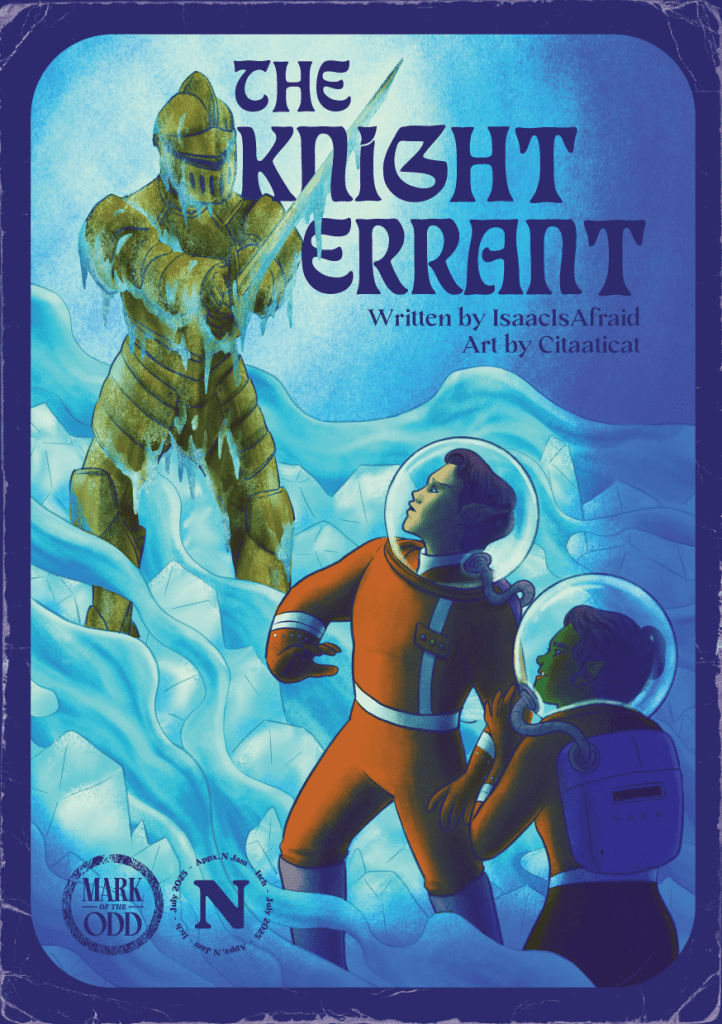
    Hardcase is a 28 page solo TTRPG by Thursday Garreau and art by Ida Ailes. In it, you struggle to get by on Basement Station, in a slice-of-life game in a rusty cyberpunk future.

    The first thing that strikes me about Hardcase, is that unlike most solo games I see, it’s not modelled after an existing solo game. In this case, it’s modelled after a mixed-success system like Apocalypse World and you get some additional labels which give you bonuses. The main flavour subsystem here is stress; you can upgrade the result of a roll by taking stress (you choose the type of stress from a list), and it gives you a permanent debuff; but if you pay enough, or take enough drugs, you can untick the box. But stress doesn’t kill you, conditions do: if you take 3 conditions of any nature (related to stress or not) you die. The driver of gameplay is economics; you have to pay for rent, and food, and treatment if you get conditions. If you don’t earn enough money, you can take on debt, but when the bill comes due every 2 weeks, you might gain stress if you can’t pay, or maybe get a job that you have to do, else you’ll face more severe consequences. But gear and cybernetics, as well as subcontractors to help you out, all cost money. If you manage to earn enough money to put some away, you might retire; but there’s a decent chance when you try to retire, someone might try to steal your savings. This is a pretty pleasing loop, in terms of creating a direction in which to play. Enemies are basically the same as the Player Character, but may only act on a “miss” roll, and may have fewer than 3 conditions before they’re killed.

    We then have the setting: You work and live on Basement Station, a half-finished logistics hub hanging in orbit above the earth, at the zenith of a space elevator. This is sketched out in broad strokes: 6 locales, 6 characters, how to gamble, what’s in a vending machine, a dozen drugs, and psychic folk. And jobs: There are examples of work: How to run deliveries, random “distractions” that might occur along the way, how to run salvage operations, random “hazards” that might stop you from raiding abandoned ships, how to hunt bounties. There are examples of how to use the now text-based internet, and how to play the VR that many of the residents of Basement Station spend their spare time in. There’s a page on what’s going on out in space, and a few people who aren’t from Basement station, who you might meet. All of this adds up to a pretty compelling little world, with just enough concrete facts to spark your imagination. Half the book is packed with tables, descriptions, and lists to help you understand the ins and outs of Basement Station. It’s really good work.

    At this point, though, I’m most of the way through the game, and I don’t know how to play it solo. It feels like a nice little sci-fi game, but there’s nothing about it that screams solo. The game ends, with a page on how the author plays Hardcase. I kind of love that how to play the game is kind of an afterthought, here. It assumes you’re a smart cookie, choosing to read this game. The advice the author gives is pretty straightforward: 1. When you miss, the world reacts in a way that needs to be handled. 2. If you’re not sure what happens next, assume that it’s the worst possible thing. 3. The first thing on your character’s mind is usually “How do I get paid today?”. It’s a solid phrasing of common refereeing advice, and it’s also a case that every game can be a solo game if you want it to be.

    I come out of reading Hardcase with mixed feelings: Do I want to play referee and player in a solo game about a future corpo-fascist cyberpunk reality? I’m not sure that I do. My current reality is close enough to that, as I mentioned in my earlier review of Hypermall Unlimited Violence. But this is a pretty compelling little space station, if you do. It’s vibrant, interesting. It gives you just enough to springboard off, I suspect, for Basement Station to be interesting a background for your character’s rags-to-riches story. Your campaign of Hardcase might turn into a show about the many people who struggle to break out of poverty here, or might follow one character on their whole complex journey. It gets me excited. But, it is a solo game after the style of games like Ironsworn, where you’re playing 2 roles, that of player and that of referee, rather than it being one role. That’s a different kind of barrier for me, personally to overcome.

    It’s worth noting, though, that there’s an introductory tutorial for Hardcase, specifically for people struggling with how to start out, like me, with additional guardrails and supports, called Escape the A, and that there is a, expansion called Truthseeker that adds additional support for the world, and that people have released adventures for Hardcase that can support your play as well. Maybe my concerns are short-sighted, given all that additional support. I nevertheless think Hardcase would slap as a 2-player game. That would be my preferred format for playing Hardcase, I think. But does Hardcase work as a solo game for a bunch of people who are more interested in playing something with a more traditional TTRPG structure? Hell yes, this is absolutely solid, drives further story hard, and is set in a really compelling world.

    Idle Cartulary


    Playful Void is a production of Idle Cartulary. If you liked this article, please consider liking, sharing, and subscribing to the Idle Digest Newsletter. If you want to support Idle Cartulary continuing to provide Bathtub Reviews, I Read Reviews, and Dungeon Regular, please consider a one-off donation or becoming a regular supporter of Idle Cartulary on Ko-fi.
  • Critique Navidad: Shiv, featuring Sam Dunnewold

    Each holiday season, I review different modules, games or supplements as a thank you to the wider tabletop roleplaying game community. All of the work I review during Critique Navidad is either given to me by fans of the work or the authors themselves. This holiday season, I hope I can bring attention to a broader range of tabletop roleplaying game work than I usually would be able to, and find things that are new and exciting!

    Today, I’m taking the day off to spend with my family, so I’ve asked my friend Sam Dunnewold of the Dice Exploder podcast, to step in to help me out by taking a look at Shiv, by Joshuacaleb Little. Here’s Sam’s take on Shiv!


    Hello! This is Sam Dunnewold, host of Dice Exploder, filling in for your usual host. Before the review, I want to give it up for Idle Cartulary for this whole Critique Navidad series. It’s an incredible amount of work to do, it’s such a gift to the designers being reviewed (spoken as someone who was featured earlier this month), and it’s also great writing. Thus ends my review of Critique Navidad.

    From Shiv

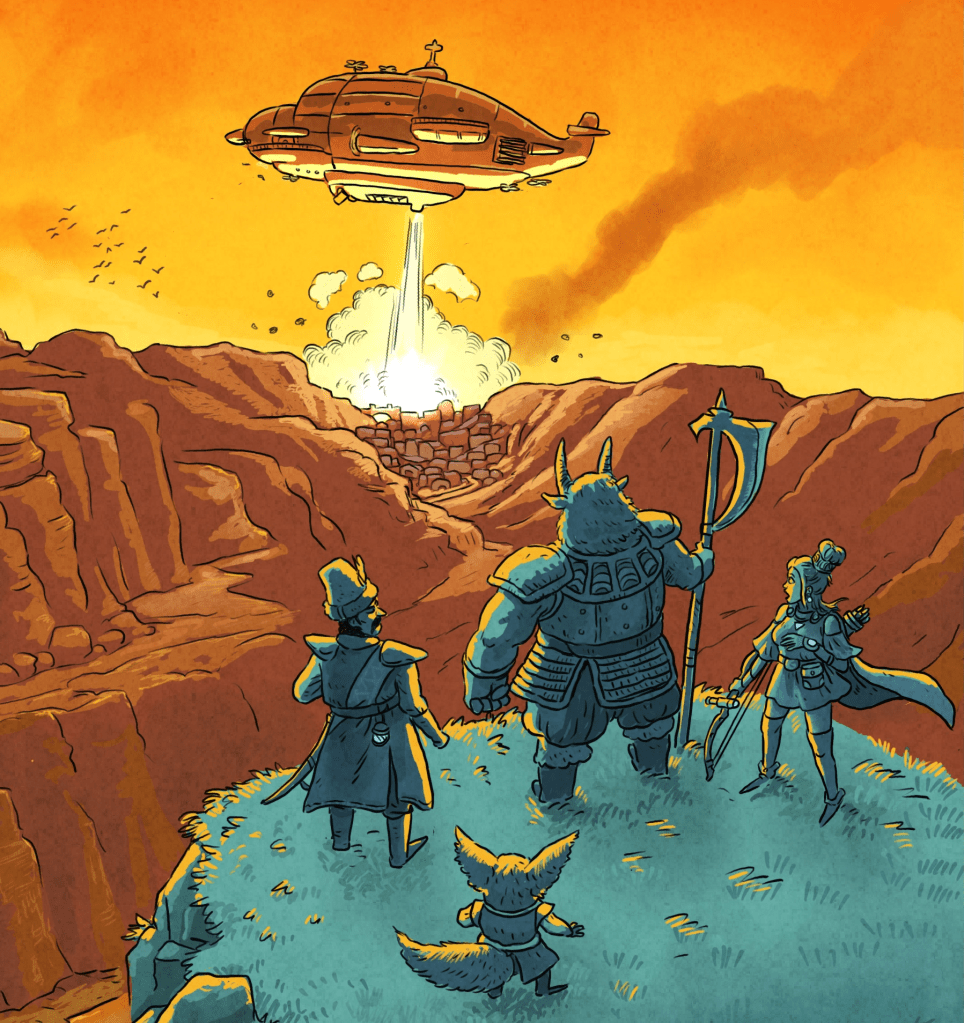
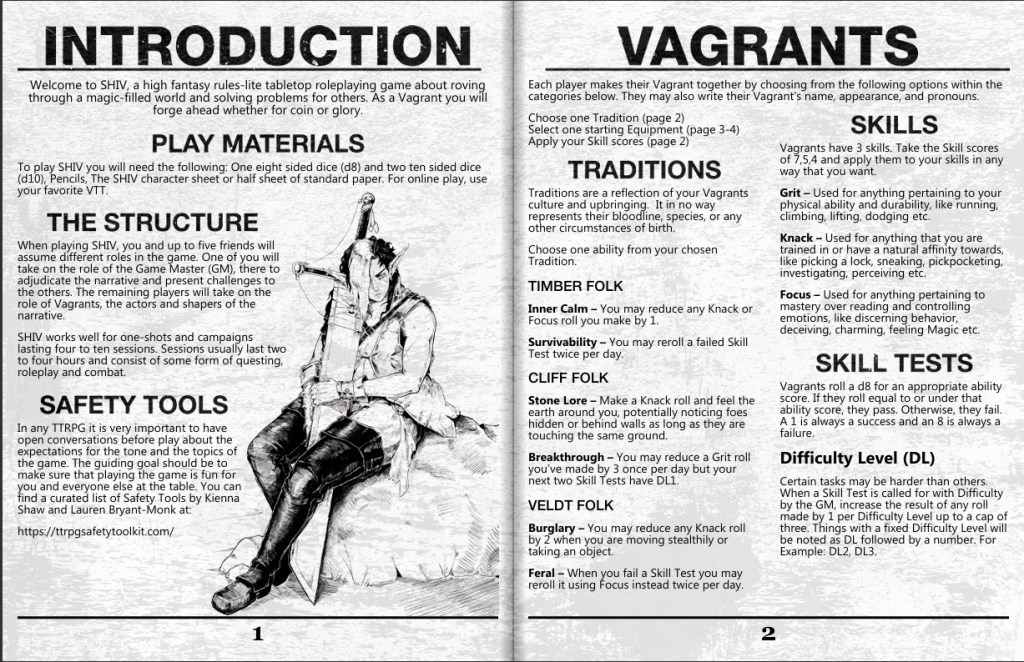
    I’m here to review Shiv by megaflare0, a “high fantasy rules-lite tabletop roleplaying game about roving through a magic-filled world and solving problems for others.” Going into it I was expecting something OSR adjacent, and that’s what I got. Shiv, like many OSR games, feels like someone publishing their particular set of house rules. That’s not necessarily a bad thing.

    At just seven pages of mechanics, Shiv is the definition of rules light. They not long pages, either. The font is pretty big. Love to see a big font. So much of indie rpgs, and the OSR in particular, is obsessed with unreadably small fonts (this is how you can tell that Blades in the Dark is OSR), but Shiv is easily legible in its layout and its prose. I never felt confused by how anything worked. Though some of the information could come in a different order, like Skills before Traditions and Combat before Gear. Still, when the game is so small, those are easy bumps to navigate. God I love a small game.

    The rules themselves feel… fine. Shiv lists Cairn and Into the Odd in its influences, and if you know those games, you won’t find a lot to be surprised by here. The scale of things have been moved around, you roll d8s for saving throws (or “skill tests” as they are here) instead of d20s, but it’s all familiar.

    The most notable change here is in combat. Instead of the more common “just roll to hit” or “automatically hit and just roll damage” models, in Shiv we always hit and always deal a fixed amount of damage… unless the defender can roll to dodge. I imagine this makes combat feel more nimble – instead of the moment of uncertainty being how hard you can cut someone, it’s in how quick you are on your feet. Interesting! Not a big change, but I’m curious how pronounced the effect would be in play.

    The equipment list and sample enemies follow suit: short, clear examples but without a lot of new innovation to be found from other OSR games. The specific items and enemies have a nice selection of special ability ideas, and it’s easy to see how to make up your own. Some of the creatures are fun: the Velocidodo, and a Mousse instead of your classic Pudding. We’re in classic whimsical fantasy adventure mode.

    Given the guidance on how to create combat encounters and settlements, I assume Shiv does not expect you to use a module. That’s fine, but it means I’d really like to see prep rules. Thankfully Shiv has them! I LOVE to see prep rules. Like everything else they’re very brief, but the advice is all good and it’s probably enough to get you through a one shot. Not enough games give the GM actual tools to prep, and not enough games remind the GM that they can always ask the table for ideas.

    Okay, having sorted through all those details, let’s step back a second. Shiv to me feels like it was designed from almost a defensive crouch. Like, let’s take its description of safety tools: “In any TTRPG it is very important to have open conversations before play about the expectations for the tone and the topics of the game. The guiding goal should be to make sure that playing the game is fun for you and everyone else at the table.” I agree with this! But it’s such broad advice as to be nearly useless to me. What kinds of conversations should I be expecting to have before this game? Do I need a section on safety tools at all given that Shiv seems targeted at people who are already familiar with this genre of play? I’d love more specificity to this instead of something that feels like lip service to the idea of safer play and the discourse around it.

    Or take how Traditions are described: it’s barely one sentence before we get to something that feels like a reaction to discourse around use of the term race in D&D. Or the designer’s note at the beginning of the section on Enemies about how to design encounters: at least one enemy for each player character. Why does that need to be the case? Why do encounters need to be balanced? Again it feels like the designer reacting to imagined “best practices” or “how things should work” instead of taking their own swings or getting more specific. Shiv is at its best when it does get specific: give me more using Stone Lore to sense Velocidodos running across the veldt! I have skill checks at home.

    Again, the game at least knows how to get in and get out. It may not have a lot new to say, but it doesn’t waste time dawdling either. I can’t emphasize enough how refreshing that is.

    Overall, Shiv doesn’t feel like it has much new to offer me, a guy who’s played a bunch of fantasy adventure games. It’s also written so briefly that I’m not sure I’d recommend it for people just getting their feet wet with these games. So who is it for? I think if I’d played one or two elfgames and was looking to broaden my horizons, Shiv would be an interesting game to pick up. That’s a narrow audience, but maybe you’re in it.

    Sam Dunnewold


    Playful Void is a production of Idle Cartulary. If you liked this article, please consider liking, sharing, and subscribing to the Idle Digest Newsletter. If you want to support Idle Cartulary continuing to provide Bathtub Reviews, I Read Reviews, and Dungeon Regular, please consider a one-off donation or becoming a regular supporter of Idle Cartulary on Ko-fi.
  • Critique Navidad: The Field Agent Handbook

    Each holiday season, I review different modules, games or supplements as a thank you to the wider tabletop roleplaying game community. All of the work I review during Critique Navidad is either given to me by fans of the work or the authors themselves. This holiday season, I hope I can bring attention to a broader range of tabletop roleplaying game work than I usually would be able to, and find things that are new and exciting!

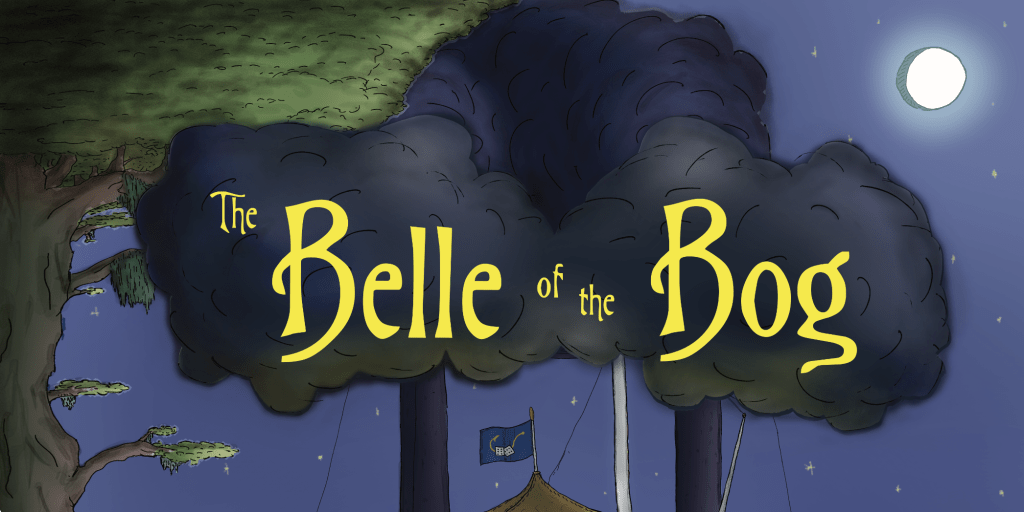
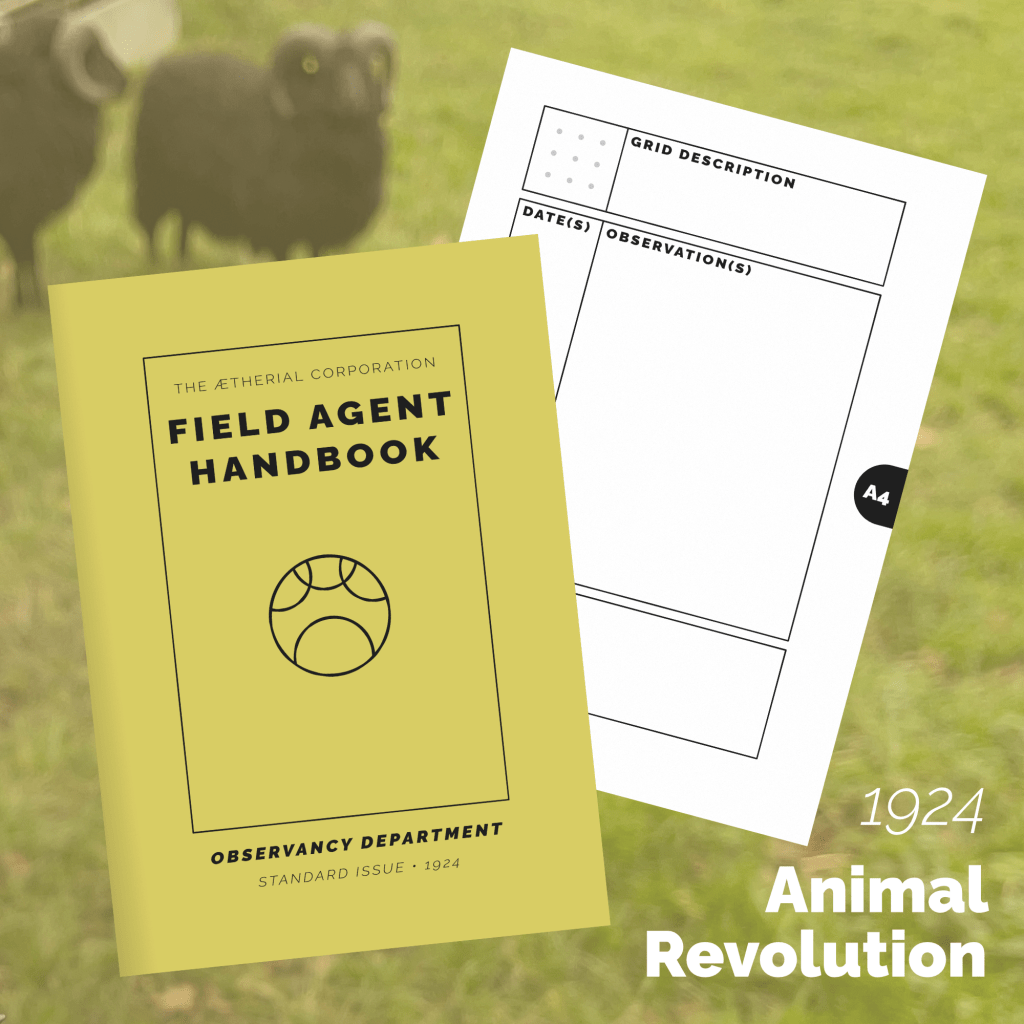
    The Field Agent Handbook is a set of 5 connected booklets, each a journal to take notes in. You take on the role of an undercover field agent from the Aetherial Corporation, viewing the world through a lens of suspicion. I’m not aware of another game like it, but you could describe it as an always-on solo RPG to play when you’re out and about. Look, honestly, if this feels like a jam to you, then just order a handbook now and get playing.

    So, what does a handbook contain? Well, to simplify it maximally, each of them has you searching for signs in everyday life of very strange things: You start with “suspicious activity” in 1924, but by 1928 you’re on the look for “kinds of giants”. All of the handbooks contain these basic signals you’re searching for in the inside cover of the book, for easy access. Once you know what to look like, you learn how to use your tools (typically a pendulum and another 1-2 items) to ascertain the likelihood it’s an actual case of giant (or whatever you’re looking for, perhaps sky-whale). We then have a few pages describing the phenomenon you’re looking for, and learning a little about it (animals, clouds, plants, geography) and the rest of the book is filled with space for your recordings.

    The layout here is perfect, and feels like one of the cheap, mail-order zines that I ordered in the 80s; if anything it feels too modern for its intended time period. But it’s legible and easy to navigate, and leaves plenty of room for you to take notes, including an index that you fill out yourself. The art style is also very work manual, which means I can’t really praise it too highly, but it’s a perfect choice for these books.

    So, I can’t really talk too much about these handbooks without spoiling things, but I think they’re absolutely genius. This is the analogue equivalent of a game like Pokémon Go; the closest TTRPG to this is the classic Collectible Trading Moon Game You pick a handbook — I’d recommend with no further research into which you get — and then until you complete it, every time you go out you’re forced to focus on one aspect of your environment. It’s meditative, and beautiful, but with a dose of humour and storytelling that I enjoy tremendously. It’s akin to the Bonsai Diaries, but you’re engaging with your actual environment and reinterpreting it, not creating your own pot sized world.

    Anyway, The Field Agents Handbook is great. If you’re looking for something to do instead of be on your phone (as I am right now, while sitting a forest surrounded by birdsong), it brings a way to connect with what’s actually around you in a creative but deeply observant way. It’s a healthy, imaginative, solo exercise, with precisely the level of engagement with the imaginary world and your role as a secret agent in it as you wish. If any of this appeals to you, check it out now.

    Idle Cartulary


    Playful Void is a production of Idle Cartulary. If you liked this article, please consider liking, sharing, and subscribing to the Idle Digest Newsletter. If you want to support Idle Cartulary continuing to provide Bathtub Reviews, I Read Reviews, and Dungeon Regular, please consider a one-off donation or becoming a regular supporter of Idle Cartulary on Ko-fi.

  • Critique Navidad: The Cycle

    Each holiday season, I review different modules, games or supplements as a thank you to the wider tabletop roleplaying game community. All of the work I review during Critique Navidad is either given to me by fans of the work or the authors themselves. This holiday season, I hope I can bring attention to a broader range of tabletop roleplaying game work than I usually would be able to, and find things that are new and exciting!

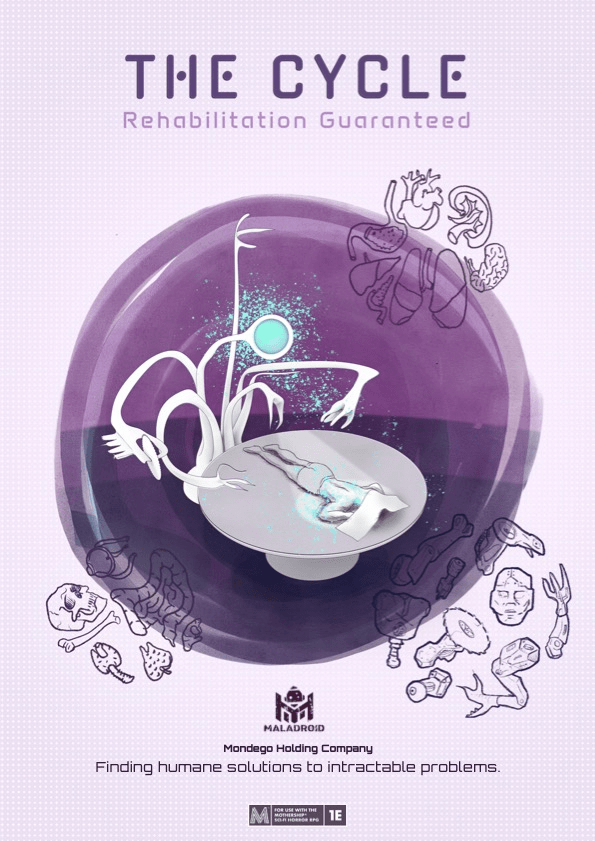
    The Cycle is a 13 page module for Mothership by Luke Frostik. In it you are trapped in a monotonous dehumanising routine, when suddenly you’re given the opportunity to escape from your interstellar prison, run by a crazed AI. It’s intended as a one-shot module.

    The layout here is simple, easy to read, well signaled, and has a lovely cohesive colour and art style. I’d love some page numbers or in-text highlighting for clearer in-game use, however. It’s a good example of how small choices can cause issues even in a small text though; the text is super light, which on the thistle-pink background gets challenging to read in large blocks. These large blocks don’t really happen until the second half of the book. You can get away with these misses in a short module like this one. The art by Eli Bensusan is honestly lovely. Great work.

    You get one key NPC, the protagonist Dante, and a prisoner generator if you need more. Play takes place during a series of time-loops, which while aren’t technically time-loops, effectively they are. Between cycles, you can have a dream some of which will affect you in different ways. The module expects the session to be over by the third cycle, which is just enough to get a sense for what’s going on; I hope that the players won’t figure this out and try taking advantage of the cycle, though. The likelihood is that they’ll break free of it, and explore the rest of the space station, then realise they’re not going to be rehabilitated, and what their fate will be if they don’t escape. I really like the AI table, which basically automates the responses it makes. This is pretty neat, and makes it feel like AI, and not some god-like being.

    I do wish that this module relied a little more on read-aloud text, instead of relying on my translating the description in-text of what I’m supposed to communicate into my own words. It’s just another, unnecessary step. I love to see beautiful writing in modules, especially to read it aloud. Instead, this module tells, rather than shows. I like the locations, though, and plenty of these encounters are interesting. This feels a little bigger than a one-shot, however, by sheer number of rooms; that said, you may just breeze through them, because there aren’t too many random encounters, more a series of scenes you may or may not stumble into.

    Overall, I like the Cycle. I’ts a lovely little module, and I love the idea that on the first few play-throughs, you’re living a monotonous and boring life being re-integrated, before the truth starts to come out and you begin to break free. However, I don’t think the module itself scaffolds’ that play well — if someone told me that I was going to be playing a bored corporate drone in Mothership, I’d be confused, which undermines the implied course of play. And the ease of play is limited by the fact that that implied structure of play isn’t really assisted along for the referee by the text itself. I could see this story being told in a different format, incredibly well, and it’s compelling enough a concept that it has my mind jumping to how I could either fix the module or write something inspired by it. And, the truth is, that’s enough that for your table, with your amazing improvisation skills or your enjoyment of prep as an excuse to escape downstairs to the study, the Cycle might be an excellent one-shot for the right table.

    Idle Cartulary


    Playful Void is a production of Idle Cartulary. If you liked this article, please consider liking, sharing, and subscribing to the Idle Digest Newsletter. If you want to support Idle Cartulary continuing to provide Bathtub Reviews, I Read Reviews, and Dungeon Regular, please consider a one-off donation or becoming a regular supporter of Idle Cartulary on Ko-fi.
  • Critique Navidad: HyperMall Unlimited Violence

    Each holiday season, I review different modules, games or supplements as a thank you to the wider tabletop roleplaying game community. All of the work I review during Critique Navidad is either given to me by fans of the work or the authors themselves. This holiday season, I hope I can bring attention to a broader range of tabletop roleplaying game work than I usually would be able to, and find things that are new and exciting!

    HyperMall Unlimited Violence is a 248 page game by JD Clement, with art by Bryton J Swan and additional art by a bunch of other artists. It’s a cyberpunk game, that appears loosely inspired by Troika! In it, you and your fellow contractors go on missions against the corporations that run the world.

    This is maximalist layout. Every page is heavily collaged, it’s rare to have text running vertically down the page. It’s messy. It’s a vibe. It’s most reminiscent in its maximialism of Mork Borg, but I personally find it a little harder to read than Mork Borg, largely because it’s intentionally less cohesive. These choices often are reflected in a less easy to navigate book — in a short book like Mork Borg, it works well, but in an almost 250 page book, where you need to find your way around, a little more consistency in terms of page numbering colours, or section headers, etc. would really go a long way.

    So, what does this massive book contain? Well, the rules take up the first 5 or so pages, and then we have 75 pages of backgrounds. We then have some player-facing rules — skills, psionics, mutations, resurrection and gear — for about 50 pages. Then, we have a short 15 pages on how to run the game, and finally, a few pages on the world of the Hypermall, and then a mission generator and a section on enemies, along with a list of 36 enemies. That’s a lot, and the nature of Critique Navidad means I don’t have a lot of capacity to dig into this in a lot of detail; what I’ll do, is cherry pick some examples.

    The rules are more or less Troika!, with a few small changes (a dice pool, mixed successes, a few types of combat, no chip-based initiative). It incorporates a bunch of tech from the Apocalypse World through Blades in the Dark lineage into a Troika! framework, effectively. It’s a neat jam, but it explicitly says the system doesn’t matter: on, and the game agrees with me: “This is all the boring s**t nobody cares about. Let’s get to the part about the killing.”. This is a vibes game, through and through. If you like Troika! Backgrounds, you’re going to like these backgrounds, as they’re similarly flavourful and communicate a lot about the world of the Hypermall. There’s normal cyberpunk here, and also weirder stuff like the carcinized believer, a human who’s religion has transformed them into a crustacean hybrid of some kind. What’s interesting to me about the world of Hypermall is that it’s not always clear what level of reality these backgrounds are actually existing in. In combination with the intro, and especially the end of book setting information, you get an impressionistic idea of what this world is like, if you read enough of the book, or else you’re going to make it up in concert with your players. The referee advice section adds referee moves into the framework — really a necessity if you’re going to add partial success. “Let’s get to the part about the killing.” is the pinch point here. We get advice around making the violence fun in the referee section, but it weirdly doesn’t do enough to show us how to make the violence fun. This is a game that expects you to be steeped in violence as a genre, rather than something that supports you in being hyper violent. Compared to say Vengeance California or Crank It Up, two other hyper violent games, it doesn’t really tell you how to be violent. It relies on the referee for that support.

    But, this world is not my jam at all. The writing is very cyberpunk and gross in a bunch of ways. It’s darkly funny. But, the hostility of the writing and the hostility in the world, in combination with the — aesthetically appropriate — challenging and bold layout — is that I really struggle to read it, and I’d struggle even more to run it or play in it. For me, I exist in a cyberpunk hellscape already, and this parodic one is a little too close to real life for me to want to spend time here. If you’re not sure whether this is for you, the title of the holiday module that’s been released is likely to tell you whether you’ll enjoy the writing and the world.

    HyperMall Unlimited Violence is an interesting beast, though. The big caveat is that you might bounce off the layout and art style, but you can see examples of that right there on the store page: Trust me when I tell you it is all like that. If you have played Troika! but you thought it needed some storygame influence to fulfil it’s promises, this is probably a mechanical direction you’ll appreciate, and is worth looking at for that purpose. If you’re looking to play in a parodically dark cyberpunk future, and the mainstream ones are a little too clean for you, then this one might appeal to you. There are a lot of people who are going to absolutely eat up this hyper-stylised, maximalist, Troika/Storygame hybrid, extreme parody of our impending cyberpunk future. Sadly, HyperMall Unlimited Violence is not for me.

    Idle Cartulary


    Playful Void is a production of Idle Cartulary. If you liked this article, please consider liking, sharing, and subscribing to the Idle Digest Newsletter. If you want to support Idle Cartulary continuing to provide Bathtub Reviews, I Read Reviews, and Dungeon Regular, please consider a one-off donation or becoming a regular supporter of Idle Cartulary on Ko-fi.
  • Critique Navidad: Turn It Off

    Each holiday season, I review different modules, games or supplements as a thank you to the wider tabletop roleplaying game community. All of the work I review during Critique Navidad is either given to me by fans of the work or the authors themselves. This holiday season, I hope I can bring attention to a broader range of tabletop roleplaying game work than I usually would be able to, and find things that are new and exciting!

    Turn It Off is an 8 page module for Knave 2e by Sean Audet. In it you explore a lighthouse in an effort to extinguish its’ light and hence prevent an ancient eldritch abomination from rising from the dead.

    The module opens with the key, horizontally split across a spread, with an exterior of the lighthouse at the top, and the map of the lighthouse at the bottom. The choice of a lighthouse means that descriptions of all the rooms and the exterior are entirely on the map, with page references for more details. Excellent stuff, and although it would be a little better had this been the inside front cover with regards to readability in print, the map is small enough you can probably hold relevant spaces in memory.

    Then we have 4 adventure hooks; these are excellent damned hooks. Each one has a juicy worm, and as icing on that cake (mixing metaphors, sorry), they also have a potential way to raise the stakes in addition to that juicy worm. These are what hooks are supposed to look like. Next up we have the 3 characters occupying the lighthouse – these also slap, and are nice and brief and easy to run from. Then, we have our events and encounters, which progress the worsening of the storm and the nearness of the approaching ship, while also handling the random encounter table. The only thing I don’t like about this little system is that you move to Table B “when it feels right to increase the tension”, which I don’t love as a criteria in an OSR style game.

    Then, all of the locations are expanded into a half page column. While these are a little excessive in length in my opinion — there’s not a lot of weird and wonderful things going on in these rooms — it works well, because we have the summaries to go from on the map. We’re only going here for details, and I for one don’t know what I’d find in an 18th century lighthouse, so it’s appreciated. The thing missing here is that the characters are listed earlier — the choice makes sense, but means a bit more flicking to and fro.

    What’s nice about Turn It Off is the difficult decisions you’re forced to make. You’re wondering the lighthouse looking to repair and light the lantern, ever the while looking out the window at the approaching ship. If you don’t light the lantern, all aboard the ship will die. However, as you explore the lighthouse, you’ll find clues that lighting the lantern might cause a greater evil to come to pass. It’s a trolley problem, and that’s precisely the kind of problem I love to see in small modules like this one. Thankfully, it gives some options for a more heroic finale if your players aren’t into the doomed resolutions that are the player’s options out of the box.

    I think the biggest problem a lot of people will have with Turn It Off is that it, like Late Stage Death Cultism that I reviewed yesterday, is fairly linear. You can’t really avoid it with an environment like a lighthouse, to be honest. It also opens in specific circumstances: It’s night-time, it’s a storm, there’s a distant ship, and you can see a man silhouetted against the lantern. All of this works really well for the specific vibe that Turn It Off is going for, but it requires a table that is signed on for a moody, locked-in creeping horror vibe, rather than an inventive, problem-solving OSR romp. In fact, when I reviewed Late Stage Death Cultism, I suggested that using its’ model to work on an alternative time period, which is precisely what Turn It Off is doing. I feel like Turn It Off would only be better were it to have Troika! backgrounds rather than hooks, or pre-gen characters.

    Turn It Off uses the Explorer’s Template for it’s layout, but it does so with flare, breaking the grid, combining spreads for impact, and using horizontal splits. It’s really good. Art is in the public domain and is excellently curated, and all attributions are on the page. The large, gloomy choices of paintings are offset by poetry quotes, that add a lot to the aesthetic as well. All around smart choices, for a low-budget module.

    Ok, so overall, I think Turn It Off slaps. This is precisely what I’m looking for in a one-shot. I do think it might do better with pre-generated characters, particularly given the hopeless outcomes associated with the devil’s bargains your characters are forced to make. If you’re looking for a one-shot and your table is one that takes delight in hard decision making, then I wouldn’t hesitate to pick Turn It Off up.

    Idle Cartulary


    Playful Void is a production of Idle Cartulary. If you liked this article, please consider liking, sharing, and subscribing to the Idle Digest Newsletter. If you want to support Idle Cartulary continuing to provide Bathtub Reviews, I Read Reviews, and Dungeon Regular, please consider a one-off donation or becoming a regular supporter of Idle Cartulary on Ko-fi.
  • Critique Navidad: Late Stage Death Cultism

    Each holiday season, I review different modules, games or supplements as a thank you to the wider tabletop roleplaying game community. All of the work I review during Critique Navidad is either given to me by fans of the work or the authors themselves. This holiday season, I hope I can bring attention to a broader range of tabletop roleplaying game work than I usually would be able to, and find things that are new and exciting!

    Late Stage Death Cultism is a 28 page module for Troika! by Diogo Barros, who also made the fantastic Isle of Hex. In it, you pursue a giant corporate-sponsored ape along a coast-to-coast road on a postapocalyptic continent.

    Unlike most Troika! modules, the focus of Late Stage Death Cultism is not in the backgrounds. We only have 6 backgrounds here, as well as a few short additions: A few reasons to chase the ape, and a few choices in what you’re riding as you chose it. Honestly, my gut feeling is that it would’ve made a little more sense to fold those additions into the backgrounds, as they’re not entirely consistent; that said, I like these backgrounds, as they are bright with Barros’ humour, and interestingly enough, come across as playbooks of a sort, each being more of a character trope in kaiju cinema than a class or background per se.

    The map here is linear, because you’re following a road, chasing the giant ape. I like this, a lot, because firstly it is such a contrast to the “make up the world” ethos that a lot of Troika displays, and secondly because it allows you, once again, to explore the tropes of the apocalyptic road trip movie. These are all neat, they feature very clear and fun to play characters, but it is, absolutely, on rails. I’m not opposed to a one-shot that’s largely on rails, you just might need to flag this with your table beforehand, else you’ll be completely unsupported when they go off-script. This reminds me a lot of the pleasure to be had described in the Monomyth Thread of yore, and I think there’s a place for it, but it’s not something you’d expect in a Troika! module.

    The characters you encounter all have very specific responses to the ape that has stampeded through their homes, and this is where the title comes into play: Barros here asks how do various personalities respond to the absurdity and danger of this apocalypse? But it’s buried very solidly in a very gonzo, very absurdist sense of humour throughout.

    The layout here is simple, with Barros drawing all the art in digital ink, and hand-writing a lot of the headings etc. The asides and the aesthetic fit the humour, if perhaps not the themes, and work far better than any of the house Troika! layouts, which insist on challenging formatting in their current iteration.

    I’ve always been fascinated a little in Troika! as a model, but I’ve found many of the people who develop it fall a little short of it’s potential: This is perhaps the most interesting gesture towards that potential, effectively being a capsule game, for a very specific story and series of events. This is rendered possible because so much emphasis is placed on the backgrounds in Troika! that it effectively can be used to explore very specific situations, without a lot of mechanical overhead. I like this as a conceptual space a lot, and I’d really like more designers to take advantage of this underutilised space to explore a wider set of environments and situations. Based on this, I could see someone using Troika! as a little Fiasco or Desperation simulator, as weird as that seems; Late Stage Death Cultism gestures in that direction with its’ choices, but still lives in the traditional Troika! extremity. What happens to Troika! when you place it in a historical or mythological context though?

    Overall, Late Stage Death Cultism is a really interesting module, full of humour and interesting characters. It’s essentially a series of linear scenes, though: This would make for a fun one- or two-shot, I feel, if you got the table on board in advance. More importantly, though, Late Stage Death Cultism is a pretty interesting model for exploring smaller and more specific narrative spaces, in a way that not many people are doing, and with low mechanical overhead. I’d check it out, either way: It’s a fun night with your friends, or else it might inspire you to write something yourself.

    Idle Cartulary


    Playful Void is a production of Idle Cartulary. If you liked this article, please consider liking, sharing, and subscribing to the Idle Digest Newsletter. If you want to support Idle Cartulary continuing to provide Bathtub Reviews, I Read Reviews, and Dungeon Regular, please consider a one-off donation or becoming a regular supporter of Idle Cartulary on Ko-fi.

  • Critique Navidad: The Model Minister

    Each holiday season, I review different modules, games or supplements as a thank you to the wider tabletop roleplaying game community. All of the work I review during Critique Navidad is either given to me by fans of the work or the authors themselves. This holiday season, I hope I can bring attention to a broader range of tabletop roleplaying game work than I usually would be able to, and find things that are new and exciting!

    The Model Minster is a 5 page mission for Spire by Sebastian Yūe. In it you are tasked with assassinating a compromised agent embedded in a fashion house.

    Cover by Adrian Stone

    First up, the cover by Adrian Stone slaps. Just excellent. It communicates the content of the mission extremely well. The layout is a simple, two-column one, very reminiscent of Spire itself, and at 5 pages it’s navigable and readable. The only criticism I have is that potentially if I printed it at home, the textured background might render it more difficult to read in greyscale.

    The themes and a characterisation here are exceptional: The aesir are twisted and evil in an unselfconscious way, the drow are desperate. The disguising of abuse as fashion and of experimentation and infection as healthcare is compelling, and scary given the real world parallels. It’s a hell of a basis for a module. I want to run this; it’s rare that a non-horror module explores horrific themes in such a compelling way.

    As a mission, I find the tension here fascinating. I really want this to be a typical, location-based module. But that’s not what Spire wants it to be! So, what we have, is a set up that drops you straight into the action without preamble, 4 NPCs that have 2-3 paragraphs of description for them and how to run them, 4 suggested scenes that might occur somewhere in the running of the module, and a twist, which reinterprets the other information. Let’s call these the base of the module. You don’t need anything else, is the impression I get. Then you get 4 single paragraph descriptions of locations, 6 props, a potential reward for completing the mission, and then some ideas for continuing the story.

    I haven’t read or played enough Spire to know if this is a typical structure for Spire or Heart modules – I’ve written about how I clash with the system before – but I can see this working quite well. I could make this work quite well, myself, if I had the memory – but that’s the thing, I don’t, and with this many variables and suggestions, I think I’d have to study these 5 pages pretty hard to use it as an improvisation base. For example, the character of Alix has about 8 different pieces of information that are true about her. These are 8 interesting pieces of information – I genuinely think that the concoction brewed by Yue here across the 4 main characters in particular is a potent one – but that’s 24 pieces of information across the main characters, plus the suggested interactions. I’m going to lose track. And neither characters nor props are tied to any locations – this is clearly intended to be for ease, in the way that some modules give generic clues to hand out to ensure they always feel appropriate and help the players progress – but in this case it means the added cognitive load of deciding where to encounter these people, where they are going to be, and more. Adding in the fact that I don’t have a sense for the broader estate we are supposed to be infiltrating, and I don’t think I’d be able to run this, for the same reason that I could run Blades in the Dark without Tim’s maps, but it’s much, much easier with them. It’s not the detail of every room, but the support that having the visualisation would provide me.

    For me, then, I’d have to put a fair bit of effort into running this: I’d need to provide myself with the support. I’d find an estate map, I’d decide where the people are hanging out, and I’d mark up where the key 4 rooms are on the map, and where the suggested scenes are likely to occur. I’d come up with a few extra characters that live in the estate, so it doesn’t feel like a dead space. And then, it’d be an excellent module: It has everything you need for interesting intrigue, but without the extra information that make the estate feel like a real place, it feels like it would be walking the players through scenes of my own devising, in the worst possible way.

    If you’re better at improvising than I, or better at memorising, then I think the Model Minister is an excellent little infiltration and intrigue module. The concepts and characters are creepy and have the exact amount of honesty that they’re compelling. But for me, then brevity sacrifices a sense of reality that I want to be seeing in my modules, that helps me run them. If you’re after a neat little intrigue mission, you’re running spire, or you’re compelled by the very cool twisted concepts in the characters, check out the Model Minister.

    Idle Cartulary


    Playful Void is a production of Idle Cartulary. If you liked this article, please consider liking, sharing, and subscribing to the Idle Digest Newsletter. If you want to support Idle Cartulary continuing to provide Bathtub Reviews, I Read Reviews, and Dungeon Regular, please consider a one-off donation or becoming a regular supporter of Idle Cartulary on Ko-fi.

  • Critique Navidad: Assault Fleet Centauri

    Assault Fleet Centauri is a 75 page roleplaying game “Quickstart” by Reizor. To my knowledge the full game is still in development. It’s a spaceship combat roleplaying game, where each player takes command of a warship in the titular fleet, defending the outer planets from the imperialist inner planets.

    The game opens with a brief overview of the setting, where the solar system is fully inhabited, but the inner and outer planets are at war. I struggle with extended setting descriptions, but this keeps it tight enough that I don’t tune out, and it uses analogies to modern day locations and relationships to keep things relatable. It’s pretty good as far as setting goes, and if you want to dig deeper, there’s a bunch more on world anvil.

    The rules here are designed to focus on captains making the hard decisions of war, managing resources, and commanding crew, and so you’re playing all of these things: Captain, Crew and Ship. Despite the straightforward basic mechanic, which is inspired by Blades in the Dark, but substitutes a dice chain for a dice pool. because you’re covering all of these, the rules are a lot. I’d say there are two perspectives on that a lot: For me, it’s a little too much. But, for you, it might be that being the captain of a spaceship is a bit much, and it feels right to be juggling a lot of balls.

    The most complex aspect of the game is the combat, which involves tokens, movement cards, and ship cards, with players and enemies alternating activations. For me, this is a return to the kind of Lancer-style combat that I struggle to referee, but enjoy playing, but I do think that this firm nudge into war game territory is only right for the kind of audience that wants to play spaceship commanders. But here you still need a referee to run those enemies, and as a forever referee, I couldn’t see myself building these battles out. That said, unlike a game like Lancer, Assault Fleet Centauri is designed to be interesting in a vacuum (no pun intended), and so you don’t have to put so much effort into the preparation here, or at least so it appears. And the referee section is quite supportive, providing playsheets and advice on running missions and mission structure, as well as covering some specific locations for you to dig into and base your own locations off. It comes with a free mission pack, “No Win Scenario”, which supports my hypothesis about what Assault Fleet Centauri is supposed to look like at the table: This looks a lot like a Lancer module, albeit without the detailed maps. The players are making hard decisions about dangerous situations, that are likely to result in combat.

    In yesterday’s review of Cryptid Keeper, I wondered about the importance of familiarity with specific texts as a scaffold to specific games, and it comes up again here. The only real piece of media I’m familiar with that feels like it fits Assault Fleet Centauri is Battlestar Galactica, but with that being 20 years lost to memory, I don’t think I’d know how to act or what to say in either the role of referee, or as player, if you handed me the complexity of Assault Fleet Centauri. Is it the game’s fault that it doesn’t cater to me, that it assumes that people interested in a spaceship battle roleplaying game are going to be familiar with the Expanse, the Culture, or the Hunt for the Red October? No, I don’t think so, and I don’t think that weakens its’ appeal to those players. A comprehensive system for handing Martian-Outer Planet negotiation would likely weaken the game for them, while simply adding a complex system I’m not interested in, in the name of making it easier for me to understand. I think this is the game it wants to be.

    Assault Fleet Centauri is a great roleplaying game for people interested in the kind of interplanetary spacecraft warfare it’s aiming for. It has complex systems, you’re managing hard decisions at crew, ship and command levels, you’re trying to liaise with other captains, and you’re doing it all in the depths of uninhabitable space. But it’s not a bunch of things that I personally relate to more: It’s not an espionage game, it’s not a game of dashing around spaceships making repairs to systems, it’s not a game of space exploration. Don’t look here for that. If you’re looking to feel like you’re the captain of a huge vessel, managing a large crew, and fighting in battles on the scale of light-seconds? I’d check this out. The mission-pack is available for free, if you’d like to have a taste.

    Idle Cartulary


    Playful Void is a production of Idle Cartulary. If you liked this article, please consider liking, sharing, and subscribing to the Idle Digest Newsletter. If you want to support Idle Cartulary continuing to provide Bathtub Reviews, I Read Reviews, and Dungeon Regular, please consider a one-off donation or becoming a regular supporter of Idle Cartulary on Ko-fi.

Want to support Playful Void or Bathtub Reviews? Donate to or join my Ko-fi!


I use affiliate links where I can, to keep reviewing sustainable! Please click them if you’re considering buying something I’ve reviewed! Want to know more?


Have a module, adventure or supplement you’d like me to review? Read my review policy here, and then email me at idle dot cartulary at gmail dot com, or direct message me on Discord!


Recent Posts


Categories


Archives

July 2026
M T W T F S S
 12345
6789101112
13141516171819
20212223242526
2728293031  

Recent Posts